Genk's Clinical Counter-Attack Secures Victory Over Utrecht
Utrecht dictated the ball but not the outcome. With 57% possession and 519 total passes at an 87% accuracy rate, Ron Jans’ 4-3-3 aimed to control territory and tempo, especially through central circulation. Genk, in their 4-1-4-1, were content with 43% possession and 386 passes, focusing more on controlling space than the ball. The Belgian side accepted longer spells without possession to keep their block compact and protect central areas, then spring forward when Utrecht’s structure stretched. The flow evolved into classic “sterile domination” from the hosts versus a compact, counter-oriented Genk who waited for key moments.
Offensive Efficiency
Utrecht’s plan was volume and territory. They produced 17 total shots, with 7 on target and 12 from inside the box, supported by 2 corners. The 2.09 expected_goals underline that they created enough situations to score, but the lack of goals exposes a clear cutting-edge problem. Many of those 12 in-box attempts were likely under pressure, reflected in Genk needing only 2 blocked shots, suggesting Utrecht often reached shooting zones but without clean separation.
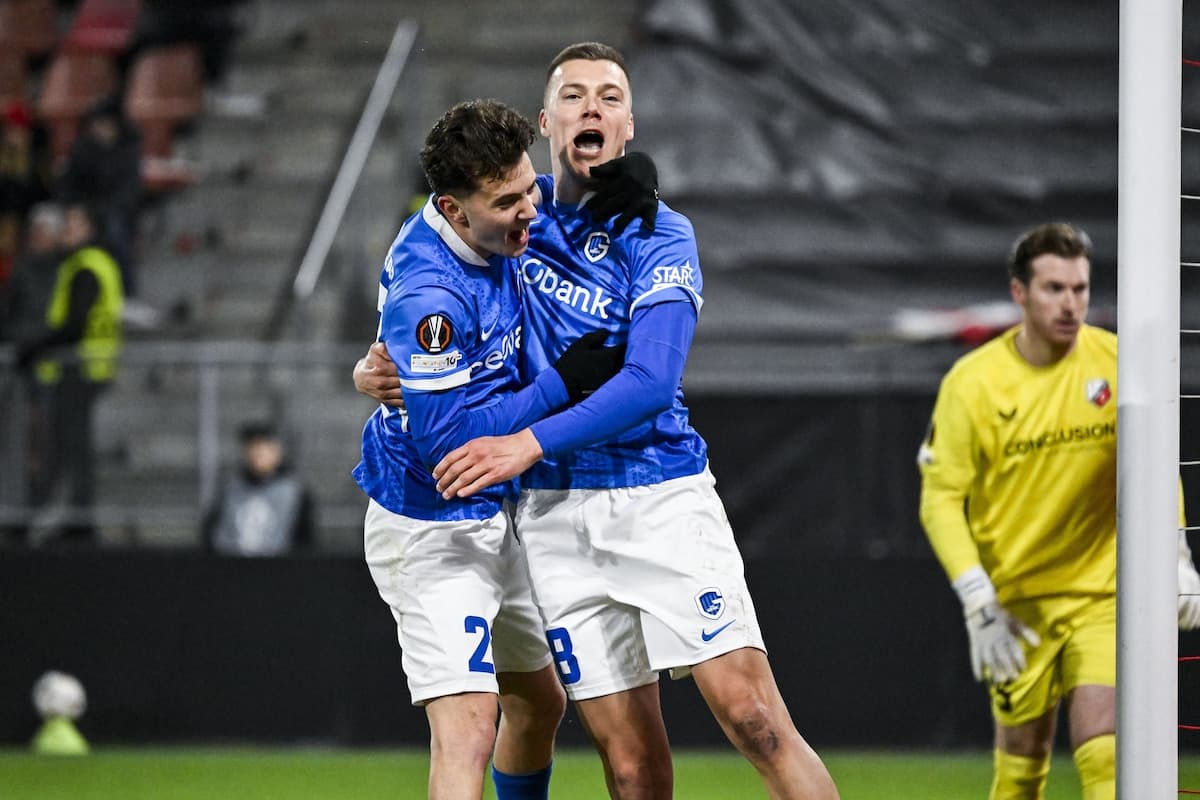
Genk, by contrast, were more selective and efficient. With just 12 total shots and 5 on target, they matched Utrecht’s threat far more closely than the possession split suggests. Their 1.66 expected_goals from fewer attempts highlights the quality of their chances, fitting a clinical counter-attacking and transitional approach. Three corners and 8 shots inside the box show that when they advanced, they arrived with numbers and composure rather than settling for speculative efforts. The 0–2 scoreline from this shot profile points to ruthless exploitation of the best openings rather than sustained pressure.
Defensive Discipline & Intensity
The match had a controlled but competitive edge. Utrecht committed 11 fouls and Genk 12, numbers that indicate regular tactical interruptions without descending into chaos. Only one yellow card, for Genk, reinforces that both teams managed their aggression reasonably well.
Defensively, Genk’s structure and goalkeeper were decisive. With 7 saves, Tobias Okiki Lawal turned Utrecht’s 7 shots on target into a clean sheet, underlining how the visitors’ game plan relied not just on compactness but on last-line reliability. Utrecht’s keeper made 3 saves, consistent with Genk’s lower shot volume but higher efficiency. Utrecht’s 4 blocked shots versus Genk’s 2 suggest the hosts defended higher and more reactively against counters, while Genk’s deeper block forced Utrecht into less clean looks rather than constant emergency defending.
Conclusion
Ultimately, Genk’s compact defensive block and clinical use of their 12 shots overcame Utrecht’s 57% possession and 2.09 expected_goals. Utrecht controlled the ball, but Genk controlled the decisive spaces, with 7 saves and efficient finishing turning a counter-attacking game plan into a 0–2 away win.