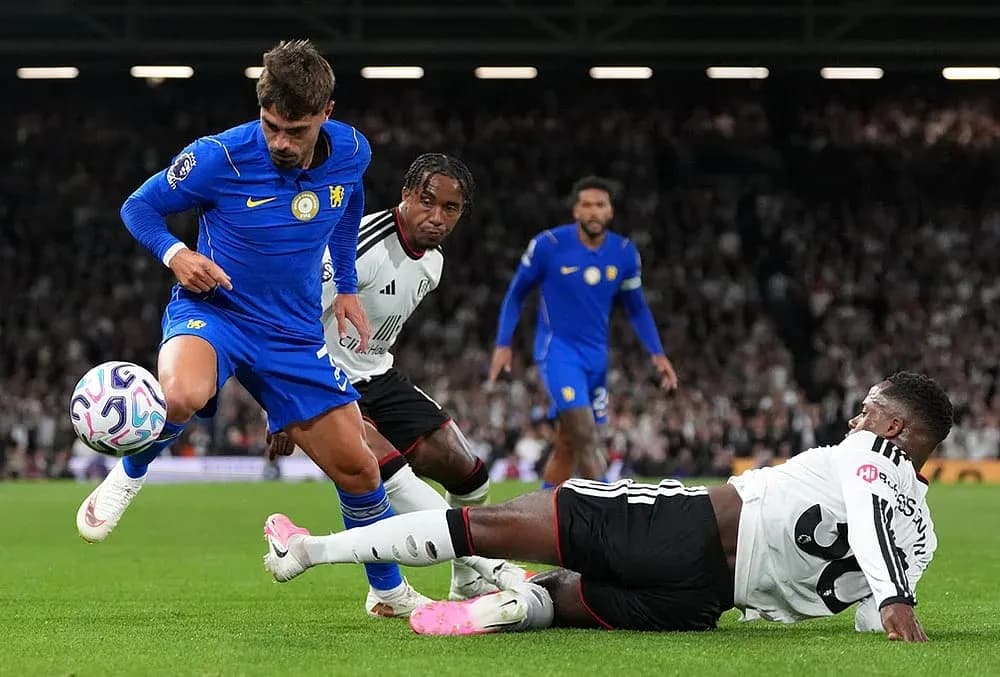
Fulham vs Chelsea: Premier League Opening Match Analysis
Craven Cottage under the lights, the Thames glinting just beyond the old Johnny Haynes Stand, and a new Premier League season already drawing its first fault lines. Fulham and Chelsea opened their 2026 campaign here with a 3-2 away win for Xabi Alonso’s side, a result that leaves Fulham 12th and Chelsea 6th after one match each. The scoreline – 2-3 at half-time and full-time – told of attacking ambition on both sides, but the tactical story underneath was about control, structure, and how each manager tried to mask early-season absences.
Fulham’s overall record now reads one defeat from one, with 2 goals scored and 3 conceded in total. At home they mirror that exactly: 2.0 goals for and 3.0 against on average, no clean sheets, but no failure to score either. Chelsea, on their travels, emerge with 3 goals for and 2 against, averaging 3.0 scored and 2.0 conceded away and carrying the confidence of an opening win.
I. The Big Picture – Shapes, Space, and Early Identities
Alvaro Arbeloa set Fulham up in a 4-2-3-1 that looked, on paper, like a classic Craven Cottage configuration: full-backs high, double pivot to screen, a band of three to knit attacks, and a lone forward to occupy the Chelsea back three. Bernd Leno anchored a back four of Timothy Castagne, Calvin Bassey, Jorge Cuenca and Antonee Robinson. In front, Sander Berge and Alex Iwobi formed the pivot, with Oscar Bobb, J. King and C. Palacios supporting G. Garcia.
Across from them, Alonso’s Chelsea arrived with a 3-4-2-1 that leaned heavily into technical security and fluid rotations. Robert Sanchez was protected by a trio of J. Acheampong, Maxence Lacroix and Levi Colwill. Malo Gusto and Reece James operated as advanced wing-backs, with Roméo Lavia and J. Hato inside. Ahead, Cole Palmer and Morgan Rogers floated behind Joao Pedro.
The scoreline – Fulham 2-3 Chelsea – underlines the early-season DNA of both sides. Fulham are already an open, front-foot team: they have yet to keep a clean sheet, yet to fail to score, and their only defeat is a narrow 3-2. Chelsea, meanwhile, show signs of a more balanced, possession-heavy side under Alonso: one away win, three different scorers, and a structure that gets the best out of their attacking technicians.
II. Tactical Voids – Absences and Discipline
The absentees shaped this contest as much as the starters. Fulham were without J. Andersen (suspended after a red card) and T. Cairney (knee injury). Without Andersen’s aerial dominance and organising voice, Arbeloa turned to Bassey and Cuenca as his central pairing. It gave Fulham mobility, but also a sense that the line could be bent by Chelsea’s movement between the channels.
Chelsea’s list of missing players was longer: A. Anselmino (inactive), M. Caicedo and M. Sarr (injuries), E. Emegha (hamstring), W. Fofana (red card suspension) and J. Henderson (wrist injury). Alonso therefore leaned on Lavia as his central organiser and Lacroix as the defensive pillar. The fact Chelsea still looked structurally sound away from home despite those absences speaks to the depth and clarity of their setup.
Disciplinary trends add another layer. Fulham’s yellow cards this season have all come late: 100.00% of their bookings arrived between 76-90 minutes. That late-game surge in cautions hints at a side that chases games, stretches itself, and commits tired fouls as legs and concentration wane. Chelsea’s cards are front-loaded: 66.67% of their yellows have come between 0-15 minutes, with another 33.33% between 61-75. They start aggressively, setting a physical tone early, then spike again as they look to protect a lead in the middle of the second half.
Neither team has seen a red card in this match or in their card distributions, and neither side has taken a penalty yet – both show 0 total penalties, with 0% conversion and 0% missed, so no spot-kick drama or wastefulness to colour this early narrative.
III. Key Matchups – Hunter vs Shield, Engine Room Battles
The headline duel in this fixture – and for Chelsea’s season – is Cole Palmer against any defence brave enough to give him space. Palmer’s opening outing in the league was elite: 1 goal, 1 assist, an 8.9 rating, 4 shots (2 on target), 32 passes at 87% accuracy, 3 key passes, and 8 attempted dribbles with 5 completed. He is both hunter and creator, as comfortable finishing moves as he is threading them.
Against Fulham’s back line, the “Hunter vs Shield” dynamic is stark. Fulham have conceded 3 goals at home already, an average of 3.0, and their goal difference overall stands at -1 (2 scored, 3 conceded). Bassey and Cuenca will be asked to step out of the line to meet Palmer between the lines, but that exposes the channels for Joao Pedro’s runs and Rogers’ diagonal darts.
Joao Pedro’s numbers underline his threat: 1 goal, 1 assist, 3 shots, and 2 key passes, with a perfect dribble success rate so far. Rogers complements him with vertical running and incision: 1 goal, 5 key passes from 22 total, and 3 successful dribbles from 3 attempts. Between them, they stretch and distort defensive structures that are not fully settled – exactly the situation Fulham find themselves in without Andersen.
On Fulham’s side, the creative onus falls heavily on Castagne and the advanced midfield trio. Castagne has already supplied 1 assist, with 40 passes at 85% accuracy, 2 key passes and 1 shot on target, plus solid defensive work: 1 tackle, 1 interception, and 1 successful block. His ability to provide width and quality delivery from the right is Fulham’s clearest route to unsettling Chelsea’s back three, particularly attacking the space outside Colwill.
In the “Engine Room” battle, Lavia is Chelsea’s quiet conductor. His line so far – 22 passes at 95% accuracy, 2 key passes, 3 tackles, and 1 interception – shows a midfielder who both progresses the ball and shields the defence. He has 1 yellow card to his name, underlining that he is not afraid to break play up cynically when needed. Opposite him, Berge and Iwobi must find the balance between pressing Lavia and protecting the central corridor against Palmer and Joao Pedro. Lose that duel, and Fulham’s back four will be repeatedly exposed.
IV. Statistical Prognosis – Patterns and Probabilities
With only one match played, the sample is small, but the patterns are suggestive. Fulham at home are entertaining but porous: 2.0 goals scored, 3.0 conceded, no clean sheets. Chelsea away are efficient and incisive: 3.0 goals scored, 2.0 conceded, also without a clean sheet but with superior attacking output.
The disciplinary distributions matter tactically. Fulham’s late yellow-card spike between 76-90 minutes suggests that as matches stretch, their structure frays. That is precisely when Chelsea’s attacking trio are most dangerous in transition. Conversely, Chelsea’s early aggression between 0-15 minutes can invite pressure if they mistime challenges; but with no red cards and only one yellow to Lavia so far, they seem adept at skirting the edge without tumbling over it.
Neither side has yet leaned on penalties, so any expected goals model for these teams will be driven by open-play creation. Chelsea’s three-pronged threat of Palmer, Joao Pedro and Rogers, all already on the scoresheet and assist chart, implies a high open-play xG profile. Fulham’s two goals from their only match show they can generate chances, especially through Castagne’s delivery and the supporting cast behind Garcia, but their defensive concessions hint that their xG against may outstrip their xG for if the balance is not corrected.
Following this result, the tactical balance of power tilts towards Chelsea. Their 3-4-2-1 provides multiple passing lanes out from the back, with Lacroix’s 50 passes at 94% accuracy and 5 tackles underlining a defender who can both build and break. Fulham’s 4-2-3-1, while capable of fluid attacking play, currently exposes a back line still adjusting to life without Andersen’s presence.
In narrative terms, Fulham emerge from this opening fixture as brave but brittle, a side whose late-game discipline and defensive organisation must sharpen if they are to climb from 12th. Chelsea, sitting 6th with a positive goal difference of 1 (3 scored, 2 conceded), look like a team whose attacking stars are already in rhythm and whose structure can absorb the absence of key names. On this evidence, any future meeting between these sides promises goals, with Chelsea’s creative core poised to dictate the xG landscape unless Fulham’s shield catches up to their spear.