Fulham vs Bournemouth: Tactical Insights from Premier League Clash
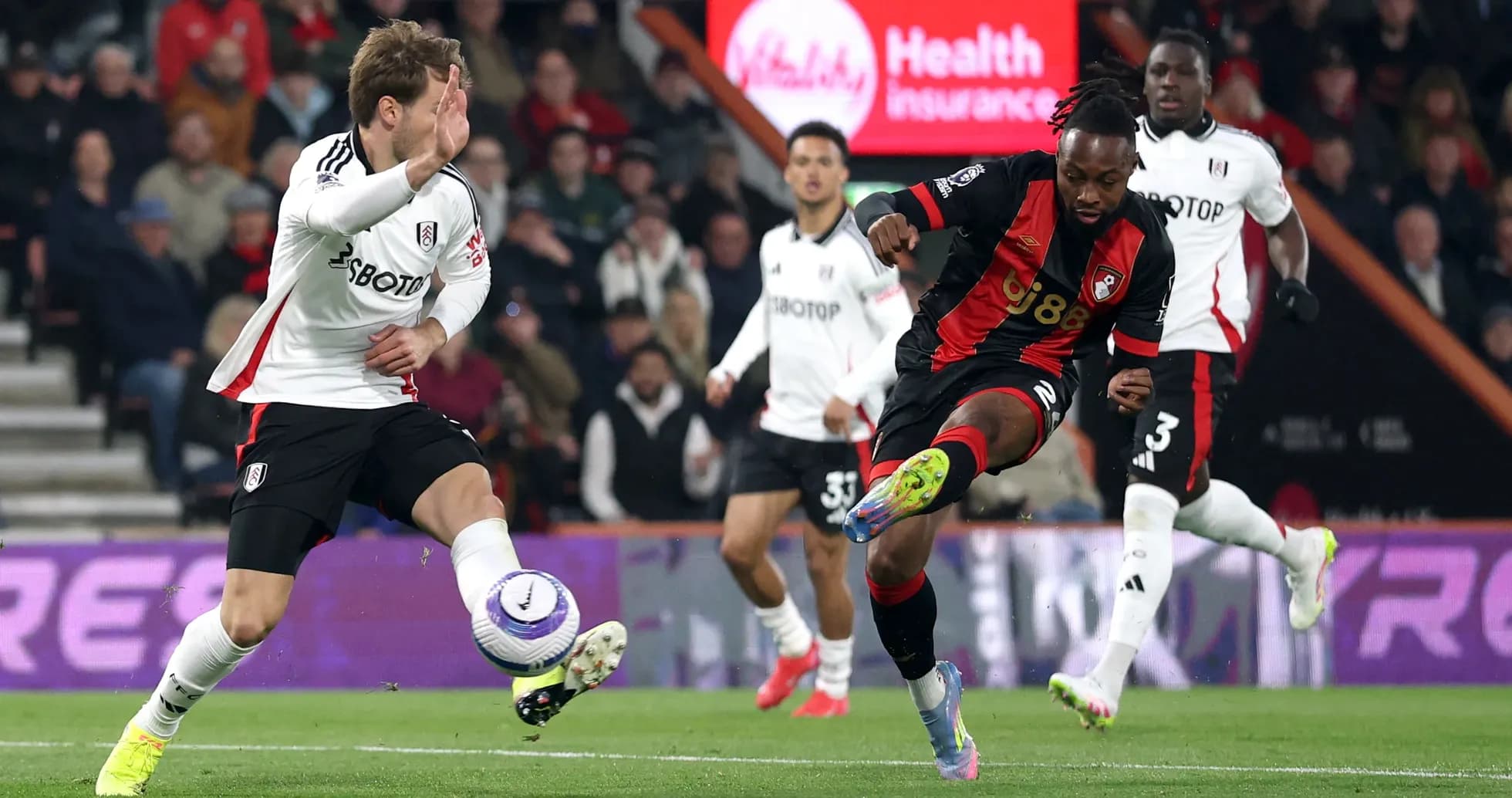
Craven Cottage felt heavy at full time, the Thames-side air thick with frustration as Fulham slipped to a 0–1 home defeat against a Bournemouth side that has quietly grown into one of the Premier League’s most reliable operators. Following this result in Round 36 of the 2025 Premier League season, the table tells a stark story: Fulham sit 11th on 48 points with a goal difference of -6 (44 scored, 50 conceded), while Bournemouth, now on 55 points with a goal difference of 4 (56 scored, 52 conceded), continue to look every inch a Europa League contender.
I. The Big Picture – contrasting identities
Heading into this game, Fulham’s season at Craven Cottage had been built on assertive home form. They had played 18 league matches at home, winning 10, drawing 2 and losing 6, with 28 goals for and 20 against. An average of 1.6 goals scored at home against 1.1 conceded underlined Marco Silva’s intent: front-foot football, even if it left them occasionally exposed.
Bournemouth arrived with a different kind of balance. Overall, they had played 36 league matches, winning 13, drawing 16 and losing only 7. On their travels, they had 6 wins, 7 draws and 5 defeats, scoring 28 and conceding 33, an away average of 1.6 goals for and 1.8 against. Andoni Iraola’s side have become one of the division’s great disruptors: always in the game, rarely blown away, and increasingly ruthless in key moments.
The 0–0 half-time scoreline reflected Fulham’s familiar pattern: at home they average 1.6 goals but are also capable of control, with 5 clean sheets at Craven Cottage this season. Yet the longer the game stayed level, the more it tilted towards Bournemouth’s mentality of grinding their way into contests and striking when the opponent’s structure loosens.
II. Tactical voids – absences that shaped the contest
Both managers had to navigate important absences. Fulham were without A. Iwobi (injury) and R. Sessegnon (hamstring injury), two players whose vertical running and one‑v‑one threat often give Silva’s 4‑2‑3‑1 an extra gear. Without them, the creative burden fell more heavily on Harry Wilson, Tom Cairney and Emile Smith Rowe between the lines, with Samuel Chukwueze asked to stretch the pitch from wide.
Bournemouth’s list was even more disruptive on paper. L. Cook and J. Soler were both missing with hamstring injuries, depriving Iraola of two midfielders who can steady possession and link phases. More crucially, Álex Jiménez was suspended. His 10 yellow cards this season underline how central he is to Bournemouth’s defensive aggression; 69 tackles, 11 blocked shots and 27 interceptions show a defender who lives on the front foot. Removing that profile forced Bournemouth to reconfigure their back line, with Adam Smith, James Hill and Marcos Senesi forming the defensive core in front of Đorđe Petrović.
Disciplinary trends hinted at an edge. Heading into this game, Fulham’s yellow cards peaked late, with 23.29% of their bookings arriving between 91–105 minutes and 21.92% between 46–60 minutes. Bournemouth, meanwhile, showed a pronounced late‑game spike: 27.71% of their yellows between 76–90 minutes and 20.48% between 91–105. Both sides are emotionally volatile in the closing stretch; in a tight contest, that risked tilting momentum on a single rash challenge.
III. Key matchups – Hunter vs Shield, and the engine room battle
The “Hunter vs Shield” narrative belonged to Bournemouth’s attacking cast against Fulham’s defensive spine. Eli Junior Kroupi, one of the league’s standout young forwards, came into this fixture with 12 goals in total from 31 appearances, scoring at a rate that belies his 19 years. His 29 total shots with 20 on target and 21 key passes speak of a player who both finishes and creates.
Opposite him, Joachim Andersen has been Fulham’s defensive metronome. Across 33 appearances he has made 45 tackles, 19 successful blocked shots and 36 interceptions, supported by 2,275 completed passes at 86% accuracy. His presence, alongside Calvin Bassey and shielded by Saša Lukić, is the reason Fulham’s home goals-against column sits at only 20 from 18 games.
In midfield, the “Engine Room” duel was layered. For Fulham, Lukić brought bite and balance: 44 tackles, 9 blocked shots and 16 interceptions in 25 league appearances, plus 50 fouls committed and 9 yellow cards. He is the enforcer whose job is to protect Cairney and Wilson’s more creative instincts. Wilson himself is Fulham’s attacking compass: 10 goals and 6 assists overall, 38 key passes and 761 total passes at 81% accuracy. He is both their top scorer and top creator in the league.
Bournemouth’s counterpoint came through Ryan Christie and Alex Scott. Christie’s season has been defined by versatility: 2 goals, 547 passes at 78% accuracy, 27 tackles and 4 blocks, plus a red card that shows his willingness to take risks in the press. Scott, more of a tempo‑setter, links the first and second phases, allowing Kroupi and Marcus Tavernier to receive in advantageous pockets.
Without Jiménez, Bournemouth’s “Shield” was more collective than individual. Marcos Senesi’s reading of the game and Adrien Truffert’s energy on the flank had to compensate for the missing aggression on the right side of defence.
IV. Statistical prognosis and what the result tells us
From a seasonal lens, Fulham’s overall averages heading into this game – 1.2 goals scored and 1.4 conceded per match – always left them vulnerable to tight margins. They had failed to score in 11 league games overall, including 3 at home, and this match became another chapter in that story. Bournemouth, by contrast, arrived with a more reliable attacking output of 1.6 goals per game overall and 11 clean sheets in total (6 at home, 5 away). Their ability to keep matches within reach and trust their forwards to find a moment was borne out by the 0–1 scoreline.
Penalties offered no twist here: Fulham had scored all 4 of their spot-kicks this season, missing none, while Bournemouth had converted all 5 of theirs, also without a miss. The decisive moment instead came from open play, aligning with Bournemouth’s broader profile as a side that does not depend on the penalty spot to change games.
Following this result, the tactical verdict is clear. Fulham’s home model remains potent but brittle; when Wilson is contained and the wide players cannot isolate defenders, their 4‑2‑3‑1 can look sterile. Bournemouth, even shorn of key figures like Cook, Soler and Jiménez, showed a mature, system‑first identity: disciplined without the ball, patient in possession, and ruthless enough to turn a marginal away performance into three points.
In a league defined by fine details, this was a match where structure, squad depth and emotional control tilted the balance. Bournemouth’s rise to 6th feels less like a surprise and more like the logical outcome of a side whose numbers, and now their narrative, are all pointing in the same direction.