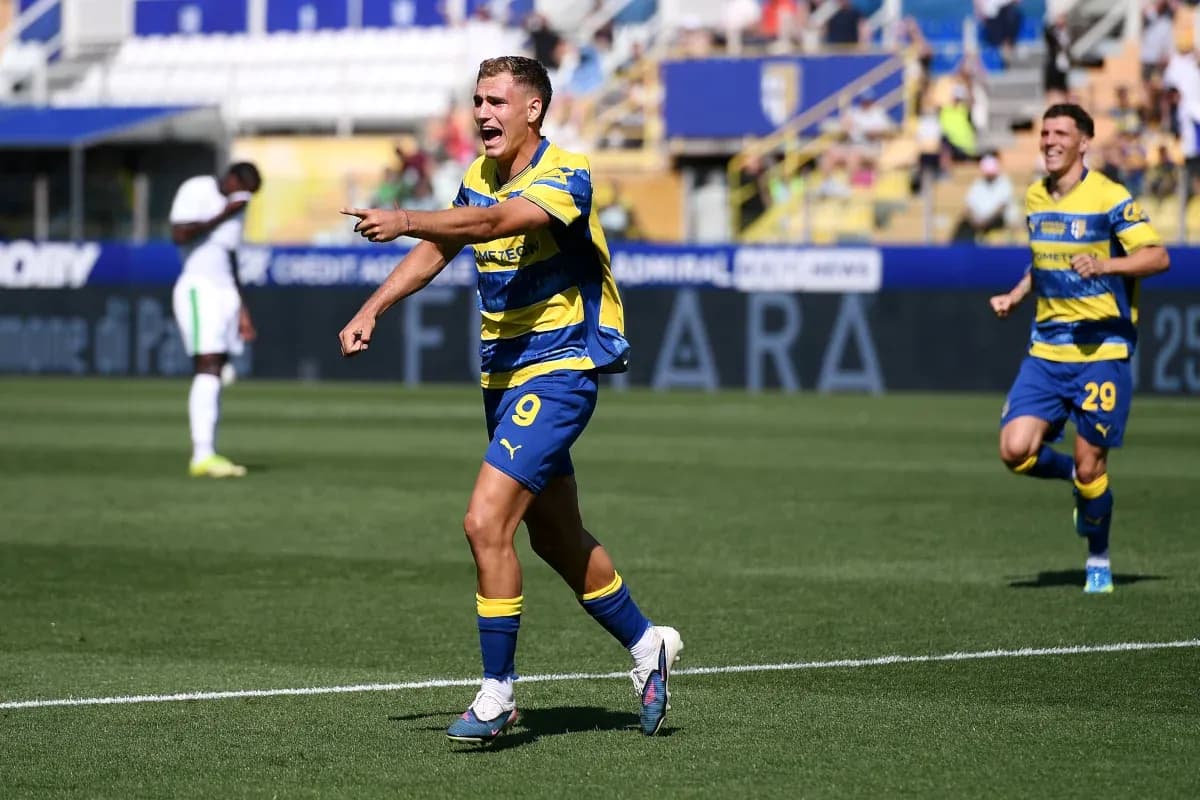
Frosinone vs Juventus: Tactical Analysis of Serie A Opener
Under the late-summer glare at Stadio Benito Stirpe, Frosinone’s return to Serie A began with a harsh lesson in elite game management. The 1–0 defeat to Juventus leaves Massimiliano Alvini’s side 14th after the opening round, with 0 points and a goal difference of -1 (0 goals scored, 1 conceded overall). Juventus, by contrast, depart Frosinone with exactly what Luciano Spalletti wanted from Matchday 1: three points, an away clean sheet, and the early imprint of a new tactical identity. They sit 8th, with 3 points and a goal difference of +1 (1 scored, 0 conceded overall).
Both teams lined up in a mirrored 4-2-3-1, but the shapes told very different stories. Frosinone’s version was about survival and structure; Juventus’ was about control, vertical threat, and the ruthless use of individual quality.
Tactical Voids and Selection Choices
Frosinone’s XI felt like a declaration of faith in youth and compactness. L. Palmisani in goal, shielded by a back four of I. Monterisi, G. Calvani, G. Cittadini, and G. Bracaglia, formed a narrow, low-risk defensive block. Ahead of them, the double pivot of G. Calo and M. Cichella was tasked with screening central spaces and offering the first pass out. The attacking band of three — S. Fini, R. Schmid, and G. Kvernadze — worked behind lone forward A. Raimondo, whose job was as much about pressing triggers as it was about finishing.
The bench hinted at alternative identities Alvini could not fully unlock in this opener: the experience and passing of F. Grillitsch, the running of I. Koutsoupias, and the direct wide threat of A. Zerbin all remained tools to reshape the game state, but Frosinone’s inability to score — they have now failed to find the net in total this campaign, with 0.0 goals per game overall and at home — shows how limited their attacking punch currently is.
Juventus arrived with their own absences. M. Di Gregorio was unavailable due to transfer negotiations, while J. Ekhator and F. Gatti missed out through injury. Yet the depth of Spalletti’s squad absorbed those losses with ease. G. Vicario started in goal, with a back four of P. Kalulu, Bremer, L. Kelly, and Z. Celik. In front, the double pivot of M. Locatelli and Douglas Luiz provided both control and vertical passing lanes.
The line of three behind R. Kolo Muani — F. Conceicao on the right, W. McKennie centrally, and K. Yildiz from the left — offered a blend of dribbling, late box runs, and creative half-space occupation. On the bench, Spalletti could still call on A. Cambiaso, D. Rugani, T. Koopmeiners, K. Thuram, N. Gonzalez, J. David, A. Milik, J. Boga, and E. Zhegrova: a bench that underlined the gulf in depth between the sides.
Disciplinary trends are already emerging. Frosinone’s yellow cards this season have been split into a clear pattern: 50.00% between minutes 31–45 and 50.00% between 91–105, a sign of late-half stress when concentration and legs fade. R. Schmid is already on the league radar for cards, with 1 yellow in his 59 minutes here. Juventus, meanwhile, show their own edge: their yellows have been shared evenly between minutes 46–60 (50.00%) and 76–90 (50.00%), a reflection of how they defend their leads aggressively as the game wears on. A. Cambiaso and Z. Celik both sit among the early carded defenders in Serie A, each with 1 yellow.
Key Matchups – Hunter vs Shield, Engine Room Battles
The defining duel of this fixture — and a signpost for the season ahead — is the emerging “Hunter vs Shield” dynamic around Juventus’ defensive core. Bremer, already on the scoresheet this campaign with 1 goal in 1 appearance, embodies the modern two-way centre-back. Against Frosinone he not only anchored a defence that has yet to concede in total this season, but also threatened in the opposition box, taking 2 shots, 1 on target, and finishing with an 8.2 rating. He completed 36 passes at 88% accuracy, added 3 key passes, made 2 tackles, blocked 1 shot, and won 5 of his 8 duels.
For Frosinone’s lone striker A. Raimondo, that is the level of “shield” he must learn to unpick. Starved of service in a team that averages 0.0 goals overall and at home, his battles with Bremer were more about survival than dominance. Until Frosinone can consistently connect their midfield three to their forward, the Hunter in yellow will remain isolated against elite shields like Bremer.
In the “Engine Room” matchup, Juventus’ double pivot decisively outclassed Frosinone’s. Locatelli and Douglas Luiz dictated tempo, constantly offering angles to recycle possession and compress Frosinone into their own third. On the other side, Calo and Cichella were forced into reactive work, rarely able to step beyond the first line of pressure.
Further forward, F. Conceicao has already emerged as one of Serie A’s early creative leaders. With 1 assist in his first appearance, 26 passes at 88% accuracy, 2 key passes, 3 shots (1 on target), and 9 dribble attempts with 4 successful, he repeatedly targeted the spaces around Frosinone’s full-backs. His duel numbers — 16 contested, 5 won — speak to a winger constantly engaging his direct opponent.
For Frosinone, R. Schmid’s role as a creative hub is still a work in progress. His 14 passes at 50% accuracy and 7 duels (2 won) underline how hard it was for him to impose himself against Juventus’ structure. Yet his willingness to draw contact — 2 fouls won, 4 committed — shows a player not hiding from the physical side of Serie A.
Statistical Prognosis and Tactical Trajectories
Following this result, the statistical profiles of both teams are starkly contrasted. Frosinone have played 1 match in total, losing it, with 0 wins, 0 draws, and 1 defeat overall and at home. They have scored 0 goals and conceded 1 overall; at home their record mirrors that: 0 scored, 1 conceded. Their average goals for stand at 0.0 overall and at home, while their goals against average is 1.0 overall and at home. They have yet to keep a clean sheet and have already failed to score once in total this campaign.
Juventus, conversely, have started with a perfect away profile: 1 match played on their travels, 1 win, 0 draws, 0 losses. They have scored 1 goal and conceded none away, giving them an average of 1.0 goals for and 0.0 against on their travels, and the same 1.0 for, 0.0 against overall. They have already recorded 1 clean sheet away and in total, and have not yet failed to score.
With no penalties taken or missed by either side so far, the margins have been decided in open play and set-piece execution. Juventus’ ability to turn defensive solidity into attacking threat — epitomised by Bremer’s early goal return and Conceicao’s creativity — suggests their xG and chance quality will remain high, even if the raw numbers are not yet visible in the dataset.
For Frosinone, the blueprint is clear: defensive organisation in the 4-2-3-1 is a necessary foundation, but without more progressive passing from the double pivot and greater support for A. Raimondo, their 0.0 goals-per-game profile will become a worrying trend rather than a one-off. The late-half yellow card spikes point to fatigue; squad options like F. Grillitsch and I. Koutsoupias may be crucial to stabilising those phases.
In tactical terms, Juventus leave Frosinone as a side whose defensive solidity and structured pressing are already aligned with their statistical profile: 0.0 goals conceded overall, a clean sheet away, and a disciplined, if combative, card pattern in the second half. Frosinone, meanwhile, must quickly turn their defensive grit into a more daring attacking identity, or risk spending the season trapped in games like this — close on the scoreboard, but always feeling a goal short of parity.