Franco Baresi: Milan Bids Farewell to Its Legendary Captain
Milan stopped on Tuesday. Not for a title parade, not for a derby, but for a farewell that felt every bit as big as any trophy the city has ever celebrated.
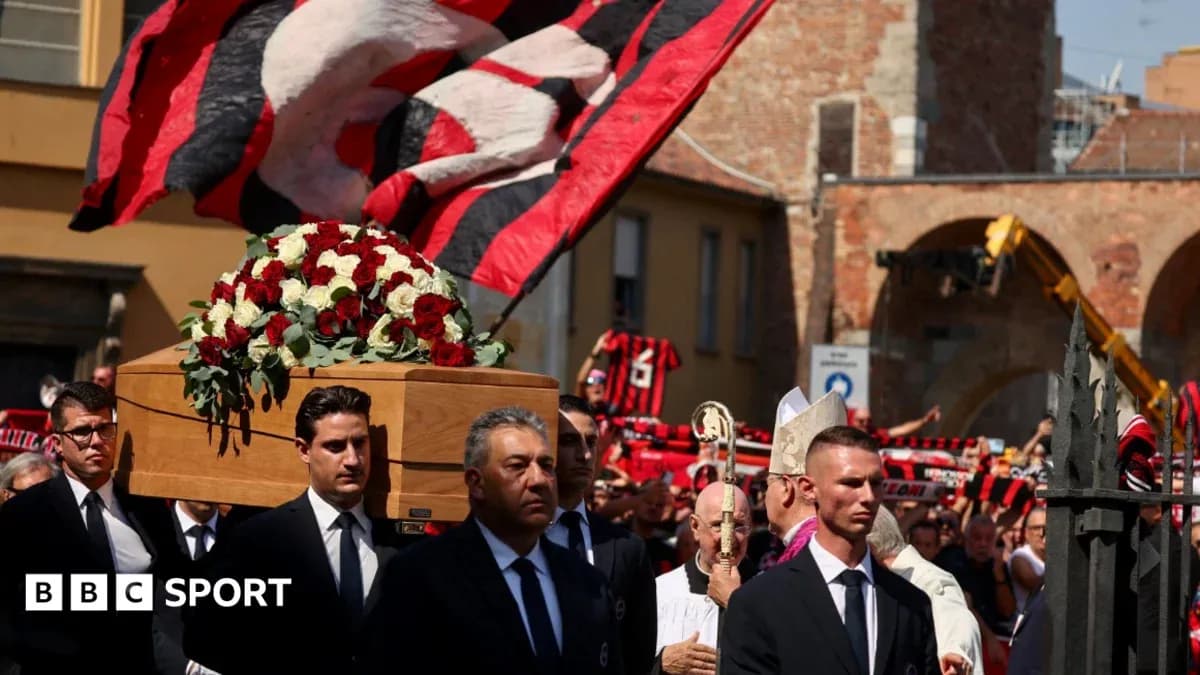
Thousands lined the streets around the Sant'Ambrogio Basilica to pay their last respects to Franco Baresi, the legendary AC Milan defender and captain, who died last week at the age of 66 after a period of ill health. Scarves were held aloft, banners unfurled, and the silence at times felt louder than any Curva Sud chorus.
This was not just a funeral. It was Milan saluting its conscience.
A career that redefined a position
Baresi is widely regarded as one of the greatest defenders the game has ever seen, a player who turned the art of defending into a kind of command. He captained Milan for 15 seasons, a span that covers some of the club’s most dominant and stylish eras, and pulled on the Rossoneri shirt 719 times, scoring 33 goals from centre-back.
The numbers only tell part of the story, but they are staggering. Across his career with Milan, Baresi collected 18 major trophies: six Serie A titles, three Champions Leagues, four Italian Super Cups, three Uefa Super Cups and two Club World Cups. He was the fixed point in a team that changed coaches, systems and stars, yet rarely its defensive heartbeat.
Italy felt his presence just as strongly. Baresi earned 81 caps for the Azzurri and was part of the squad that lifted the 1982 World Cup in Spain. Twelve years later, he captained his country in the 1994 World Cup final against Brazil, playing through injury to lead Italy onto the biggest stage, only to see the title slip away on penalties. Even in defeat, his authority and resilience became part of his legend.
Milan recognised that bond long before Tuesday. The club retired his number six shirt when he hung up his boots, a gesture reserved for the untouchables. In 2020, they went further, naming him honorary president — a formal title for a man who had long been the club’s spiritual figurehead.
Legends in the pews
Inside Sant'Ambrogio, the roll call of football royalty underlined what Baresi meant to the sport. Paolo Maldini, his old partner in that famously impenetrable back line, was there. Marco van Basten, Clarence Seedorf, Roberto Baggio, Alessandro Costacurta — names that defined eras — all took their places among the mourners.
The sight was striking: heroes of different generations united not by a match, but by the man who had anchored so many of their greatest nights. Heads bowed, eyes fixed on the coffin draped in red and black, they came not as icons, but as former teammates, rivals and admirers.
The current AC Milan squad could not attend en masse, with the team on a pre-season tour in Australia, yet the club’s present still found a way to be represented. Some first-team players not involved in the tour made the journey, including USA forward Christian Pulisic, a reminder that Baresi’s influence stretches far beyond Italian borders or defensive lines.
A city, a club, and a legacy
Outside, supporters packed the streets, many of them too young ever to have seen Baresi play live, yet old enough to understand what his name means. For them, he is the captain in grainy clips, the number six on the back of retro shirts, the standard by which every new defender is measured and almost always found wanting.
For older fans, he is something else: the player who bridged eras, from the grit of the 1980s to the elegance of the early 1990s, from domestic dominance to European supremacy. The man who made the offside trap look like choreography. The leader who rarely needed to shout to be heard.
Milan’s tribute will not end at the basilica doors. The club will honour their former captain again on Wednesday, ahead of their friendly against Inter. A derby, even on foreign soil and in pre-season, carries its own charge. This one will carry his shadow too.
In life, Franco Baresi organised the back line and set the standard. In death, he has once more brought Milan together under one idea: that some shirts, some players, some captains, are never truly replaced.