Three Hall of Famers, Ten Battles, 109 Rounds: The Forgotten Rivalry That Shaped Lightweight Boxing
The Legendary Lightweight Rivalry of Montgomery, Jack, and Williams
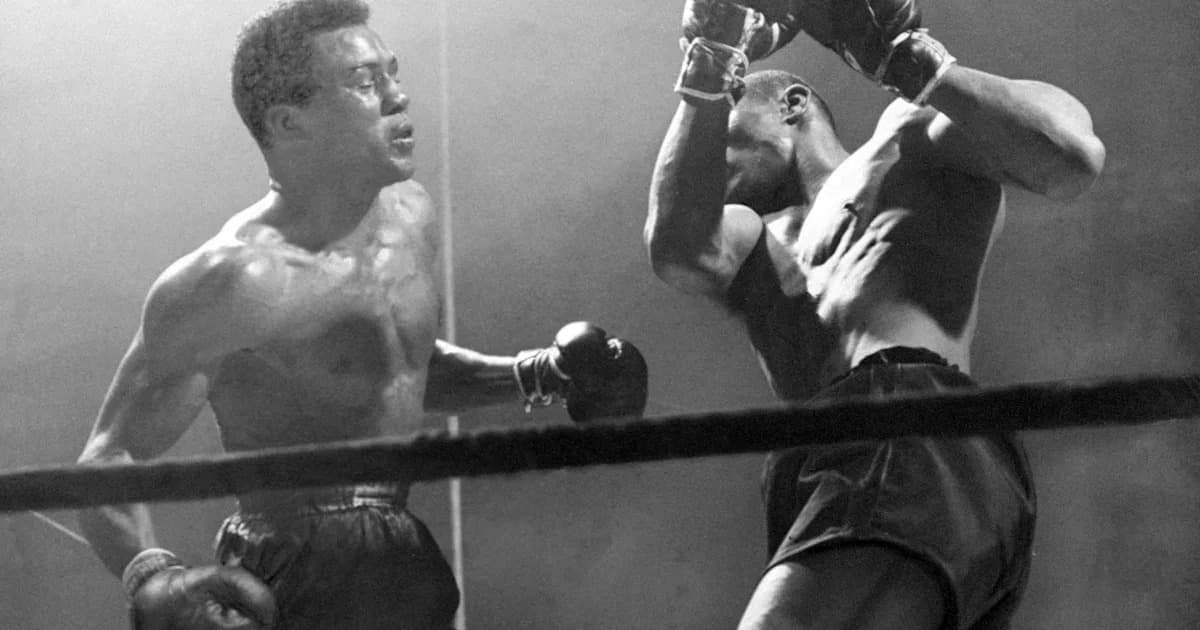
In the mid-20th century, the lightweight division of boxing was defined by an intense rivalry among three future Hall of Famers: Bob Montgomery, Beau Jack, and Ike Williams. Over more than a decade, these fighters met ten times, battling through 109 rounds that captivated fans and set a high standard for competition in the sport.
Backgrounds of Three Champions
Born between 1919 and 1923 in the American South, all three came from tough beginnings during the Depression era. Montgomery moved to Philadelphia as a teenager and worked in industrial laundry while training at a gritty gym known as The Slaughterhouse. Managed by Joe Gramby, a notable figure in Pennsylvania boxing, he earned the nickname “The Philadelphia Bobcat” for his relentless forward pressure in the ring.
Beau Jack, originally Sidney Walker from Georgia, survived a harsh childhood that included participating in brutal Battle Royales at the Augusta National Golf Club, where he also worked shining shoes and later caddying. Golf legend Bobby Jones supported his early boxing career. Williams, also from Georgia but raised partly in New Jersey, fought street battles as a newsboy before turning pro. He excelled in multiple sports during high school and trained under former boxer Jesse Goss.
Distinct Fighting Styles
Boxing historian Bert Sugar ranked Beau Jack #52 among boxing's greatest fighters, describing his style as a whirlwind of unpredictable punches from every angle, overwhelming opponents gradually. Ike Williams, standing tall at 5-foot-9, combined reach and power, with 61 knockouts marking him as a fierce puncher and a skilled boxer-puncher. Though Bob Montgomery was not listed by Sugar, he was known for his aggressive, never-back-down approach, earning him the “Bobcat” moniker for his persistence and tactical pawing of opponents.
Key Fights That Defined the Era
- May 21, 1943: Montgomery defeated Jack by decision at Madison Square Garden, winning the New York State Athletic Commission lightweight title before 18,000 fans. Montgomery’s strong finish and an 11th-round knockdown sealed the fight.
- November 19, 1943: Jack took the rematch, claiming victory over Montgomery with a game plan that included close-range fighting under new trainer Larry Amadee.
- January 25, 1944: Montgomery stopped Williams with three knockdowns in the final round in Philadelphia, ending Williams’ 34-fight unbeaten run.
- March 1944: Montgomery bounced back from a stunning loss to Al Davis and won a split decision over Jack in their third meeting.
- August 4, 1947: Williams knocked out Montgomery in Philadelphia, capturing the undisputed lightweight title with his powerful right cross.
- July 12, 1948: Williams defended his title against Jack in a brutal battle at Shibe Park, winning by stoppage after a punishing body attack.
The Final Chapters and Legacy
Williams and Jack fought four more times after 1948, including two bouts in 1955 in Georgia, their shared home state. Williams held the edge in their overall matchups, and when tallying all fights among the trio, Williams led with a 4-1-1 record, Montgomery stood at 3-3, and Jack at 2-5-1.
Only three of their ten battles ended before the final bell, meaning most contests went the full distance, demonstrating their endurance and skill. Their readiness to repeatedly face one another despite the physical toll left a lasting mark on lightweight boxing history.
“I just beat him to the punch,” said Williams after knocking out Montgomery in 1947, explaining how timing and quick reflexes sealed the fight.
These fighters built careers and legacies on facing top-level competition head-on, a commitment that seems rare today. Contemporary lightweight stars like Ryan Garcia, Gervonta Davis, Teofimo Lopez, and Devin Haney have yet to create similar rivalries, often hindered by politics and ego.
Reflecting on this era reminds us what boxing once was: raw, fearless, and built on mutual respect forged in the ring’s heat.