Forge vs York United: Clash of Strategies in Canadian Premier League
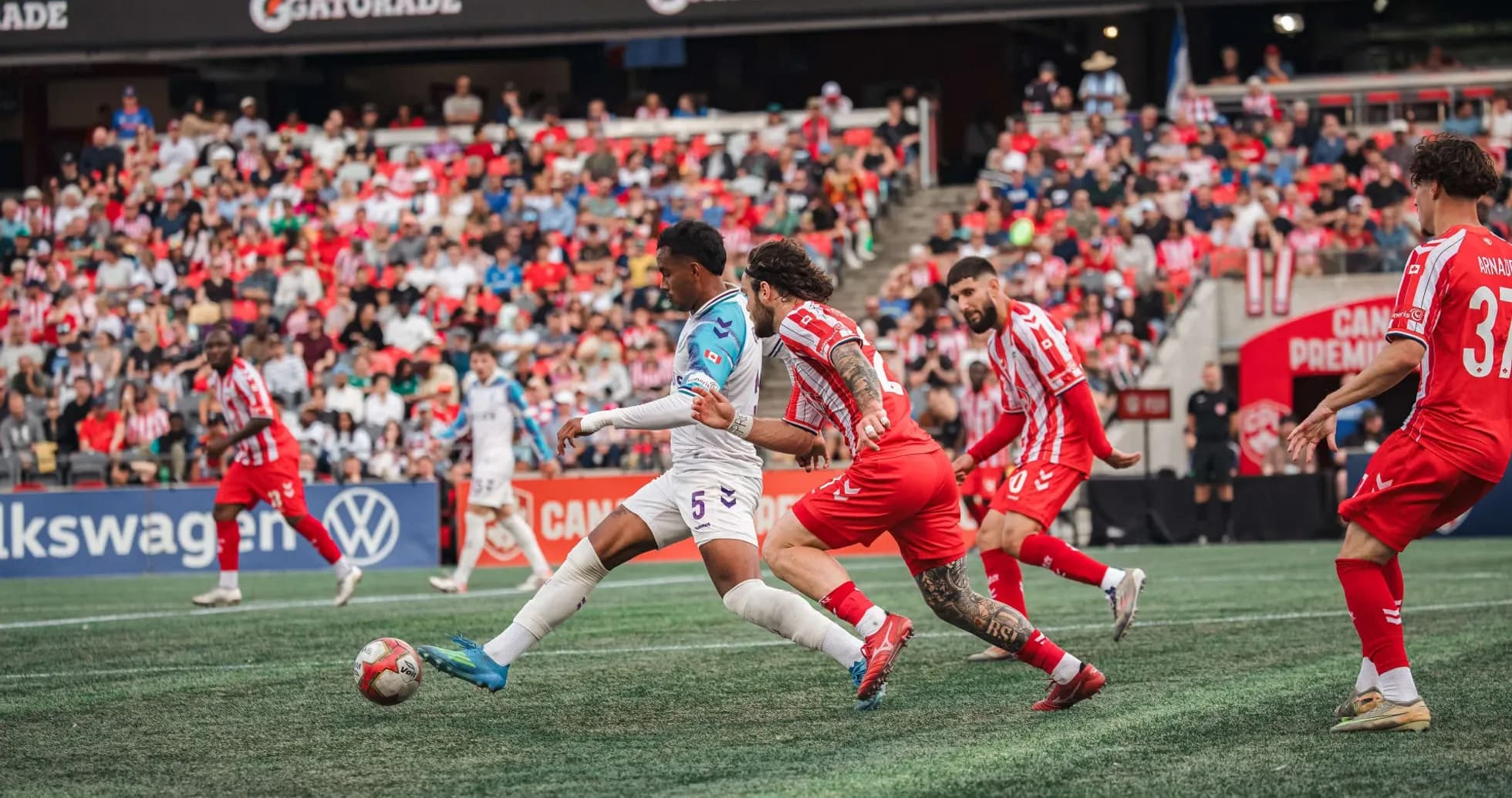
Under the lights at Tim Hortons Field, this Group Stage meeting in the Canadian Premier League brought together two very different footballing identities. Forge, second in the table on 42 points with a goal difference of 15 (30 scored, 15 conceded in total), arrived as a well-drilled contender. York United, seventh with 19 points and a goal difference of -15 (23 scored, 38 conceded in total), came as a volatile, hard-to-trust spoiler. The 1–1 final scoreline felt less like a stalemate and more like a clash of philosophies that cancelled each other out.
Forge lined up in their familiar 4-3-3 under Bobby Smyrniotis, a shape that has been their most-used setup this season. D. Bertaud anchored the side in goal, shielded by a back four of R. Rama, D. Nimick, D. Krutzen and M. Jevremović. In front of them, the midfield trio of N. Jensen, A. Aromatario and captain-like fulcrum K. Bekker was designed to control rhythm and territory. Ahead, the front three of H. Massunda, A. Sadek and N. Ampomah offered verticality and width.
Across from them, York United chose a 3-4-3 under M. Eustáquio, a system that leans into their transitional threat. Campos Ralston Kai Antonio started in goal behind a back three of L. Singh, F. Sturing and O. León. The four-man band of C. Guzmán, S. Yeates, O. Bassett and J. Córdova stretched across midfield, with a front line of K. Clarke, T. Skublak and J. Almagro tasked with punishing any Forge overcommitment.
The absences list was blank, so both managers essentially had their core available. That continuity matters for Forge: heading into this game they had played 20 league matches in total, winning 13, drawing 3 and losing 4. At home they had been particularly ruthless: 7 wins, 2 draws and just 1 defeat from 10, scoring 14 and conceding 6. That home defensive record is underpinned by a total average of 0.6 goals conceded at home per match, and Bertaud’s back line reflected that security.
York, by contrast, arrived with a season-long identity crisis. In total they had 4 wins, 7 draws and 7 defeats from 18 games. Away from home they had played 10, winning only 1, drawing 5 and losing 4, with 8 goals scored and 19 conceded. Their total away averages told the story starkly: 0.8 goals scored per away game against 1.9 conceded. This is a side that bleeds chances, yet somehow still finds ways to hang around in matches.
From a disciplinary perspective, both squads carried a certain edge. Forge’s season card profile shows a pronounced yellow-card surge between 31–45 minutes (20.00%), 46–60 minutes (20.00%) and 61–75 minutes (20.00%), with a late-game flurry at 76–90 minutes (15.56%) and even 91–105 minutes (15.56%). Red cards have been spread across 31–45, 46–60 and 76–90 minutes, each accounting for 33.33% of their total reds. In personnel terms, A. Aromatario is a walking warning sign: 8 yellows in 17 appearances, plus heavy involvement in duels and tackles. Behind him, Rama and Jevremović both feature among the league’s most carded and sent-off defenders, reinforcing the idea that Forge’s aggression is a feature, not a bug.
York’s yellow-card distribution spikes most dramatically between 61–75 minutes, where 27.45% of their yellows arrive, and 46–60 minutes at 19.61%. Their lone red in the league has come in that 61–75 window, hinting at a side that frays as legs tire and spaces open. It is not subtle: this is a team that often has to foul to survive the middle third of the second half.
Within that context, the key matchups write themselves. In the “Hunter vs Shield” duel, York’s primary threat is T. Skublak, who came into this fixture as both a top scorer and creative outlet: 4 goals and 1 assist in 16 appearances, with 16 shots and 9 on target. He thrives in duels (77 contested, 40 won) and is willing to run the channels and scrap. His task was to find cracks in a Forge defence marshalled by D. Nimick, one of the league’s standout defenders. Nimick had 3 goals this season, 458 total passes at 89% accuracy and 4 blocked shots, plus 10 interceptions. The aerial and physical battle between Skublak and Nimick was the tactical hinge of York’s attack against Forge’s shield.
In the “Engine Room,” the contrast was equally sharp. For Forge, Bekker and Aromatario offer control and bite. Aromatario’s 27 tackles, 20 interceptions and 107 duels (62 won) show a midfielder who relishes contact and recovery. Bekker, flanked by N. Jensen, orchestrates the tempo that underpins Forge’s total average of 1.5 goals scored per match and 0.8 conceded. On the other side, York’s creativity has often flowed through players like O. Bassett and the bench option B. Badibanga, the latter having 3 assists and 10 key passes in limited minutes. But starting with a more workmanlike quartet in Guzmán, Yeates, Bassett and Córdova signalled that York prioritised compactness over pure invention from the opening whistle.
Statistically, the pre-match prognosis tilted heavily towards Forge. Their total clean sheets (9 in 20) and just 4 matches in total where they failed to score offered a stable floor. Their penalty record was flawless: 3 taken, 3 scored, 0 missed, a quiet but important edge in tight games. York, by contrast, had only 2 clean sheets in total and had conceded 5 in both their heaviest home and away defeats. Their total average of 2.1 goals conceded per match hinted that any extended Forge pressure would eventually tell.
Yet the 1–1 final tells of a York side that, for one night, bent but did not break. Forge’s 4-3-3 structure still generated territory and possession, but York’s 3-4-3 shell, with Skublak as the out-ball and Clarke and Almagro flaring wide, repeatedly disrupted Forge’s rhythm. The match became a negotiation between Forge’s methodical, high-floor football and York’s opportunistic, high-variance approach.
From a forward-looking tactical lens, this draw will sting Forge more. Their total form line of WWDWWWLWWWWWWDLLWWLD speaks of a side used to stacking wins, especially at home. Dropping points here keeps the door ajar for the pack behind them. For York, however, this result fits their recent pattern of stubborn resistance: their form of DLDWD suggests a team slowly rediscovering its capacity to frustrate.
In the end, the numbers still insist that over a long run Forge’s structure and defensive solidity will outpace York’s volatility. But this match, at least, was a reminder that in a single 90-minute story, a disciplined back five, a tireless front three and a striker like Skublak can tilt even the most lopsided statistical preview back towards balance.