
Football's Heavyweights Redraw Their Lines
On a single afternoon, football’s present, past and future all nudged forward a step. A haircut in London, a crest in Paris, a farewell in Munich and a balance sheet that once again points towards Stamford Bridge.
Cucurella, the ink and the scissors
Marc Cucurella has never exactly blended into the background. The hair alone made sure of that. Now the Chelsea full-back has doubled down on the image game.
After having the face of his Spain coach Luis de la Fuente tattooed on his elbow – a striking, deeply personal tribute to the man who has backed him at international level – Cucurella has followed it up with a fresh haircut. The trademark wild mane has been reshaped, the look sharpened.
It is a small detail in the grand scheme, but it fits the mood around him: a player very aware of who helped him get here, and very comfortable putting that story on his skin and on his head for everyone to see.
Les Bleus redraw their identity
Across the Channel, another image was being reworked – this one belonging to a nation.
On Wednesday afternoon, the FFF unveiled a new logo for the France national team, a fresh version of the crest that has sat on the chests of World Cup winners and European champions. The cockerel remains, of course. The blue, the elegance, the sense of history are still there. But the lines, the finish, the overall feel have been modernised.
It is the latest chapter in a long visual journey. From more modest, almost minimalist early designs to the bold, star-topped emblems of the modern era, Les Bleus’ badge has mirrored the growth of French football itself – from promising contender to global benchmark.
The new crest will inevitably divide opinion at first. They always do. Over time, it will be judged by the memories made beneath it.
Mbappé, Zidane and the weight of heritage
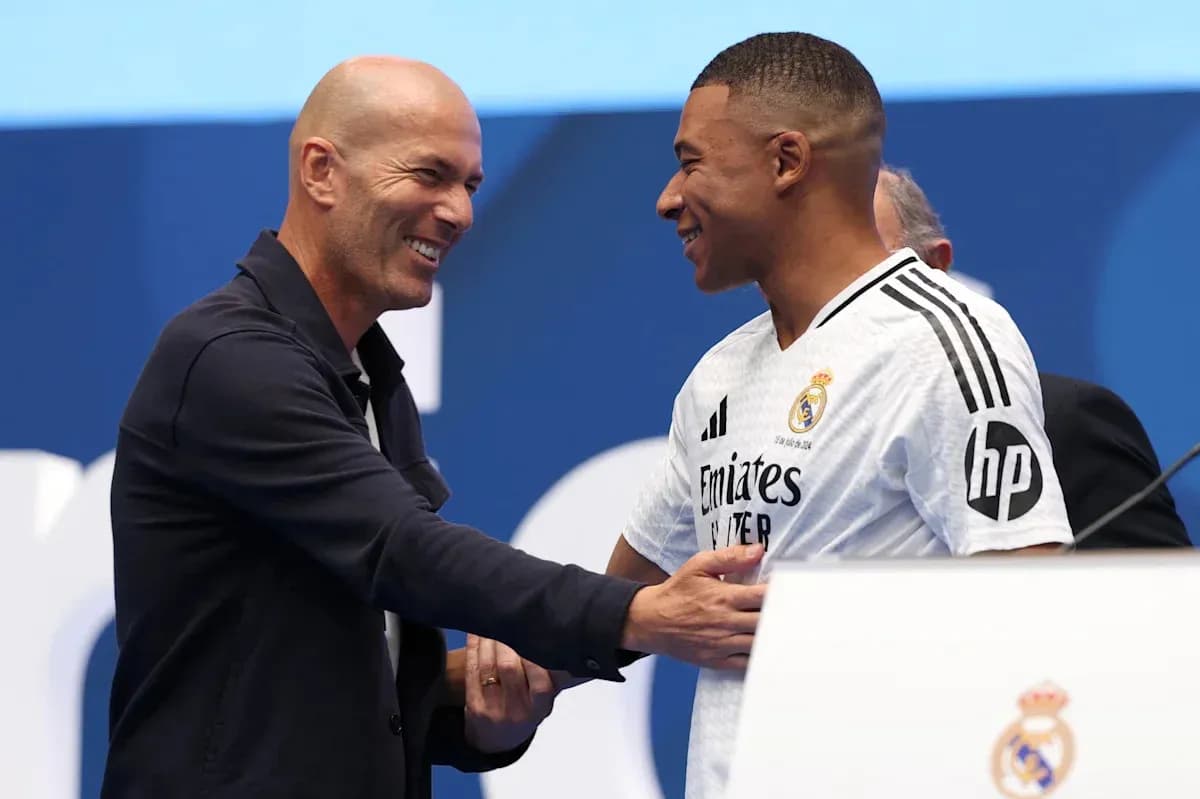
That sense of heritage was underlined again in an archival video that brought together two names that define different eras of French greatness: Kylian Mbappé and Zinedine Zidane.
The footage, revisited this week, throws them into the same frame and the same conversation. Are these the two best players in the history of the France national team? The question hangs there, impossible to answer definitively, irresistible to debate.
Zidane, the conductor of 1998 and 2000. Mbappé, the jet-heeled finisher of 2018 and the standard-bearer for the next decade. Different styles, different contexts, the same impact on a country that measures itself by what happens in July and December on the biggest stages.
Neuer sets his final date
In Germany, one of the game’s true revolutionaries has put an expiry date on an era.
Manuel Neuer, the legendary Bayern Munich and Germany goalkeeper, has confirmed he will retire from professional football at the end of the 2026-27 season. The statement draws a clear line in the sand: three more campaigns, then the curtain comes down.
Neuer did not just keep goal; he redefined the job. The sweeping, the starting positions near halfway, the calm under pressure with the ball at his feet – they all changed what coaches expected from a No. 1. For Bayern, he has been the constant behind a dynasty. For his successors, he has been the template.
Now everyone knows the clock is ticking. Bayern must plan for life after a giant. The Bundesliga must imagine Saturdays without that familiar figure in luminous kit, stepping out of his box as if it were the most natural thing in the world.
Chelsea, the €100m specialists
Back in England, Chelsea continue to bend the transfer market to their will.
The club now stand alone as the team with the most transfers worth over €100 million in football history: five such signings. No one else has pushed through that particular glass ceiling as often. The number underlines the scale of the project at Stamford Bridge – aggressive, expensive, unapologetically bold.
Real Madrid are expected to move closer. The Spanish giants are poised to make it four €100m-plus signings with the arrival of Yan Diomandé, tightening a race that exists almost entirely in the rarefied air of super-club finance.
These are not normal deals. They are statements, gambles, declarations of intent that shape squads and balance sheets for years.
A shirt without a sponsor, by design
Chelsea’s strategy is not just about who wears the shirt, but what – or who – appears on the front of it.
For the fourth consecutive season, the Blues will start the campaign without a shirt sponsor. In an era when every inch of fabric is usually monetised, that bare blue chest is a striking sight.
This is not a failure to find a partner. It is a deliberate call. BlueCo’s leadership has embraced the idea of waiting, holding out for a more lucrative, long-term agreement rather than signing a deal that undersells the scale of the Chelsea brand.
It is a risk. Lost short-term revenue is never taken lightly at this level. Yet it also speaks to the club’s confidence that, in a market where visibility is everything, their shirt remains one of the most valuable billboards in world sport.
From Cucurella’s elbow to Neuer’s farewell date, from a new French crest to another nine-figure transfer, the game keeps rewriting its own image. The only real question is which of today’s bold choices will still look wise when the next generation looks back at this moment and decides what truly mattered.



