Final Day Drama: Tottenham and West Ham's Survival Battle
The final day arrives like it always does in this league: loud, messy and gloriously overcaffeinated. Ten games kicking off at once, nerves shredded in a dozen postcodes, radios hissing out rumours of goals elsewhere that may or may not exist. Somewhere, inevitably, two mid-table sides will stage a ludicrous 5-4 that means absolutely nothing and yet feels like everything.
The title race has failed to stagger over the line, but the season still has teeth. Tottenham, reliably incapable of doing anything the easy way, have turned what should have been a quiet stroll into a full-blown relegation scrap. Because of course they have.
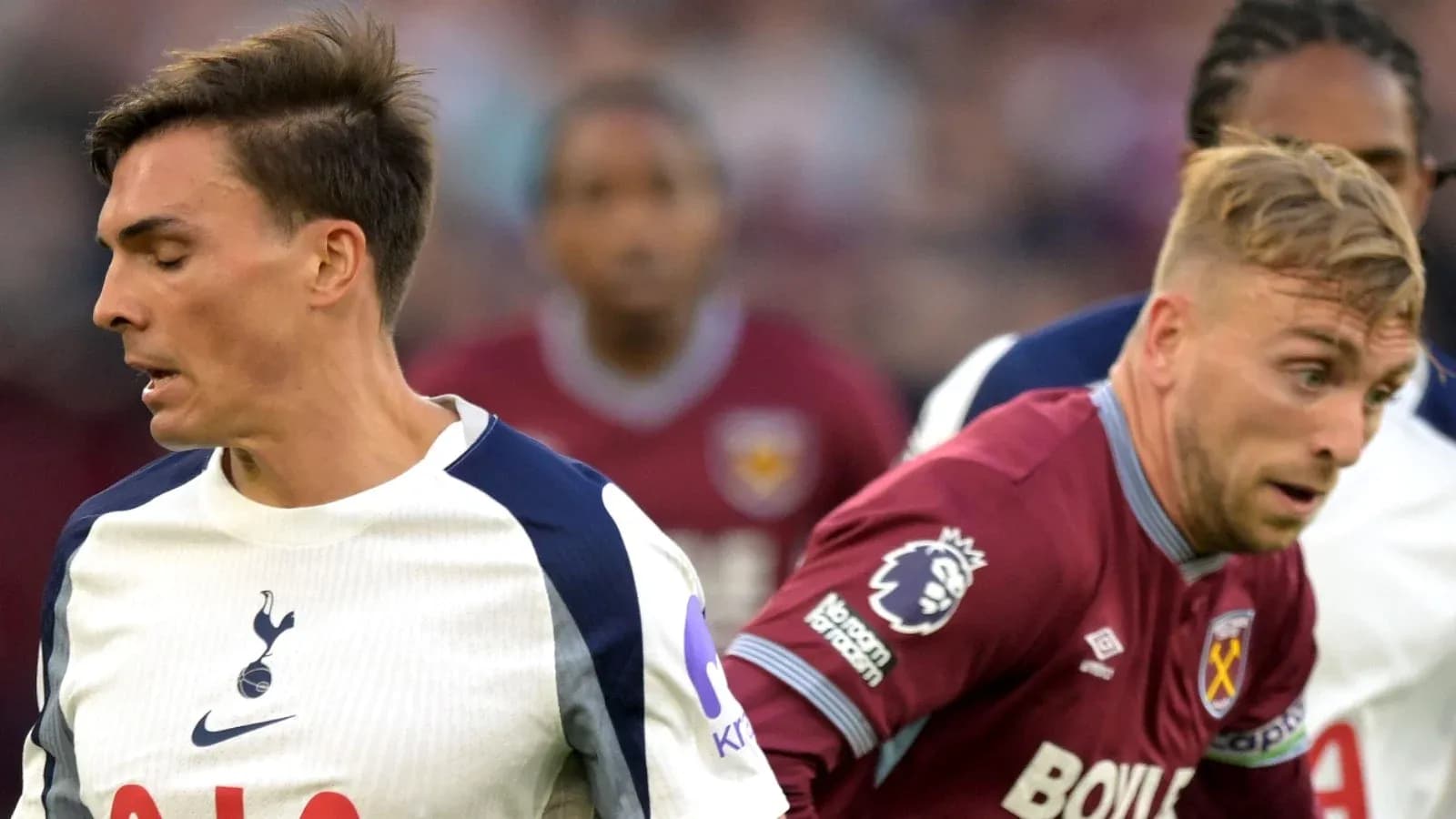
Forget the polite jostling for European places. The real theatre sits at the bottom, where Spurs and West Ham are tethered together by mathematics and dread.
And nowhere crackles quite like north London.
Game to watch: Tottenham v Everton
James Maddison called it “embarrassing.” He wasn’t wrong. Tottenham Hotspur, a club that began this era dreaming of titles and Champions League nights, arrive at the final day needing a result simply to stay in the Premier League.
The numbers are cruel. They finished 17th last season with the same points total they carry into this weekend. Back then, they were safe early because three clubs were marooned at the bottom. This time there are only two, and the trapdoor is far closer.
Last season’s late collapse came with a caveat: once a three-game winning run in February had pretty much secured survival, the club quite obviously shoved its chips onto the Europa League. It was still a collapse, but at least it had a flimsy alibi.
This year? No such luxury. Just another catastrophic injury list and the uncomfortable truth that the club saw one crisis coming and chose to do nothing.
The decision in January to neither properly back nor sack Thomas Frank might yet define the season. On the right wing in particular, it was damning. Selling Brennan Johnson early in the window made financial sense and, on the evidence of his Spurs and Crystal Palace form, wasn’t a sporting disaster. The real negligence came in the aftermath: watching Mohammad Kudus suffer a serious injury in the very next game and then spending the remaining weeks of the window doing almost nothing to replace either of them.
If the worst happens on Sunday, that inertia will sit at the heart of every post-mortem. Even if they survive, it’s hard to see how Chief Executive Vinai Venkatesham or sporting director Johan Lange credibly escape scrutiny after presiding over a season this shambolic.
Roberto De Zerbi has at least given the team shape and some attacking structure, but his work keeps smashing into the same wall: there simply aren’t enough fit, reliable forwards. Once again, he will almost certainly be forced into a front three of Richarlison, Mathys Tel and the wildly out-of-form Randal Kolo Muani, then pray that Maddison’s half-hour cameo off the bench is not a last roll of the dice but a chance to put a bow on the job.
Maddison’s brief appearances against Leeds and Chelsea have been revealing. Even nowhere near full sharpness, he has transformed Spurs’ attacking play in those 20-minute bursts. That glow only throws the rest of the season into harsher light. This team, without him, has looked utterly blunt.
The equation is simple: one point keeps Spurs up, barring the sort of freak event that belongs in folklore – West Ham scoring a dozen against Leeds. On paper, Everton are ideal opponents. They have faded badly since early March, their push for European football evaporating in a long, weary exhale.
But nothing about this Spurs side invites certainty. A good start feels essential. Even under De Zerbi, this remains a group whose confidence evaporates at the first hint of trouble. Go behind, and they don’t respond; they unravel.
We’ve seen it already. At Sunderland and Chelsea they were fine until the opening goal went against them, then visibly shrank. At home to Leeds, they went from cruise control to panic the moment the equaliser went in.
On Sunday, the danger doesn’t even have to come from their own match. Imagine the Tottenham Hotspur Stadium, already tight with tension, hearing that West Ham have scored. Imagine that noise. Imagine those players, already brittle, feeling the walls close in.
Mathematically, nine different combinations of results across the two key fixtures decide the relegation picture. Eight of those keep Spurs safe. Yet this is Tottenham. There is always the nagging suspicion they might find the one remaining disaster and walk straight into it.
Lose, and the cameras swing east.
Team to watch: West Ham
West Ham United enter the final day staring at a possibility rather than a probability. Survival is out of their hands, but not out of reach. They face Leeds, who on current form represent a far stiffer challenge than Everton.
The damage at Newcastle last weekend still stings. That limp, half-hearted performance looked like a team resigned to its fate. All they could realistically hope for was a final-day scenario where the door remained ajar. They have it.
The problem? Leeds look like the worst possible opponents for a side in need of mercy. They are unbeaten in eight and have shown little appetite for coasting. They had nothing tangible to play for last weekend either, yet still beat a Brighton team fighting for Europe.
This does not look like a Leeds side interested in cigars and flip-flops.
So West Ham must do what they failed to do at St James’ Park: treat this as the all-or-nothing occasion it is. They need to land the first punch, to send a shudder of anxiety up the M1 and into that nervous bowl in north London.
If they score early, if word filters through to Spurs, everything changes. Suddenly the league table on the big screens and the whispers from the stands become part of the gameplan.
It remains a long shot. But it is a live one. Take care of their own business, and West Ham can at least demand that Spurs prove they are not quite as fragile as the rest of the country suspects.
Manager to watch: Pep Guardiola
At the other end of the table, a very different kind of farewell. Pep Guardiola, like Sir Alex Ferguson, Arsène Wenger and Jürgen Klopp before him, walks away from the Premier League in a way that makes it almost impossible to picture him prowling any other technical area in this country.
His Manchester City side face Aston Villa, the Europa League winners, in a game stripped of jeopardy. Arsenal’s relentlessness and City’s own midweek stumble at Bournemouth have removed the last banana skin from his path. No title race, no late twist, just a lap of honour that never quite materialised.
On paper, a domestic cup double with a remodelled squad is no failure. It is a season many managers would frame on the wall. But Guardiola has spent a decade in this league resetting the definition of success. Six titles in seven seasons at their peak, 95 points and beyond just to be in the conversation.
To depart after one year with no title challenge and another with a flawed, faltering one will itch at him. He leaves, by any sane measure, as the second-greatest manager the Premier League has seen.
Given the man in first place, that is not a bad place to stand.
Player to watch: Mohamed Salah
Another goodbye, this one far more sour. Mohamed Salah’s final season at Liverpool has played out in a minor key: frustration, visible irritation, the sense of a great player misaligned with the team around him.
Without Trent Alexander-Arnold dovetailing behind him, Salah has often looked isolated. His body language has told its own story, from touchline spats to prickly post-match comments and the occasional misjudged social media appearance.
It is a bleak way for an all-time Premier League and Liverpool great to bow out, especially 12 months on from Alexander-Arnold’s own fractious exit. The pair who defined an era on that right flank depart under clouds that feel entirely avoidable.
For our purposes, though, there is no ambiguity. Liverpool need a point to lock in Champions League football next season, and Salah will be at the heart of the narrative whatever role he plays. If he starts, all eyes are on his final act. If he sulks on the bench, the cameras will linger there too. If he drifts somewhere between the two, the story writes itself.
On a day when ten games unfold at once, he remains the player you keep checking back on. Even if he never steps onto the pitch. Perhaps especially then.
Football League game to watch: Hull City v Southampton Middlesbrough
The Championship play-off final rarely needs extra drama. Promotion is worth around £200m; tension is baked into the occasion. This year, though, the stakes have been wrapped in farce.
Southampton’s “Spygate” fiasco has already cost them dear. The method was almost comically low-rent: no drones, no elaborate tech, just an intern with a phone and not even the basic guile to blend into the background. The price of that stupidity has been enormous.
Middlesbrough, in all this, occupy a strange middle ground. They are victims in one sense, beneficiaries in another. While debate rages over whether Southampton’s punishment fits the crime, it is just as fair to ask how much fortune has smiled on Boro.
The true innocents are Hull City. They did everything by the book, navigated a two-legged semi-final, and earned their place at Wembley in the old-fashioned way. Yet they are the ones most profoundly inconvenienced by the chaos.
Southampton cheated. Middlesbrough lost. Traditionally, the latter ends your season. Yet both clubs at least had the luxury of preparing for a binary outcome: face Hull or don’t. Hull had no such clarity. They only discovered their opponents less than 72 hours before the final.
And still, you can feel the gravitational pull of football’s mischief. All the narrative threads tug in one direction: Middlesbrough, the semi-final losers, somehow walking away with promotion and a place in history as the strangest winners of the £200m match.
European game to watch: Bayern Munich v Stuttgart
Beyond England, another familiar figure chases another piece of silverware. Harry Kane, now the spearhead of Bayern Munich, stands one game from the DFB Pokal as the Bundesliga champions meet holders Stuttgart.
It is easy to treat a Bayern cup final as a formality, but the reality is more nuanced. They have not lifted this trophy since 2020, when they claimed their 20th Pokal. They have not even reached the final in the five seasons since.
Stuttgart, by contrast, arrive as defending champions and history-makers. Last season’s triumph was their fourth, and this appearance gives them back-to-back finals for the first time. Twice before they have met Bayern at this stage, in 1986 and 2013. Twice they have gone home beaten.
Kane’s career has been defined by near-misses and almosts. The stage is set again: a giant rediscovering its appetite, a holder chasing a new chapter, and a striker who has spent a lifetime waiting for nights like this.
On a weekend of finales and reckonings, it feels fitting that even in Germany, the story comes back to a familiar English question: who blinks when the pressure bites?