FIFA World Cup 2026: Top Scorers, Assists, and Key Stats from the Tournament
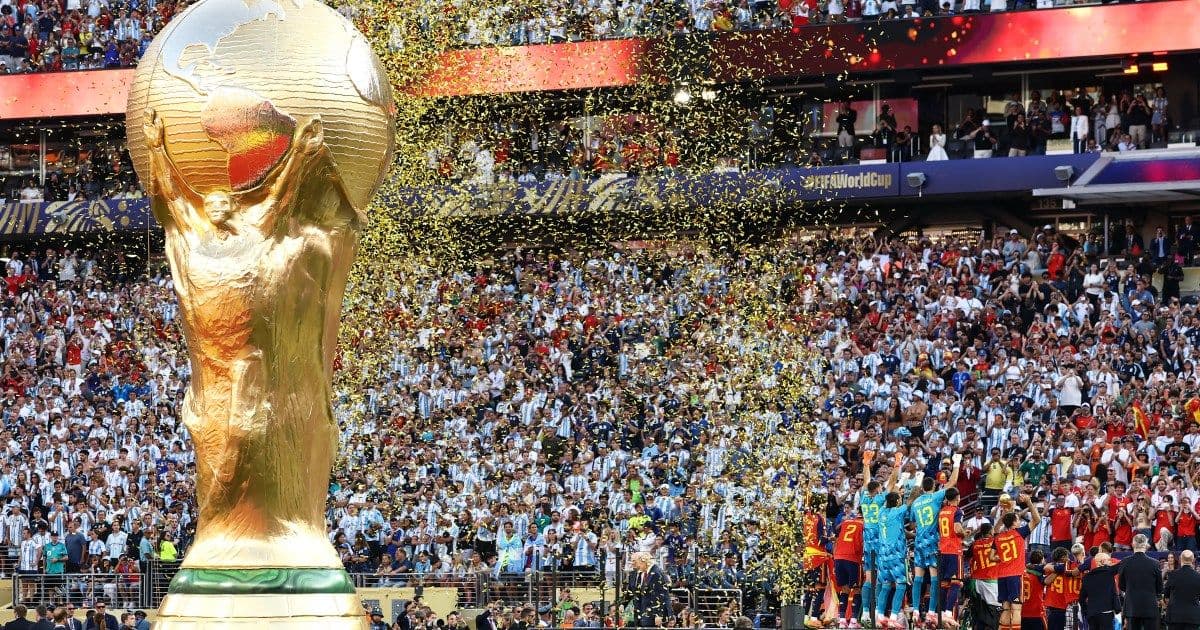
The 2026 FIFA World Cup, the largest yet, featured 1,039 players from 48 countries competing in 16 venues. Across 104 matches held over 39 days, teams scored a total of 308 goals. This edition was hosted by three nations, marking a milestone in tournament history with numbers surpassing those of the 2022 event in Qatar.
Leading Goal Scorers and Assist Providers
Kylian Mbappe, representing France and Real Madrid, secured his second Golden Boot by netting 10 goals, becoming the first player to reach that tally since West Germany’s Gerd Muller in 1970. He also set a new record as the all-time top scorer in World Cup history with 22 goals after scoring twice in France’s third-place match against England. Lionel Messi followed with eight goals and four assists, while England's Jude Bellingham made history as the first Englishman to score seven goals in a World Cup.
France led in assists, highlighted by Bayern Munich's Michael Olise who made seven assists during the third-place clash against England. Five others, including Norway’s Martin Odegaard and Messi, contributed four assists each.
Team Offensive Performances
England and France both scored 20 goals. England recorded 14 assists and maintained 50% possession with 118 goal attempts (52 on target). France exceeded these attempts with 139 (59 on target) and controlled 51% possession, alongside 18 assists.
Goalkeeping Highlights and Defensive Records
Paraguay’s goalkeeper Orlando Gill stood out for crucial saves that helped his team upset Germany, especially in penalty shootouts. Spain’s Unai Simon earned the Golden Glove for his overall performance, while Cape Verde’s debutant Vozinha made several memorable saves.
Spain topped clean sheets with seven, while France, Colombia, and Mexico each recorded four. Countries like Argentina, Morocco, England, Brazil, Ivory Coast, and Paraguay managed two clean sheets apiece.
Other Defensive and Disciplinary Stats
Qatar and Egypt had the highest number of own goals, with two each, while ten other nations had one own goal. Teams conceding the most goals included Iraq, Tunisia, and England with 12 each.
Discipline-wise, Argentina received 15 yellow cards, the most of any team, closely followed by Egypt with 12, a match noted for its tension and controversies. Canada and Paraguay also collected multiple yellow cards. Red cards were rare, with Qatar and South Africa each having two.