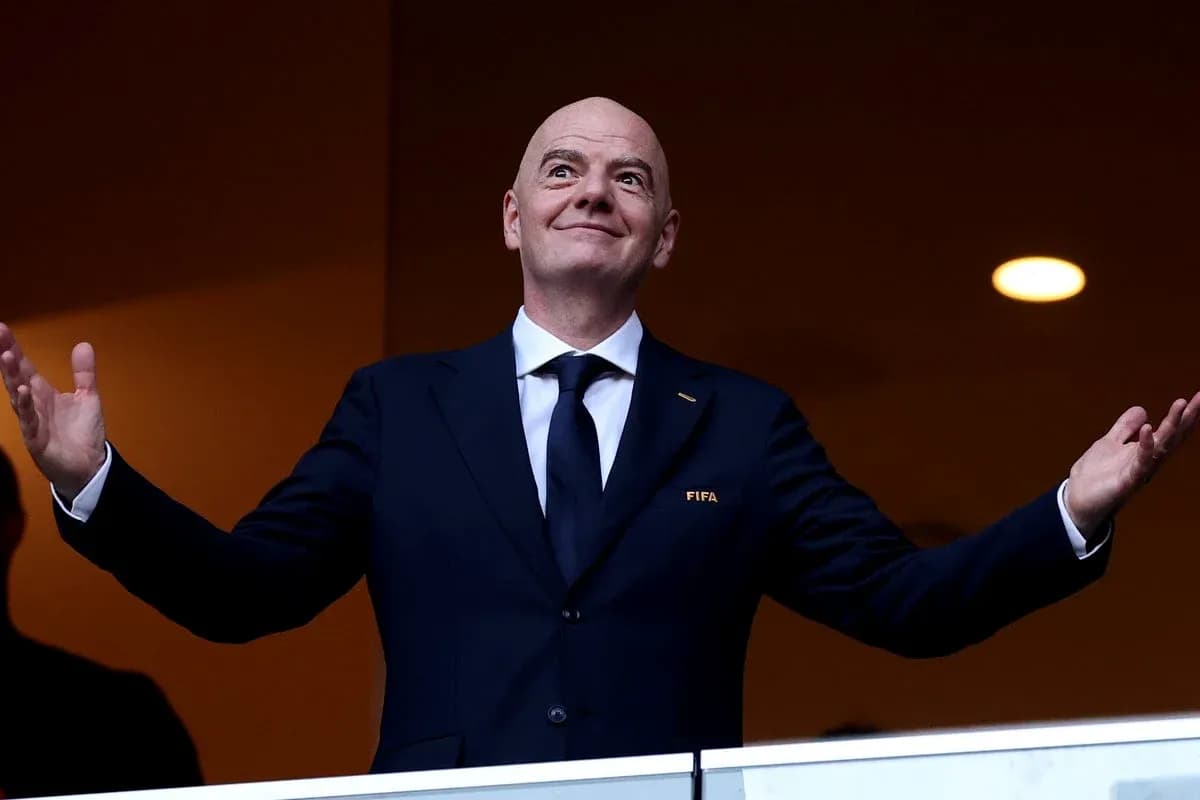
Fifa's Confidence Crisis: Infantino's Leadership Under Fire
Fifa says confidence is being restored. How do we know? Because Fifa says so.
In a week when world football’s governing body has been fighting off accusations of trying to hawk off the World Cup, it responded with a statement that read like something from a parallel universe. A “constructive and positive meeting held in Rabat, Morocco”, we were told, had set everything straight.
Only one problem: in Fifa’s sprawling empire of 211 member associations, the only elected official with real power remains the president, Gianni Infantino. And a growing number of those very associations either want him gone or have lined up against the plan at the centre of this storm – the so‑called “Fifa Forward Enterprise proposal”, as the organisation itself branded it.
That proposal is now “off the table”. Fifa’s words again. Yet the tone of its communique suggested that the real scandal, in its eyes, was not the attempted sell‑off of the sport’s crown jewel but the “attacks” on Fifa’s integrity.
One man, one crisis
Strip away the jargon and the story is brutally simple. A global sport was plunged into chaos by one man. Either Infantino dreamt up a radical restructuring of football’s future and forgot to tell almost anyone – not Fifa’s chief operating officer Kevin Lamour, not its head of global football development Arsène Wenger, not the confederations, clubs, national FAs, players or supporters – or he tried to stage a power grab against the game itself.
The fallout forced an emergency gathering. After that, Infantino and the secretary general, Mattias Grafstrom, emerged with a joint letter that tried to draw a line under the affair and instead exposed the scale of the delusion.
“Fifa’s top management is fully confident that the outcomes of today’s meeting will help restore confidence in the organisation,” it declared. Nineteen words that say everything about the bunker mentality at the top of Zurich’s glass towers.
Infantino, who intends to stay exactly where he is, has managed something remarkable. He is either the most divisive figure in modern football or the most unifying – in the sense that he has brought together a vast coalition of clubs, leagues, associations and fans in opposition.
The letter insisted that “mistakes made were acknowledged”. It sounded conciliatory. The substance was anything but.
Secrecy, money and a non‑apology
“It was agreed that it was not the intention for the Fifa council and Fifa member associations to feel excluded from the process,” the statement added, in what passed for a mea culpa.
Read that again. Not the intention for them to feel excluded. So why were they excluded?
This was a scheme so secretive that, as critics pointed out, it seemed to be shared with a select few in the Kushner family before it reached much of the football world. National associations were told that if they backed the proposal, they would receive more money from Fifa than those who did not. Many saw that as perilously close to bribery. The word does not appear anywhere in Infantino’s letter.
He has now promised there will be no repeat. A review will be conducted. But who will run it? The same Infantino‑aligned hierarchy that designed the project in the first place, and that will be trusted to deliver the “right” conclusions.
Question that logic and, in Fifa’s eyes, you are attacking its honour.
The victim complex
“It was agreed that Fifa will no longer tolerate any attacks on its integrity, good governance and due process and will take all necessary measures to protect and safeguard its name and reputation,” the letter warned.
This is not the language of reflection. It is the language of a regime that sees itself as the injured party. The comparison with Donald Trump – a man Infantino has happily courted – is hard to ignore. Both cast themselves as victims of unfair persecution. Both rail against a hostile world while using power to bend rules in their favour.
The problem for Fifa is that the reputation it now wants to “safeguard” has already been dragged through the mud on Infantino’s watch.
This is the organisation that quashed suspensions for Cristiano Ronaldo and Folarin Balogun. That twisted competition criteria to usher Lionel Messi’s Inter Miami into the Club World Cup. That allowed the United States to bar Somali referee Omar Artan from entering the country. That embraced Trump. That created a peace prize, only to hand it to a man who would go on to start an illegal war.
The cost of greed
Under Infantino, Fifa has become a byword for greed. In the United States, where fans are not shy about naming culprits, it was Fifa – not faceless “organisers” – that many blamed for eye‑watering ticket prices. The governing body did not look like a neutral custodian of the game when it offered preferential treatment to the Trump administration and let the White House loom over key decisions.
It did not look like a representative of the global game when it tried to commercialise the World Cup in near‑secrecy, leaving large parts of the football world in the dark about a plan that would have reshaped the sport’s economic future.
Those choices have consequences. Trust, once broken, does not return because of a carefully worded letter or a meeting in Rabat.
If Fifa truly wants to repair its standing, it will take something it has not yet shown: blunt honesty and a willingness to change who runs the show. The latest dispatch from Infantino’s inner circle offered neither.
The question now is not whether Fifa can restore confidence with words. It is whether world football is prepared to let this leadership keep testing how much damage the game can absorb.