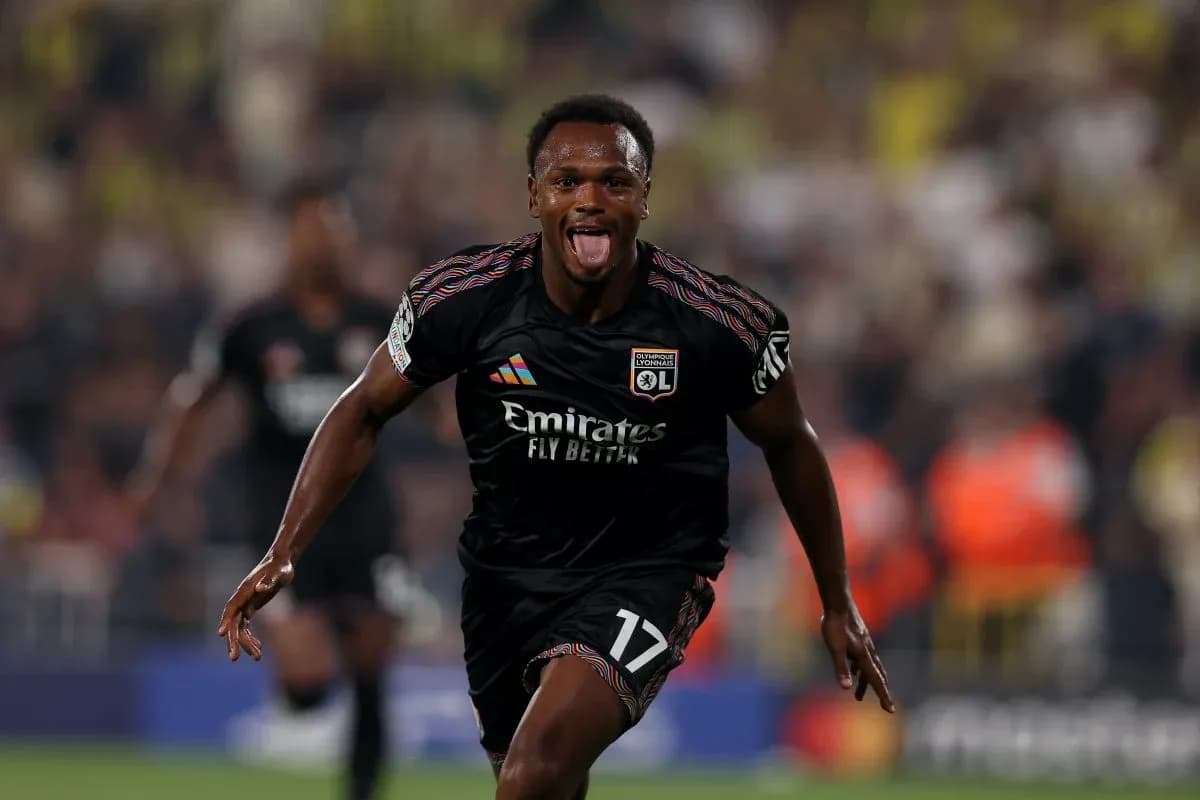
Fenerbahçe vs Lyon: Tactical Analysis of a 1-1 Draw
Fenerbahçe and Lyon produced a tactically tight 1-1 draw at Chobani Stadium in the UEFA Champions League Play-offs, a match defined by mirrored structures and marginal adjustments rather than wild momentum swings. Both sides lined up in a 4-2-3-1, and the final numbers – 12 shots each, 5 shots on goal apiece, 52%-48% possession – reflected a contest where neither team was able to impose sustained dominance, but each found a way to land a decisive punch in one half.
First Half
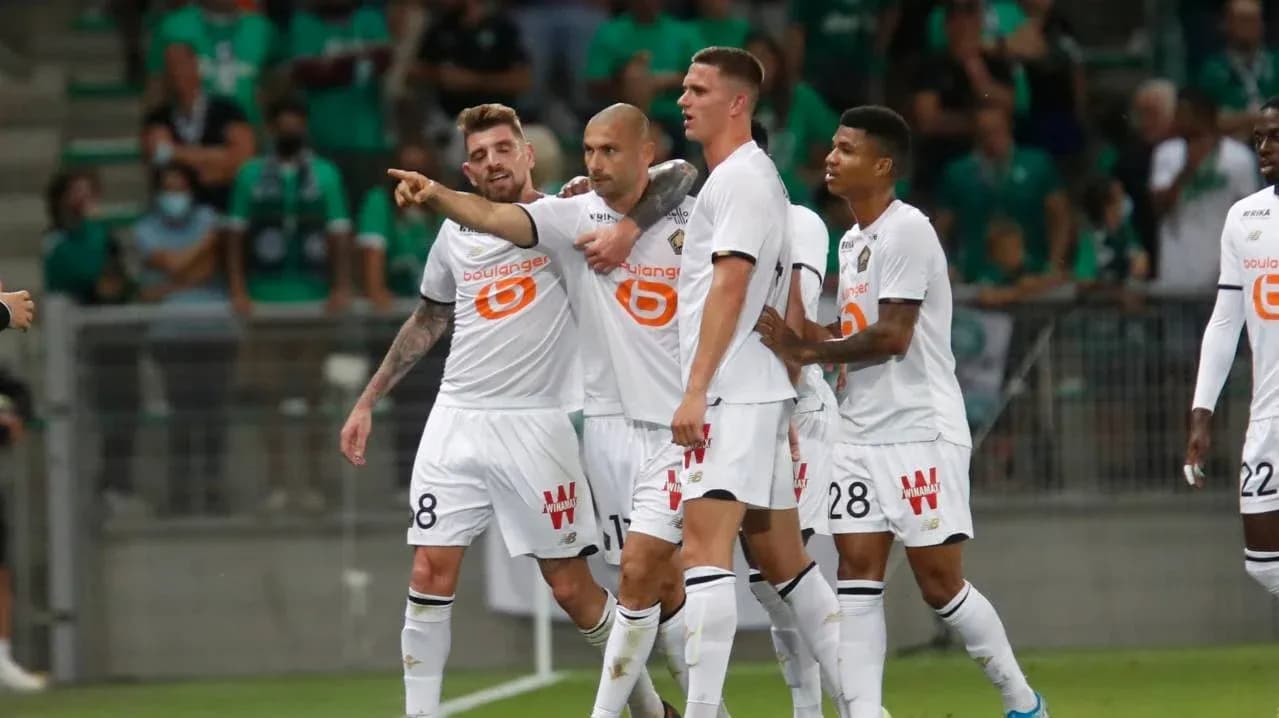
Lyon struck first, building their advantage through a clear right-sided pattern. The double pivot of T. Tessmann and T. Morton provided a stable base, allowing C. Tolisso to step higher from the “10” slot and connect with L. Openda. The breakthrough at 40' came from exactly this structure: Tolisso found space between Fenerbahçe’s lines to feed Openda, whose movement behind the centre-backs punished a defensive block that had begun to stretch horizontally. Up to that point, Lyon’s 4-2-3-1 behaved more like a 4-4-1-1 out of possession, with E. Nuamah and M. Fofana tucking in to help their full-backs, while Openda stayed high to threaten transitions.
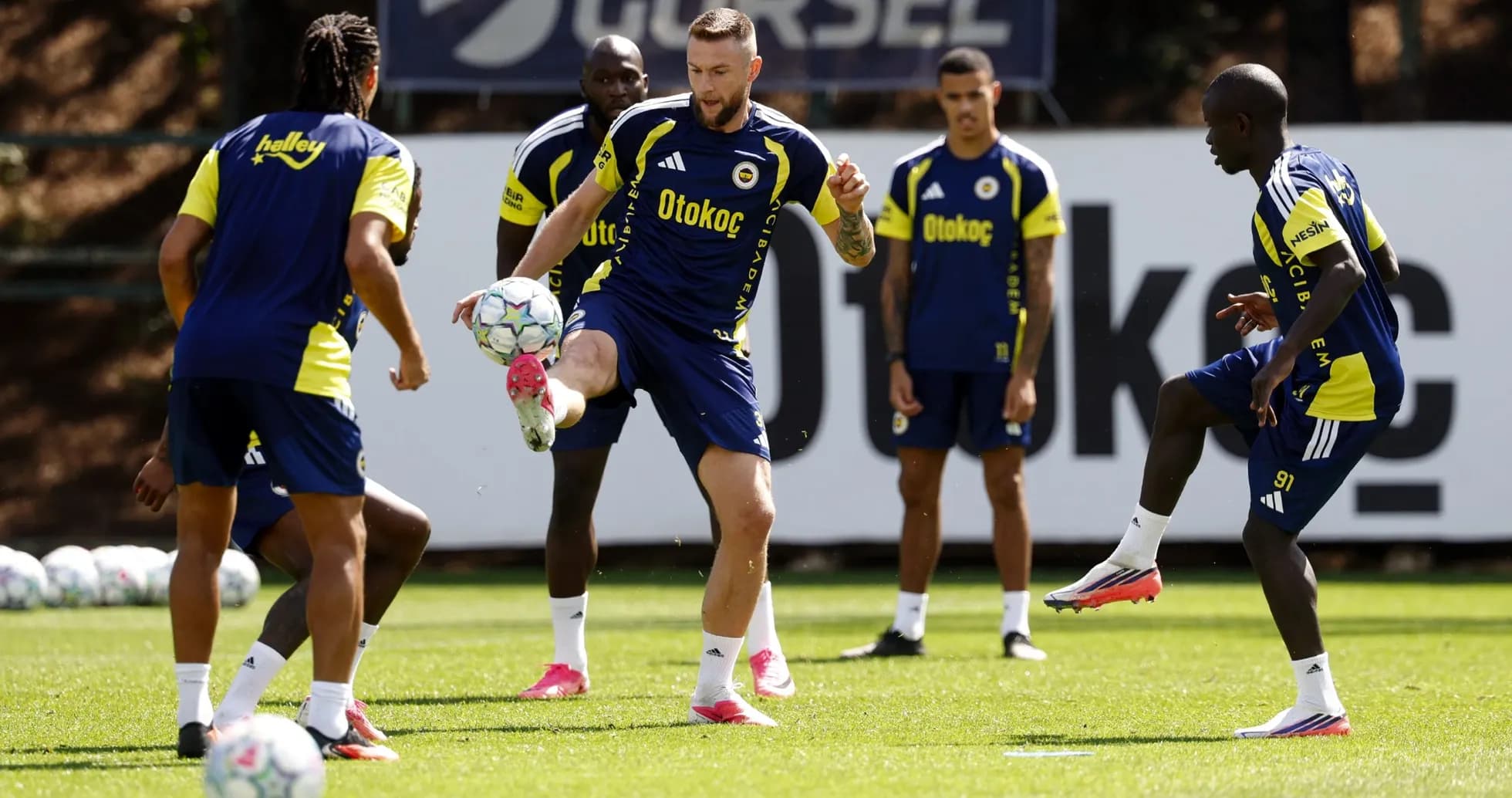
Fenerbahçe’s own 4-2-3-1 was initially conservative. N. Kanté and M. Guendouzi sat relatively deep in the double pivot, protecting the back four of N. Semedo, M. Škriniar, N. Aké and A. Brown. This gave defensive stability but left V. Muriqi isolated for long stretches of the first half. The three behind him – M. Greenwood on the right, K. Akturkoglu on the left, Talisca centrally – often received the ball with their backs to goal and limited support, which helped explain why, despite 52% possession and 453 total passes (389 accurate at 86%), Fenerbahçe lacked penetration before the break.
Second Half
The second half opened with a clear tactical correction from Ismail Kartal. Fenerbahçe pushed the full-backs higher, especially Semedo on the right, and allowed Guendouzi to step beyond Kanté to create a more aggressive 2-1 structure in midfield. The equaliser at 47' was the direct product of this shift. K. Akturkoglu, now receiving earlier and higher, delivered the key pass for Greenwood, who attacked the right half-space and finished clinically. The goal underlined a deliberate focus on combining wide and then attacking the inside channels, rather than relying on direct service to Muriqi.
From there, the match became a chess game of in-game adjustments. Lyon, under Paulo Fonseca, responded by tightening their back line and accepting deeper phases without the ball. Their shot profile – 12 total shots with 5 on goal but 5 blocked – shows how often Fenerbahçe’s defenders got in the way, but also how Lyon were forced into more speculative efforts from outside or through crowded central lanes. Lyon’s 433 total passes with 375 accurate (87%) suggest they were comfortable circulating possession when they had it, but they were less ambitious in the final third after taking the lead and then after conceding the equaliser.
The substitution pattern reinforced these tactical intentions. At 73', Fenerbahçe introduced D. Nene (IN) for K. Akturkoglu (OUT) and M. Asensio (IN) for Talisca (OUT), moves that clearly aimed to add fresh creativity and more direct one-v-one threat from the flanks and the central “10” space. This nudged the structure towards a more fluid, attacking 4-2-3-1, with greater interchange behind the striker. At 82', R. Lukaku (IN) came on for V. Muriqi (OUT), giving Fenerbahçe a more dynamic reference point who could run channels as well as occupy centre-backs. The late-game approach from the hosts therefore tilted toward sustained pressure, using overlapping full-backs, rotating attacking midfielders, and a more mobile centre-forward.
Lyon’s changes were more about game management and defensive balance. At 75', C. Mata (IN) replaced R. Kluivert (OUT) and K. Boudache (IN) replaced E. Nuamah (OUT), reinforcing the defensive line and adding fresh legs to help defend wide zones. Later, M. Bidstrup (IN) came on for T. Morton (OUT) at 86', and M. Ouedraogo (IN) for M. Fofana (OUT) at 90+1', signalling a desire to stabilise the midfield and maintain compactness rather than chase a second goal. This aligned with Lyon’s overall approach after the interval: protect central spaces, concede some territory, and rely on Openda’s transitions when possible.
Discipline and Goalkeeping
Defensively, both teams showed discipline and aggression in equal measure, as the foul count (13-13) and card distribution underline. Lyon picked up one yellow card – Abner Vinícius (37', “Foul”) – reflecting his repeated exposure to Greenwood’s direct running and Fenerbahçe’s right-sided overloads. Fenerbahçe’s two bookings – N’Golo Kanté at 81' (“Foul”) and Milan Škriniar at 84' (“Foul”) – came as they pushed higher and were forced into late interventions to stop Lyon’s counters and relieve pressure on an increasingly stretched defensive line.
In goal, both Ederson (Fenerbahçe) and D. Greif (Lyon) were central to the stalemate, each making 4 saves. For Ederson (Fenerbahçe), those interventions were crucial in the first half when Lyon’s vertical attacks through Tolisso and Openda found gaps. D. Greif (Lyon), by contrast, was busier after the break, dealing with a more direct and varied Fenerbahçe attack that produced 5 shots on goal and 7 efforts from inside the box.
Statistical Overview
Statistically, the match was almost perfectly balanced. Fenerbahçe had 12 total shots (5 on goal, 5 off goal, 2 blocked), Lyon matched the 12 shots and 5 on goal but with 5 blocked and only 2 off target. The hosts generated more corners (3-0) and offsides (3-1), indicators of their territorial push and repeated attempts to break Lyon’s line with aggressive runs in behind. Lyon’s higher pass accuracy (87% to Fenerbahçe’s 86%) and near-equal possession show they were not simply hanging on, but their lack of corners and their conservative late substitutions suggest a priority on preserving the draw once Fenerbahçe’s momentum grew.
In the end, the 1-1 scoreline and the statistical symmetry accurately capture the tactical story: two well-organised 4-2-3-1 systems, each dominating one half, each forced to adjust, and neither able to create a decisive structural superiority over 90 minutes at Chobani Stadium.