FAI's Aligned Football Calendar Plan Dies Amidst Controversy
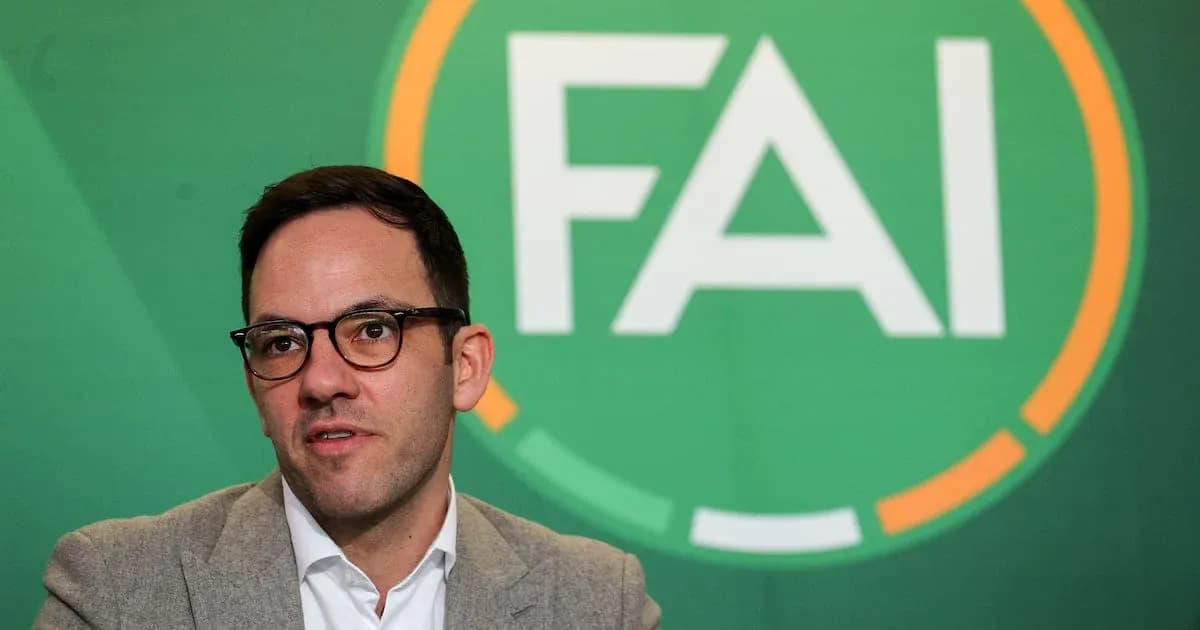
The fog around Gianni Infantino’s war with world football was still hanging over Dublin last Friday when the FAI slipped out a statement. On paper, it promised “key priorities to further boost the development of Irish football”. In reality, it read like a brochure – long on jargon, short on clarity.
Halfway down, hidden beneath the corporate mist, sat the real news.
The plan to put all Irish football on the same calendar is dead.
“Following the strategic planning process, the Aligned Football Calendar has been reprioritised and will not be considered a deliverable within the Football Pathways Plan or the FAI’s current 2026–2029 Strategic Plan.”
Nobody in a dressing room talks like that. A manager can’t look a player in the eye and say he’s been “reprioritised”. He tells him he’s dropped. Simple. Direct. Brutal. In its own way, the FAI has done exactly that with one of the most ambitious ideas it has endorsed in years. The aligned calendar has been hoofed into the long grass.
A grand plan, sold as a blueprint
The Aligned Football Calendar sat at the heart of the Football Pathways Plan, the grand project championed by former director of football Marc Canham – the man who conducted an Odyssean search to find Stephen Kenny’s successor.
The FAI said this plan was forged in consultation. Eleven thousand hours of it, no less, much of it spent on roadshows around the country. The message was that everyone had been heard.
Not everyone felt that way.
Canham arrived burnished by a Premier League and English football CV, but those who live in the mud and muck of Irish grassroots football remained sceptical. One story from a Cork roadshow lingers: Canham was asked if he knew anything about silage. It wasn’t a joke. It was a test. Do you understand how life works here? Do you understand our seasons, our fields, our realities?
His plan said Irish football needed to move to silage season.
Ireland is the only one of UEFA’s 55 member associations running different calendars at different levels. The proposal was stark: bring everyone into line with the League of Ireland schedule by 2028. One game, one country, one calendar.
Behind it lay a simple football truth: Irish kids don’t play enough. Seasons run, on average, for just 30 weeks. Pitches turn into bogs in winter. Vast swathes of the country shut down under relentless rain. The logic was obvious. If the weather ruins your winter, move more football into the light.
Play when the sun is out.
The backlash
That’s not how it landed.
Grassroots leagues erupted. Many claimed they hadn’t been properly consulted. The FAI board had unanimously backed Canham’s blueprint but still went hunting for legitimacy, putting the pathways plan – and the aligned calendar with it – to a General Assembly vote.
It scraped through. A slim majority. Just enough, but not convincing. The result was quickly framed as partisan: the League of Ireland and professional wing had backed it, the amateur game had largely resisted. Still, a vote is a vote, and FAI president Paul Cooke hailed the decision as one that would “change the face of Irish football”.
The face didn’t change. It grimaced.
The rebellion didn’t stop because a show of hands went the “right” way. It deepened. Some elected directors began to feel the heat from their own constituencies. Canham left in April last year, saying he would never again work in grassroots football. That line alone tells you plenty about the scars left behind.
The FAI tried to soften the landing. Leagues were allowed to apply for a two-year delay before switching seasons. Then came Canham’s successor, John Martin. In his first media briefing, he made it clear there would be no imposition from above. The message was gentle, but the meaning was sharp: the mandate was evaporating.
Last week’s statement simply buried the body.
What really killed the aligned calendar?
A lot of the opposition came from a genuine place. Leagues worried they would lose young players to Gaelic games if soccer shifted fully into the summer. The fear was real: in a crowded sporting landscape, why hand GAA an even clearer run at the kids?
That anxiety ignored a few awkward facts. Twenty-two of the 69 FAI-affiliated leagues already operate on a calendar season. The sky hasn’t fallen in. Where there is good will and proper communication, local clubs can work around each other. The aligned calendar also built in flexibility: leagues could pause for summer holidays, run alternative competitions, adapt formats.
It was never going to be painless. It was going to be disruptive. But disruption is often the price of progress, especially if the payoff is more games, more minutes, more kids on the pitch rather than on the couch.
There was another, more sentimental objection. People didn’t want to tamper with the old rhythm of football returning with the school year, that familiar autumn ritual of boots, bags and fresh-cut grass. Yet even that nostalgia rests on shaky ground. Some of today’s winter leagues actually played in summer before the GAA scrapped the Ban on “foreign games”.
The truth is harder to dodge: Irish football can no longer blame cultural imperialism from the GAA for its own failings. Not this time. The aligned calendar didn’t die because of Croke Park. It died because of the FAI’s own fractures.
On one side, the amateur game. On the other, the League of Ireland and professional arm. The plan was seen as something pushed by “that lot in the League of Ireland”, and that alone made it suspect in some quarters. The Leinster FA even wrote to the FAI board denouncing a “flawed voting procedure”, arguing the motion had been carried by the LOI bloc, who, they said, wouldn’t be directly affected by the change.
Their own representative on the FAI board had backed the plan.
A governing body at war with itself
Strip away the jargon and the politics, and what’s left is a brutal verdict on the FAI’s ability to govern.
Here is a body that commissioned a major plan, endorsed it unanimously at board level, brought it to its members, won a mandate – and then walked away from its central recommendation. That is not just a policy U-turn. It is an admission that the organisation cannot carry its own decisions through the storm.
It also shreds the credibility of the General Assembly as a decision-making tool. The FAI has leaned on that mechanism to show that “Irish football” stands behind key calls, including the controversial decision not to boycott fixtures against Israel. If a vote can be quietly neutered when the backlash grows loud enough, what does that endorsement actually mean?
The calendar debate was supposed to be about kids playing more football. It has ended up exposing something more corrosive: a governing body that still can’t agree with itself long enough to see a difficult change through.
So the winter will roll around again.
The rain will hammer the windows. Pitches will close. Games will vanish from fixtures lists. Parents will look out at empty, sodden fields while their children sit inside, screen-lit and restless.
And they will be told this is in the best interests of Irish football. Better, apparently, that nobody plays at all than risk some of them choosing to play something else.