
Everton's Season Collapse: From Champions League Hope to Mid-Table
For much of last season, Everton dared to glance upwards.
Jack Grealish arrived on loan and lit up the place. Kiernan Dewsbury-Hall kept deciding tight games almost by himself. Thierno Barry and Beto, who had looked lost early on, suddenly found the net with regularity. The mood shifted. The table did too.
A 3-0 dismantling of Chelsea on 21 March pushed Everton up to eighth, three points off the Champions League spots with seven matches to go. Hill Dickinson Stadium hummed with a new kind of noise. Europe no longer felt like a fantasy. It felt like a plan.
Then the plan fell apart.
Everton did not win again. Not once. It became their longest winless stretch since David Moyes walked back through the door in 2025. The turning point, if you needed to circle one, came in west London.
On 11 April, a 2-2 draw at Brentford looked, on the surface, like a respectable point. Underneath, it marked the start of a run that would rank Everton among the Premier League’s bottom three sides over the remainder of the campaign. Only Burnley and Wolves joined them in failing to win a single game in that period. Both of those clubs went down. Everton, somehow, still had Europe in view heading into their final home match.
They faced promoted Sunderland at Hill Dickinson with a chance to salvage something from the collapse. Before kick-off, CEO Angus Kinnear used his programme notes to describe himself as “happily dissatisfied” with the season – an awkward, conflicted phrase that jarred with the tension in the stands. Ninety minutes later, after a 3-1 defeat to a Sunderland side charging towards history, it sounded worse.
Sunderland finished seventh and booked European football for the first time in 53 years. Everton trudged off to 13th place and a summer full of questions.
Same finish, very different feeling
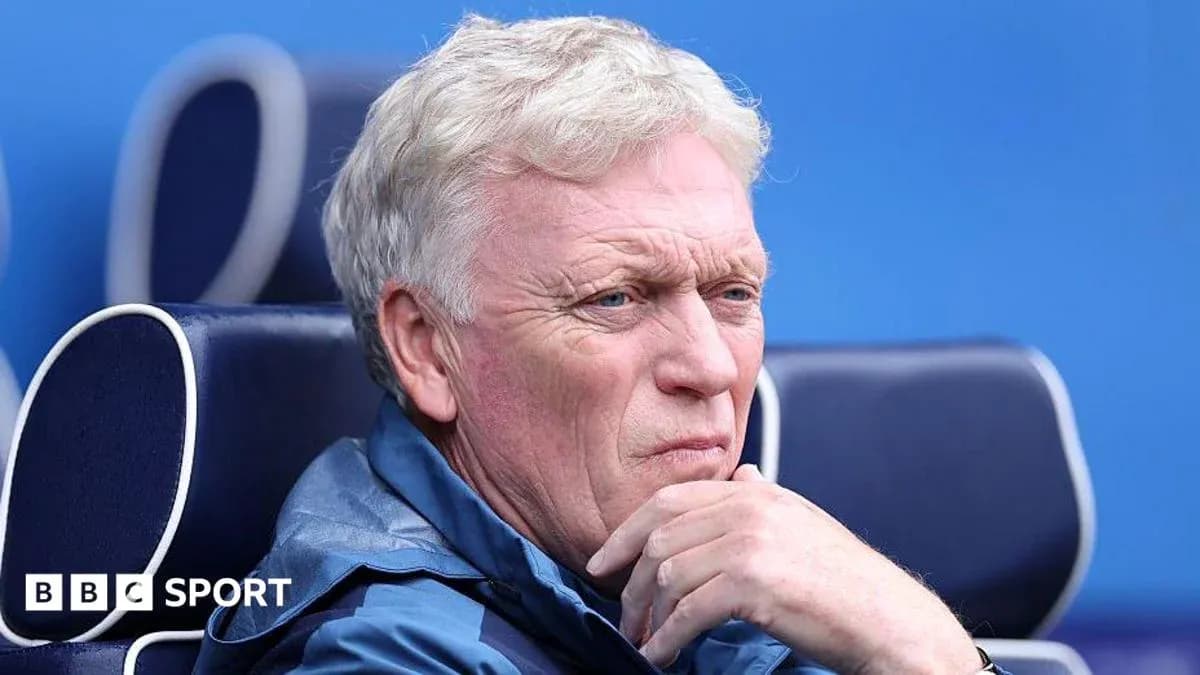
For Moyes, the symmetry is cruel. Two seasons back at Everton. Two 13th-place finishes. On paper, it looks like stasis. In reality, the journeys could hardly have been more different.
When he returned 18 months ago, Everton were a point above the relegation zone and drowning in the fallout of financial breaches, points deductions and endless survival scraps. He dragged them 23 points clear of the bottom three. That felt like a rescue mission completed.
Last summer, armed with a record £97m net spend under the Friedkin Group, the remit changed. This was supposed to be the step forward. Instead, Everton finished in the same position, with just one more point to show for that outlay.
Leon Osman, who knows both the club and Moyes as well as anyone, still sees a line of progress through the chaos.
“When David Moyes first came in, we flew out the blocks and had a great start,” he said. “That continued for well over a year before the first sort of low period, which was the end of last season. I still feel that we made progress last season, which is what we wanted, along with stability.”
Stability, though, is a hard sell when you have just watched a season crumble from the edge of the top four to mid-table obscurity.
Chasing the pack on a budget
Moyes, now 63, has been blunt about the financial reality. Over the past five years, Everton sit 15th among current Premier League clubs for net spend. They are no longer one of the division’s big spenders. They are trying to live in a Champions League neighbourhood on a mid-table budget.
The problem for Everton is that others are doing more with less. Bournemouth spent the least of any Premier League club last summer and actually made an £81m profit in the market. They finished sixth. Brighton banked £41m and still came eighth. Both clubs have clear recruitment models and a ruthless clarity about who they are.
Everton, by contrast, are still working out what their new version should look like.
The move to the gleaming Hill Dickinson Stadium was supposed to signal that identity. New home, new era. Instead, it highlighted the split personality of this team. Their points-per-game return of 1.2 at home was the lowest ever recorded by a Premier League side in its first season at a new stadium. Away from home, their form ranked among the top seven. The road warrior Toffees turned tentative on their own turf.
Osman argues Bournemouth and Brighton are “further along in their development” and that Everton’s adjustment to new surroundings has been complicated by the loss of their most influential player at a critical moment.
When Grealish went down with a stress fracture in January, Everton’s season bent with him. With him in the side, they won 45% of their matches and averaged 1.6 points per game. Without him, the win rate dropped to 22%, the points return to one per match. The numbers tell the story before anyone in the dressing room needs to.
“David Moyes is an intense manager and by the end of the season, a small squad couldn't quite last,” Osman said. The legs went, the belief followed.
“Changes take time. No one is thinking about relegation which shows you what Moyes has done. He's got 12 months remaining and I'd expect him to see that out.”
A recruitment puzzle still unsolved
If Bournemouth and Brighton are the league’s recruitment benchmarks, Everton are still sketching the blueprint.
Under Farhad Moshiri, eight players signed for at least £20m walked out the door for nothing. That era of waste left scars. After years of tightening belts, the Friedkin Group arrived and signed nine players last summer, many of them young, many of them expensive. The idea was clear: build something sustainable. The execution is still catching up.
Grealish and Dewsbury-Hall have justified the investment. Around them, the picture is mixed.
Tyler Dibling, a £35m winger from Southampton, has started only six matches. Adam Aznou, the promising left-back from Bayern Munich, has yet to make his Premier League debut. Barry, 23, dominated in the air – no player won more aerial duels in his first Premier League season – but his finishing veered from clinical to erratic. Merlin Röhl barely featured until May, then suddenly impressed across four starts, hinting at a bigger role to come.
The next few weeks will define how that puzzle fits together. BBC Radio Merseyside’s Giulia Bould reports that Grealish is expected to re-sign on loan towards the end of the window as he continues his rehabilitation, with his wages likely to remain around £200,000 per week. It would be a huge boost on the pitch and a heavy commitment off it.
Iliman Ndiaye, another key creative presence, has been linked with a move to Saudi Arabia. That is the kind of decision that can tilt a season.
“I'd welcome Grealish back but only at a price that suits Everton,” Osman said. “Ndiaye, I'd hate to lose him. There may come a point that the price is right and Everton can reinvest in two or three players but I think they should do everything they can to keep him.”
Youth, trust and a shrinking core
If Everton do sell, they will do so from a squad already stripped of experience. The departures of Seamus Coleman and Idrissa Gueye remove more than 600 Premier League appearances from the dressing room. That loss of know-how explains the club’s interest in a player like Christian Nørgaard, while the news that James Garner will miss the start of the season after groin surgery only deepens the sense of vulnerability in midfield.
Right now, Moyes faces a paradox. His senior options are thinning, yet he has been cautious about leaning on his younger players. The summer may leave him with little choice.
“They need to show they're capable and deserve to play,” Osman said. The message is clear: the door is there, but it will not be held open for anyone.
The hope inside the club is that a year of adaptation will pay off. That Dibling, Aznou, Lewis Dobbin, Youssef Chermiti, players like Tyler Onyango or Katia George in the wider pool, can absorb the demands Moyes places on his squad and respond. That the raw edges seen this year harden into something more reliable.
“I'm hoping that a year in, understanding the demands that are required, players like Dibling and George will make that progression and then suddenly our squad looks more trustworthy,” Osman added.
Everton have escaped the relegation conversation. They have stabilised the floor. The question now is whether they can raise the ceiling before Moyes’ contract ticks down and another reset looms on the horizon.



