Everton and Manchester United Battle to a Draw at Hill Dickinson Stadium
Hill Dickinson Stadium had the feel of an early‑season barometer rather than a simple Round 3 fixture. Everton and Manchester United arrived with identical tactical blueprints on paper – both lining up in a 4‑2‑3‑1 – but with very different early‑season identities. The 2‑2 draw that followed felt entirely in character for both: Everton steady and hard to beat, United volatile, capable of brilliance and chaos in the same breath.
Heading into this game, Everton sat 8th with 5 points from 3 matches, unbeaten with 1 win and 2 draws. Overall they had scored 5 and conceded 3, a goal difference of +2, underpinned by a controlled start at home: 4 goals scored and 2 conceded at Hill Dickinson Stadium. Manchester United arrived 11th on 4 points from 3, with 1 win, 1 draw and 1 defeat, their overall tally of 7 goals for and 6 against giving them a goal difference of +1. United’s story so far was extremes – a 5‑2 home win on one side, a 2‑0 away defeat on the other – and this trip to Merseyside was another test of whether Michael Carrick’s side could translate attacking firepower into consistent results on their travels.
Both managers doubled down on their preferred 4‑2‑3‑1. Leighton Baines’ Everton used the shape as a protective shell and a platform. J. Pickford anchored a back four of M. Rohl, J. Tarkowski, J. Branthwaite and V. Mykolenko – a line built to defend the box first and everything else second. Ahead of them, the double pivot of H. Armstrong and J. Garner was conservative in its starting positions but crucial for Everton’s rhythm, connecting into a fluid band of three: B. Johnson from the right, K. Dewsbury‑Hall centrally and T. George from the left, all feeding the direct running of lone forward T. Barry.
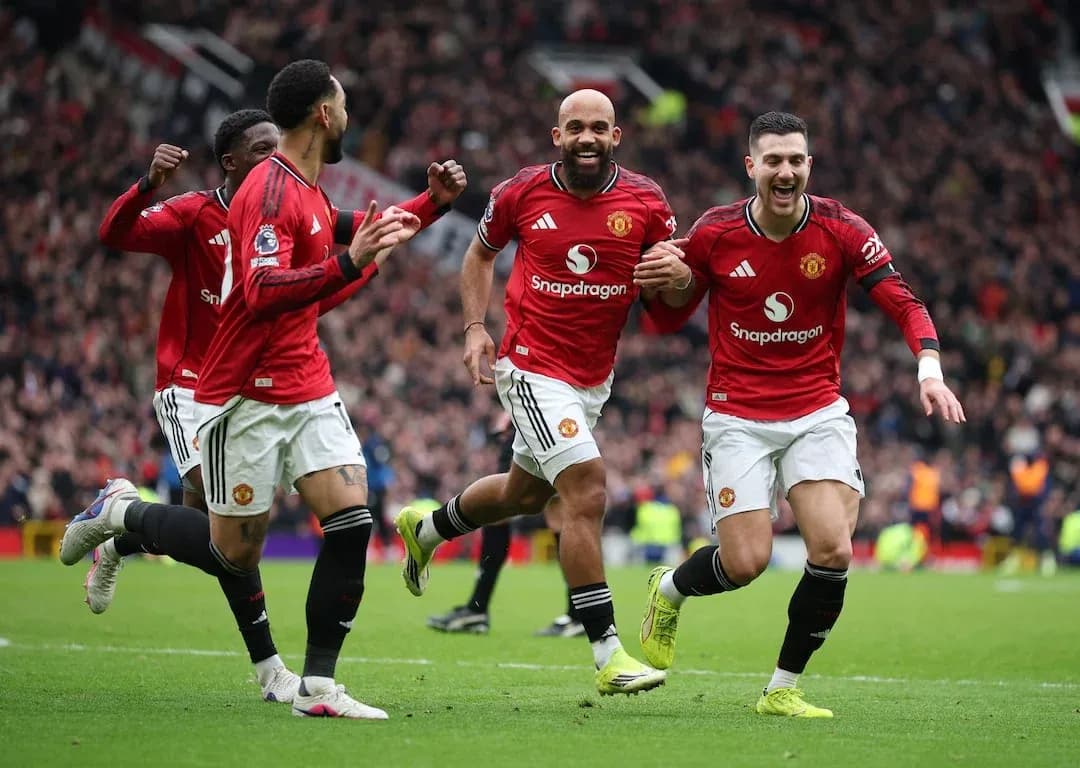
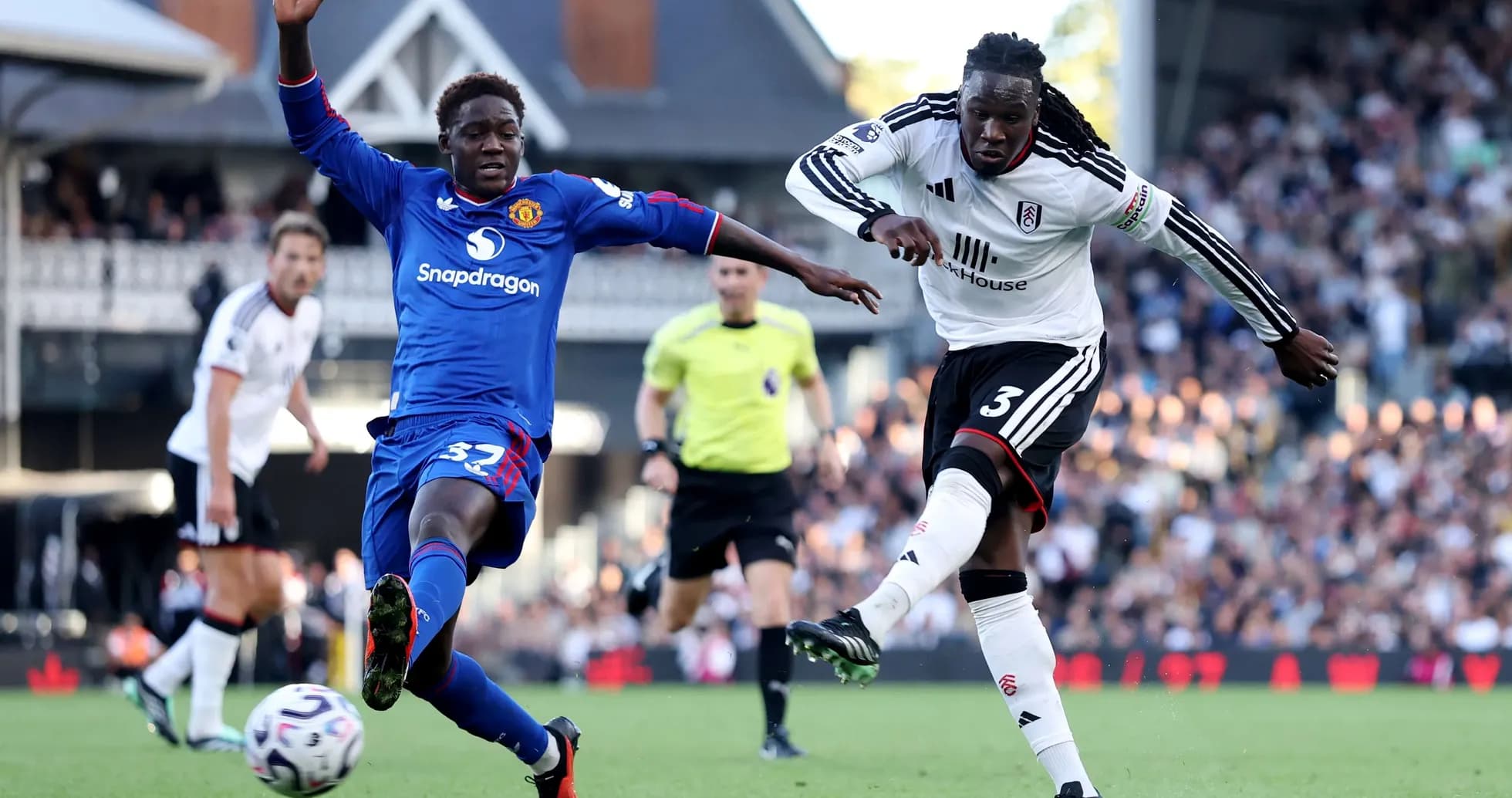
United mirrored the shape but with a far more aggressive interpretation. S. Lammens started in goal behind a back four of D. Dalot, H. Maguire, L. Martinez and L. Shaw. In front, K. Mainoo and Y. Tielemans formed a technical double pivot designed to progress the ball rather than simply screen. The three behind striker M. Cunha – B. Mbeumo on the right, B. Fernandes as the central creator and M. Rashford from the left – gave United a front four capable of overwhelming any defence in transition.
The absentees subtly reshaped both squads. Everton were without C. Norgaard through injury, depriving Baines of a natural midfield organiser who could have offered additional control against United’s press. For Carrick, the list was longer and more structurally significant: C. Baleba, A. Diallo, T. Heaton, M. Ugarte and M. de Ligt all missed out. The absence of Ugarte in particular meant United lacked a pure ball‑winner in front of the defence, forcing Mainoo and Tielemans into more defensive work than ideal and leaving their back line exposed whenever United lost the ball with numbers committed forward.
Discipline was always going to be a sub‑plot. Everton’s season‑long yellow card pattern shows a remarkable spread: they have picked up bookings evenly across early, mid and late phases of matches, with 20.00% of their yellows in each of several time blocks. It paints the picture of a side that competes consistently rather than one that loses its head in particular periods. B. Johnson, already on the league radar for his card count, embodies that edge on the flank. United, by contrast, have a clear late‑game spike: 40.00% of their yellow cards arrive between 76‑90 minutes, with another 20.00% in added time. It hints at a team that can become stretched and reactive as legs tire and game states turn frantic – a pattern that again surfaced as Everton’s pressure grew in the closing stages.
Within that structure, the “Hunter vs Shield” duel was unmistakable: Bruno Fernandes against Everton’s central block. Fernandes came into this fixture as one of the league’s standout performers, with 3 goals and 1 assist in total across his first 3 appearances, plus 9 shots (4 on target) and 8 key passes. He is not just United’s creative brain; he is their volume shooter and penalty taker, having converted his only spot‑kick so far. His ability to find pockets between the lines and thread passes into M. Cunha or wide into B. Mbeumo and M. Rashford was the primary threat Everton had to neutralise.
Baines’ answer was layered. The centre‑back pairing of Tarkowski and Branthwaite stayed tight and narrow, rarely jumping into midfield, trusting Armstrong and Garner to step into Fernandes’ zone. Dewsbury‑Hall’s work without the ball was just as important: he often dropped to create a three‑man screen in front of United’s No. 8, turning Everton’s 4‑2‑3‑1 into a situational 4‑3‑3 out of possession. The aim was to force Fernandes away from central channels and into wider, less dangerous spaces, where Mykolenko and Rohl could engage him with cover behind.
On United’s right, the “Engine Room” duel had a different flavour: B. Mbeumo against Everton’s left‑side pairing of Mykolenko and George. Mbeumo’s total of 2 goals, 7 shots and 5 key passes so far underlines how often United’s attacks flow through him. He is direct, happy to drive at his full‑back, and his 3 tackles and 3 interceptions show he also leads United’s counter‑press from that flank. For Everton, George’s defensive diligence and Mykolenko’s body positioning were crucial to prevent United from repeatedly isolating the Cameroonian wide man in one‑v‑one situations.
Everton’s own attacking threat was more collective than star‑driven. Their overall scoring profile – 5 goals in 3 matches, with 2.0 goals per game at home – reflects a side that creates enough volume without relying on a single finisher. The fact they have yet to fail to score in any league match and have already recorded a 2‑0 home win as their biggest victory suggests that once they settle into a rhythm, they can sustain pressure, especially at Hill Dickinson Stadium.
For United, the structural risk remains at the back. On their travels they have conceded 4 goals in 2 away matches, an average of 2.0 per game, and they have yet to keep a clean sheet anywhere this season. The high technical ceiling of Mainoo and Tielemans comes with a defensive trade‑off: when United lose the ball with full‑backs advanced and Fernandes high, the distances their pivot must cover are huge. Against an Everton side that transitions quickly through Dewsbury‑Hall, Johnson and Barry, that vulnerability was always likely to be exposed.
Following this result, the statistical balance of power looks as it did before: Everton remain one of the league’s more stable early‑season sides, now with three unbeaten performances reinforcing their defensive baseline and home scoring rate. United continue to live on the edge – their total scoring output remains impressive, but their inability to close down matches, reflected in their card timing and lack of clean sheets, keeps them in the realm of chaos.
From a tactical lens, the 2‑2 draw felt almost inevitable. Everton’s structure and home confidence were always likely to produce goals against a United defence conceding 2.0 away per game, while United’s attacking quartet, led by Fernandes and Mbeumo, had too much quality not to find openings. The xG balance – inferred from Everton’s steady chance creation at home and United’s high‑volume attack – would likely show a narrow margin either way, and the scoreboard reflected that equilibrium.
In narrative terms, this was a meeting of a side quietly building a platform and another still searching for defensive certainty. Everton leave Hill Dickinson Stadium with their identity reinforced; Manchester United depart knowing that until their shield matches the sharpness of their hunters, every away day will feel like this – breathless, entertaining, and precariously poised.