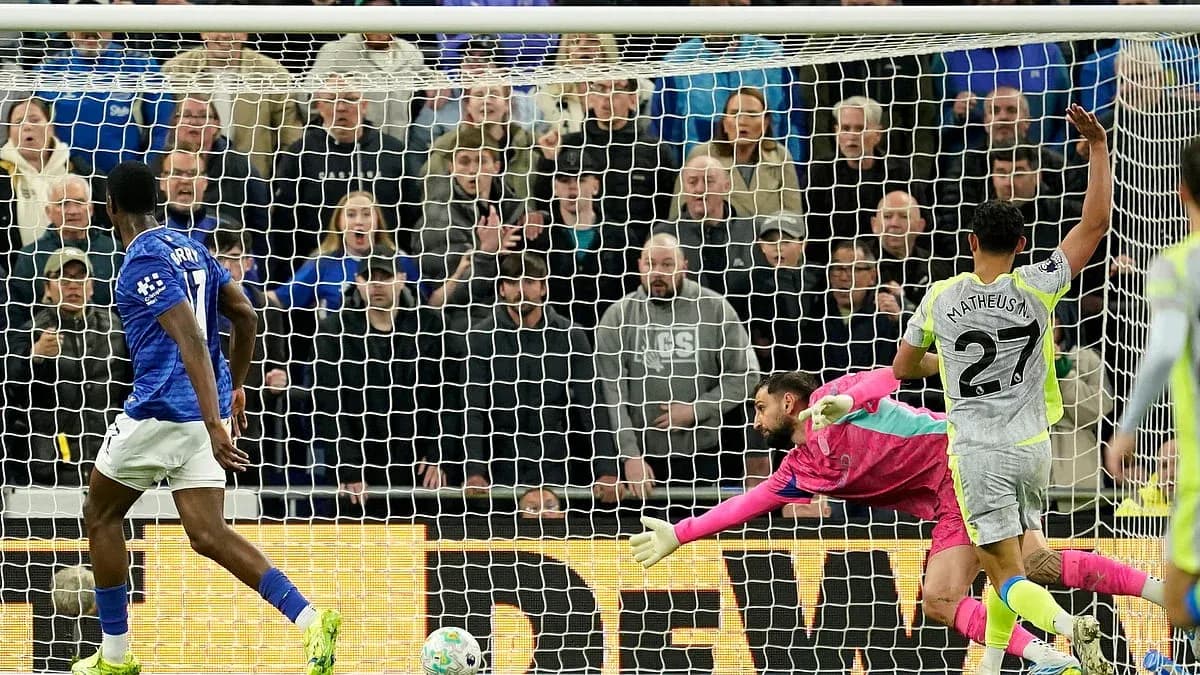
Everton vs Manchester City: A 3-3 Premier League Thriller
Under the lights at Hill Dickinson Stadium, a 3-3 draw between Everton and Manchester City felt less like a routine Premier League fixture and more like a stress test of both squads’ evolving identities. Following this result in Round 35 of the 2025 season, the table still shows Everton in 10th on 48 points with a goal difference of 0 (44 scored, 44 conceded overall), and City in 2nd on 71 points with a goal difference of 37 (69 scored, 32 conceded overall). The numbers confirm what the spectacle hinted at: Everton are learning to punch up; City are learning what happens when their control frays.
I. The Big Picture – Two 4-2-3-1s, two very different DNAs
Both managers mirrored each other on the tactics board: 4-2-3-1 against 4-2-3-1. But the shapes told different stories.
Everton’s system under Leighton Baines has been built on balance. Heading into this game they had scored 44 and conceded 44 overall, a side defined by equilibrium rather than chaos. At home they average 1.4 goals for and 1.3 against, numbers that speak to a team willing to trade blows but rarely collapse. That was visible in the XI: J. Pickford behind a back four of J. O’Brien, J. Tarkowski, M. Keane and V. Mykolenko, a double pivot of T. Iroegbunam and J. Garner, with M. Rohl, K. Dewsbury-Hall and I. Ndiaye supporting Beto.
Manchester City arrived with a different burden. Pep Guardiola’s side have been an attacking machine: overall they average 2.0 goals scored and 0.9 conceded per game, with 69 goals for and 32 against. On their travels they still carry a serious punch at 1.7 goals scored and 1.1 conceded on average. Their 4-2-3-1 here was a variation on control: G. Donnarumma in goal, a back line of M. Nunes, A. Khusanov, M. Guehi and N. O’Reilly, a deeper pair of Nico and B. Silva, and a fluid three of A. Semenyo, R. Cherki and J. Doku behind E. Haaland.
The scoreline – City leading 1-0 at half-time before being dragged into a 3-3 – underlined how fragile even elite structures can become when key pillars are missing.
II. Tactical Voids – Absences that bent the game
The team sheets were defined as much by who was not there as who was.
Everton were without J. Branthwaite, I. Gueye and J. Grealish, all listed as “Missing Fixture”. Branthwaite’s absence removed their most progressive left-sided defender; in his place, Keane and Tarkowski had to defend more space than Baines would have liked. Gueye’s injury stripped away a specialist ball-winner, forcing Iroegbunam into a more defensive role and leaving Garner to shuttle both vertically and laterally. Without Grealish, Everton lost a high-volume carrier and foul magnet; creativity had to be redistributed to Dewsbury-Hall and Ndiaye between the lines.
City’s voids were even more structural. R. Dias and J. Gvardiol were both out, robbing Guardiola of his first-choice central defensive axis. In their place, Khusanov and Guehi had to cope with Beto’s physicality and Everton’s late surges. Most significant, though, was the absence of Rodri with a groin injury. Without their metronome and emergency firefighter, City’s midfield double of Nico and B. Silva had to both build and protect. As the game stretched, that dual task became too heavy.
Disciplinary trends added another layer. Everton’s season-long yellow card profile shows a late-game spike: 22.39% of their yellows arrive between 76-90 minutes, with another 16.42% from 91-105. This is a team that tackles on the edge when fatigue and emotion rise. City’s own yellow distribution peaks between 46-60 (21.67%) and 76-90 (20.00%), suggesting they too often need tactical fouls to reset transitions. In a match that turned wild in the second half, those tendencies were always likely to surface.
III. Key Matchups – Hunter vs Shield, Engine Room vs Chaos
Hunter vs Shield was always going to be E. Haaland against Everton’s defensive record. Haaland came in as the league’s leading scorer with 25 goals and 7 assists, his 96 shots and 54 on target a statistical sledgehammer. He had also scored 3 penalties but missed 1, a reminder that even his ruthlessness has limits. Everton’s overall defensive record – 44 conceded in 35, 1.3 per game both home and away – is solid but not elite. In the first half, City’s structure allowed Haaland to pin the centre-backs and create space for runners like Doku and Cherki.
But as the game wore on, the Shield fought back. O’Brien, who has blocked 16 shots across the season and carries a red card on his disciplinary record, played on the edge, stepping in front of Haaland’s runs and engaging aggressively. Tarkowski and Keane, more conservative, narrowed the gaps. Everton’s resilience, reflected in 11 clean sheets overall this campaign, reappeared in miniature as they survived waves of pressure and then turned the match into a shootout.
In the Engine Room, the duel between creators and destroyers shaped the chaos. For Everton, Garner was the heartbeat. Across the season he has 2 goals and 7 assists, with 49 key passes and 113 tackles – a rare blend of progression and bite. He also leads their card charts with 10 yellows, a warning that his aggression can spill over. Here, he and Iroegbunam had to cope with City’s intricate rotations without the safety net of Gueye.
For City, R. Cherki and B. Silva formed the creative axis. Cherki arrived with 11 assists and 57 key passes, his 86% pass accuracy and 97 dribble attempts (46 successful) marking him as City’s primary line-breaker. Bernardo, with 4 assists, 45 key passes and 90% accuracy, is the rhythm-setter but also a willing worker, with 42 tackles and 6 blocks. Without Rodri, though, both were dragged into deeper zones, and when the game opened up, City lacked a pure enforcer to stem Everton’s counters.
On the flanks, J. Doku’s directness – 132 dribble attempts with 74 successful, plus 5 assists – asked constant questions of Mykolenko and O’Brien. Yet every time City overcommitted, Everton’s trio of Rohl, Dewsbury-Hall and Ndiaye found pockets to spin and feed Beto, exploiting the inexperience of Khusanov and the reconfigured back line.
IV. Statistical Prognosis – xG tilt vs defensive reality
Even without explicit xG numbers, the season data sketches the underlying story. City’s attack, with its 2.0 goals per game overall and 1.7 on their travels, almost certainly “won” the xG battle on volume and territory. Haaland’s shot profile, Cherki’s chance creation and Doku’s dribbling all point to a side that habitually manufactures high-quality opportunities.
Yet Everton’s defensive solidity and mentality narrowed that gap. They concede 1.3 goals per game overall, home and away, and have failed to score in only 9 matches out of 35. At home, with 25 goals scored and 24 conceded, they live in tight margins but rarely fold. That pattern repeated here: City’s superior attacking process met a home side structurally used to living on the edge.
Following this result, the tactical verdict is clear. City’s xG and attacking structure still make them favourites in most games, but without Rodri, Dias and Gvardiol, their defensive solidity is compromised enough to turn dominance into jeopardy. Everton, by contrast, have shown that their 4-2-3-1, anchored by Garner’s all-action profile and O’Brien’s aggressive defending, can trade with the league’s best when the emotional temperature rises.
In a season defined by fine margins at both ends of the table, this 3-3 felt like a preview of two futures: City’s, where control must be rebuilt around a patched-up spine; and Everton’s, where the balance between discipline and daring will decide whether nights like this become a platform or a one-off storm.