Enzo Maresca Takes the Helm at Manchester City
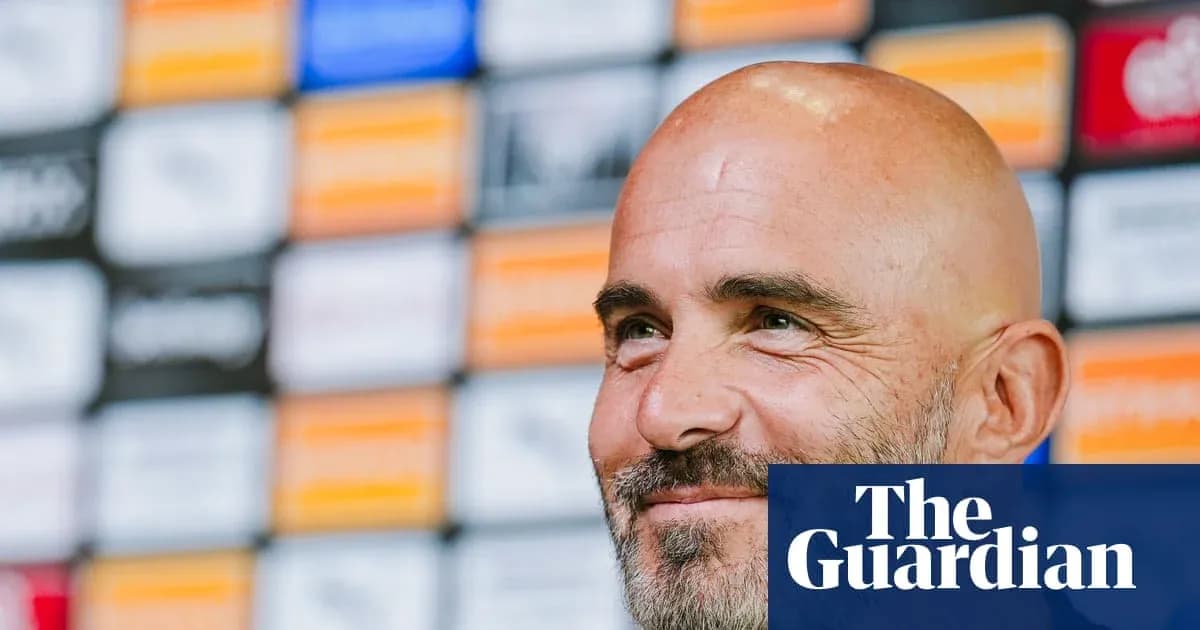
Enzo Maresca walked into the room looking like a man back from holiday, not one about to inherit the most demanding job in English football. Relaxed, tanned, he chose to start somewhere else entirely.
“Before we start, I would like to send a message and a big hug to Kevin Keegan’s family for this moment,” he said, paying tribute to the former Manchester City manager after his death on Monday.
It was a gentle opening to a brutal reality. Maresca is the man asked to follow Pep Guardiola.
Naming the giants
The 46-year-old sat where Guardiola had held court for a decade, beneath a giant “Welcome back Enzo” billboard. The slogan nodded to his previous spell in charge of City’s elite development squad in 2020-21 and his season as Guardiola’s assistant during the treble campaign of 2022-23. The seat, though, carried a different weight now.
So Maresca did what many in his position dodge. He said the names out loud.
“The history of the manager with many years in the same club always struggled a little bit. After Sir Alex, after Arsène,” he said, unprompted, referencing Ferguson and Wenger. He knows exactly what he is walking into: 20 trophies in 10 years, a coach ranked alongside the greatest the game has seen.
“How do you follow that?” was the question hanging in the air. His answer was blunt enough. “It’s a challenge to try to do the right things immediately for this organisation, for the fans, for everyone.”
He will need more than charm and clear-eyed realism. He will need time. At City, the hierarchy’s track record suggests he might actually get it.
A club that does not flinch
“This club has had three managers in 17 years,” Maresca pointed out. “This is not normal.”
Roberto Mancini arrived in December 2009 and departed in May 2013 in a storm of angst and internal tension that grated against the calm preferred by chairman Khaldoon al-Mubarak and chief executive Ferran Soriano. Manuel Pellegrini followed, a cooler presence who smoothed the edges. Then came Guardiola, who turned City into a machine and the Premier League into his playground.
Al-Mubarak and Soriano know Maresca well from his previous two seasons in Manchester. They have seen the coach and the character. That familiarity, coupled with his work since leaving, persuaded them he was worth the upheaval and the £17m compensation cheque to Chelsea.
His Chelsea exit on New Year’s Day came with an apology from Maresca, a rare flash of contrition in a career that has largely moved upwards. When the subject of his conduct there was raised, the shutters came down.
“I feel quite lucky in terms of my former clubs – Leicester, Chelsea – I think we did a great job,” he said. “In both clubs, the identity of the team was clear, the success of the team was clear, and I feel very lucky to be part of these clubs. But now we are here today. That is the most important thing, just about City. And nothing to add.”
That was as close as he came to bristling.
A winning CV, a bigger test
Maresca does not arrive as a romantic punt. He made Leicester Championship champions, restoring a sense of control and style after relegation. He then took Chelsea to fourth in the Premier League, added a Conference League title and, last summer, dismantled Paris Saint-Germain 3-0 in the Fifa Club World Cup final. That performance, ruthless and assured on a global stage, felt like a job application written in capital letters.
He did not dance around expectations. He talked openly of “titles” for the coming season. This is not a project framed in years. It is framed in trophies.
To that end, City have already armed him. Elliot Anderson has arrived from Nottingham Forest for £116m to patrol midfield, a major statement on where Maresca wants control. Lille’s Ayyoub Bouaddi, one of Morocco’s standouts at the World Cup, remains a live option to strengthen the same area. Maresca also retains an interest in Malo Gusto, one of his right-backs at Chelsea, and if Omar Marmoush departs, City will look for a similar pacy forward to stretch defences.
The squad is already elite. The trick now is to keep the irreplaceable pieces.
Rodri, Real Madrid and a ticking clock
Top of that list is Rodri. On Sunday, the midfielder lifted the World Cup with Spain and collected the Golden Ball as the tournament’s best player. For City, his value is even more specific: he dictates chaos. In a domestic game that grows more frantic by the month, his ability to slow a match to his rhythm is priceless.
He will undergo surgery on a back problem on Monday. The word from City is that the issue is not too serious, but he will miss the opening Premier League fixture at home to Bournemouth. The real tension lies elsewhere: 1 September, when the transfer window closes.
Rodri has a year left on his contract and has so far declined to sign the new deal on the table. Real Madrid’s interest is no secret. The question is whether they turn admiration into a bid before the deadline. For Maresca, starting a post-Guardiola era without his on‑field metronome would be a brutal handicap.
Asia, auditions and a staggered reunion
Before any of that, Maresca must get to know his squad properly. On Tuesday, he flies out for a pre-season tour of Asia featuring games against Inter in Hong Kong, then K-League All Stars and Atlético Madrid in Seoul. It is part commercial exercise, part tactical laboratory.
“I’m working at the moment with many young players,” he said. “That is always good because they are full of energy and some of them are very good.”
They are also keeping his sessions afloat. The World Cup pushed many of City’s A-listers deep into the summer, and those who went furthest will return late. Josko Gvardiol, Mateo Kovacic and Abdukodir Khusanov, who exited earlier, will be back in time for the tour. The rest will drip-feed into training.
“The last group of players are going to join three or four days before the Community Shield and we will have all the squad,” Maresca explained.
That Community Shield, against Arsenal in Cardiff on Sunday 16 August, will be the first real glimpse of what a Maresca City looks like under pressure. After that, the Guardiola comparison stops being theoretical and starts being weekly.
Evolution, not imitation
Maresca knows he cannot be a tribute act. He learned under Guardiola, but he will be judged on his own tweaks, his own answers.
“You need to adapt, evolve,” he said when asked about his style. “Set pieces, man to man – it’s a little bit the direction where football is going. We managers, it’s our duty to find solutions.”
That is the job now. To keep City winning while the landscape shifts, while rivals adjust, while the memory of Guardiola remains fresh in every stand and every dressing room corridor.
The banners outside the stadium say “Welcome back Enzo”. The real question is how long it takes before they simply read: this is his team now.