
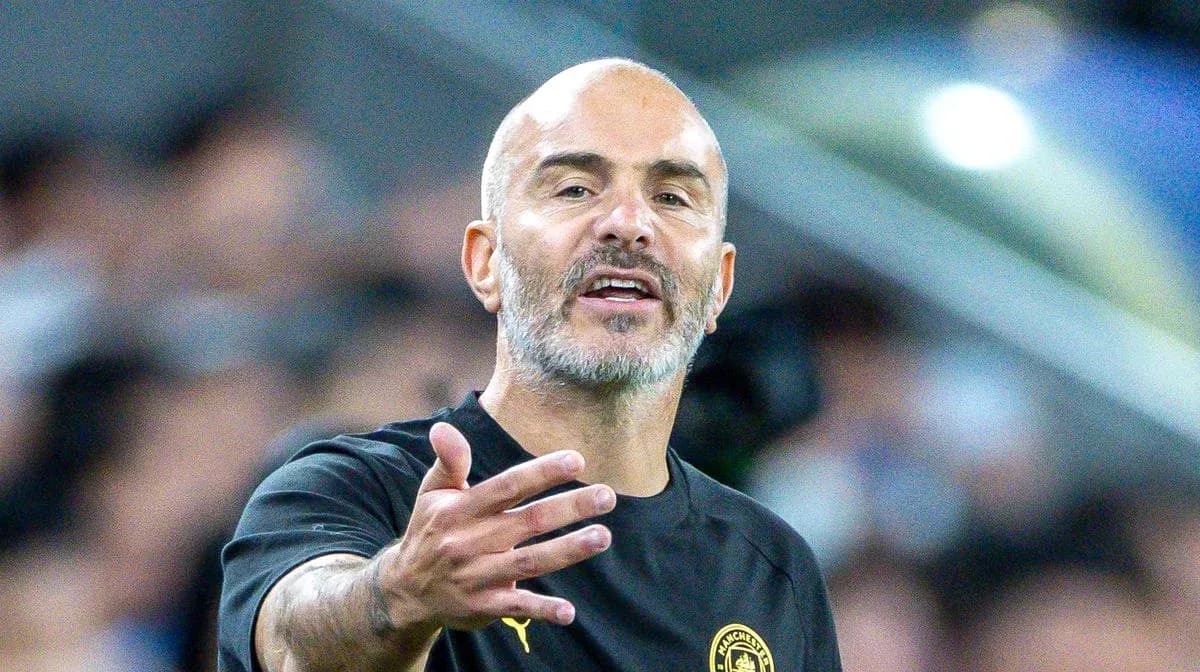
Enzo Maresca Redefines Captaincy as Manchester City Enters New Era
Enzo Maresca has been in the Manchester City job only a short time, but one thing is already crystal clear: this is his dressing room, and he will decide who leads it.
The new City manager has shut down any prospect of a players’ vote to choose the next club captain, taking full control of the leadership structure as he reshapes the champions in his own image. The armband, the hierarchy, the voices in the huddle – all of it will be chosen from the manager’s office, not the dressing room ballot box.
Ruben Dias
At the top of that list stands Ruben Dias.
With Bernardo Silva gone to Real Madrid, the path has opened for the Portugal defender to become the face of the new leadership group. Dias was already a powerful presence under Pep Guardiola and was a serious contender for the role last summer before Guardiola halted the traditional squad vote. He has since resisted interest from elsewhere and committed himself to City’s next chapter. Now, with the armband likely to land on his sleeve, his influence is set to harden into formal authority.
Shifting Dynamics
Behind him, the picture is shifting fast.
Last season’s leadership group was thin: just Dias, Erling Haaland and Rodri. Barcelona’s swift move to secure Rodri has blown a sizeable hole in that structure, leaving Maresca not only to name a captain but to rebuild the entire inner circle around him. There are vacancies, and they are significant.
Josko Gvardiol is one of those ready to move into the space. The defender has never been shy of responsibility and would embrace a more prominent role if Maresca calls. But the Italian has another clear requirement as he redraws the lines of power inside the squad: at least one of his captains must be English.
Phil Foden
That point changes the conversation – and brings Phil Foden sharply into focus.
Foden has spoken openly this week about his own sense of duty. Now the longest-serving member of the first-team squad, the 26-year-old knows the weight of the badge as well as anyone in the room. Two difficult seasons have followed his coronation as the Premier League’s best player, and the sheen of inevitability around his rise has dulled. Yet under a new manager, with a new leadership structure and a clear call for English voices, the opportunity in front of him is obvious.
If Maresca wants an English standard-bearer for this new era, Foden is standing right there.
Other Candidates
He is not the only candidate.
Marc Guehi arrives with captaincy already on his CV. The defender wore the armband at Crystal Palace and, when he moved to City in the winter window, he slipped into the side with barely a ripple, his composure and authority translating immediately to a higher stage. He is still away on holiday after the World Cup, but his return will sharpen Maresca’s options. A player who has already led a Premier League team and handled the jump to City without fuss is hard to ignore in any leadership conversation.
Nico O’Reilly and Elliot Anderson are also due back next week, adding more English representation to a squad whose core has slowly shifted away from homegrown voices in recent years. They are unlikely to walk straight into the captaincy frame, but their presence feeds into the broader theme: Maresca wants English players not just in the squad, but in the leadership chain.
Statement of Identity
This is not a cosmetic choice. It is a statement about identity at a club that has grown used to winning almost on autopilot.
Guardiola’s City were driven by a blend of global stars and a tight, player-led leadership group. Maresca, stepping into the most demanding job in English football, is tightening that structure, centralising the power and insisting on a clearer spine of responsibility. No votes. No committees. The manager will decide who speaks for his team.
The names are familiar – Dias, Haaland, potentially Gvardiol, Foden, Guehi – but the dynamics around them are changing. The armband is no longer just a reward for seniority or popularity; it is a tool Maresca intends to use to shape the culture of a squad that has already won everything.
The question now is simple: who will he trust to carry his voice onto the pitch when the season starts, and who among City’s English core will seize the chance to stand at the front of a new era?



