
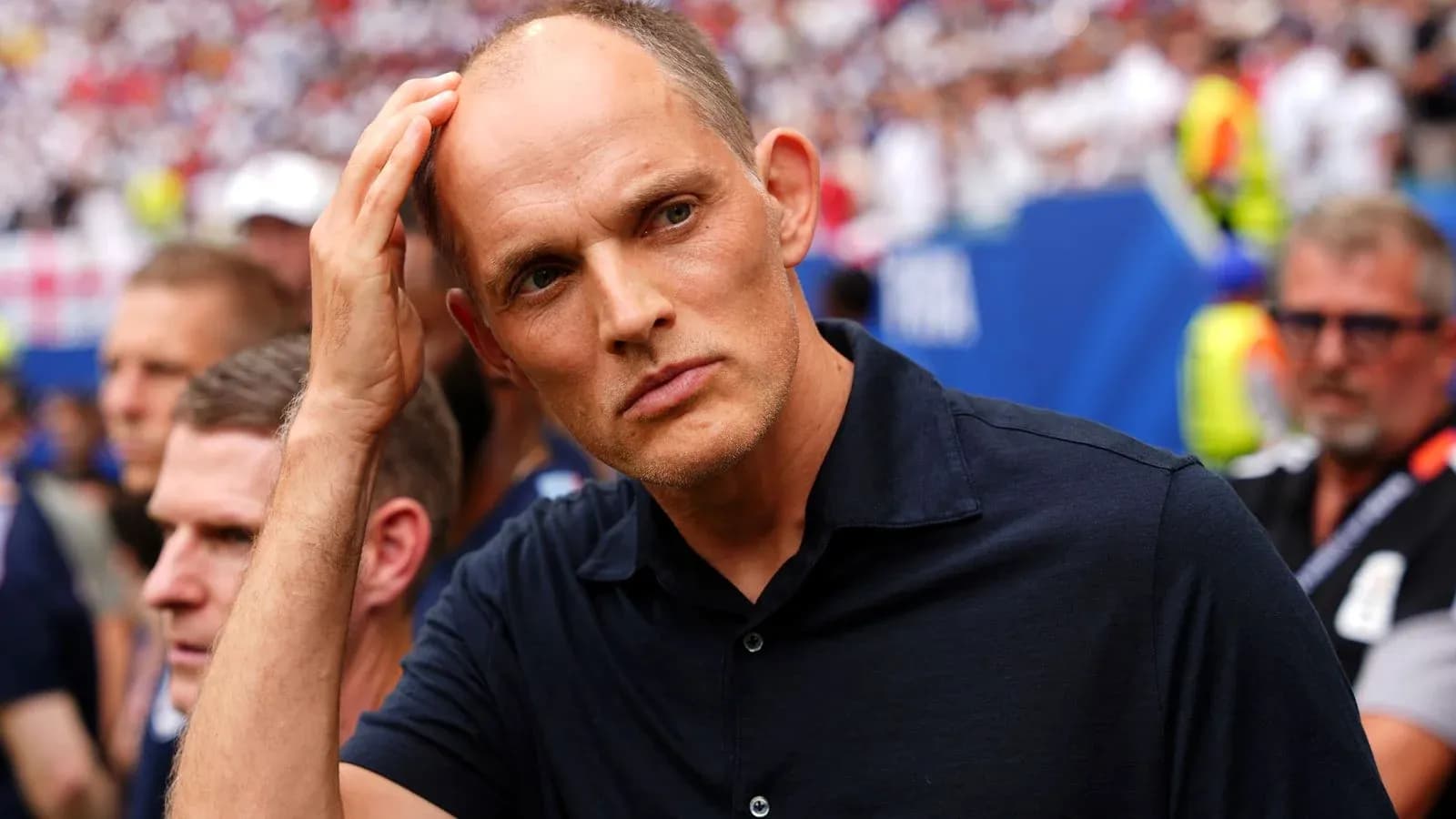
England's World Cup Semi-Final Defeat: Tuchel's Tactical Decisions Questioned
England players questioned Thomas Tuchel’s defensive reshuffle in the World Cup semi-final defeat to Argentina, with several senior figures left baffled by changes they felt dragged the team backwards rather than over the line.
A lead, then a retreat
Anthony Gordon’s 55th-minute goal had England exactly where they wanted to be. Morgan Rogers cut Argentina open down the right, Gordon arrived from the left, and for a brief spell the game looked perfectly set for a side built on pace out wide and front-foot aggression.
Then the pattern flipped.
With Argentina pushing and England dropping ever deeper, Tuchel made his first big call. Seventeen minutes after Gordon’s opener, the head coach removed his goalscorer, sent on Ezri Konsa and moved to a back five with more than half an hour still to play.
Inside the camp, that was the moment some players felt the balance tipped the wrong way. What was intended as a shield looked, to them, like a surrender.
Six defenders, no out-ball
The pressure kept building. Lionel Messi drifted into pockets, Argentina’s full-backs advanced, and England retreated further.
Ten minutes after Konsa’s introduction, Tuchel made his second decisive switch. Declan Rice, who had battled through illness and fitness issues all tournament, was replaced by Nico O’Reilly. On paper, England now had six defenders on the pitch, four of them natural centre-backs. Harry Kane dropped even deeper to help repel the waves of Argentine attacks.
Inside the squad, some saw a clear problem: England had no out-ball. No one to hold it up. No one to run the channels or drive down the flanks to turn Argentina around and relieve the strain.
That cut directly against the blueprint of their tournament. England’s attacking identity had been built on pacy wingers and a belief that Argentina’s full-backs could be exposed. It was that very plan that delivered the goal – Rogers on the right, Gordon on the left, stretching the game and punishing space.
Yet after taking the lead, Noni Madueke, Bukayo Saka and Eberechi Eze stayed rooted to the bench. Marcus Rashford only appeared in the 96th minute, with England already 2-1 down after late strikes from Enzo Fernandez and Lautaro Martinez completed a ruthless turnaround.
Between Gordon’s goal and Martinez’s stoppage-time winner, England had just 12 per cent of the ball. The numbers told the story the players had felt in real time.
Tuchel stands by his plan
Tuchel emerged afterwards convinced the issue ran deeper than one tactical call. Without having fully reviewed the match, he framed the defeat as a symptom of a broader flaw in English football: an inability, under high pressure, to keep the ball in the way Spanish, Argentinian or Brazilian players routinely do.
He did not believe his switch to a back five was the problem. In his mind, the change was logical. Argentina had introduced Nico Gonzalez on the left and pushed Messi to the right in a bold 4-2-4, slinging crosses into the box. Tuchel’s response was to crowd the penalty area, cut out deliveries and close the spaces those forwards craved.
Some of his players saw it differently. To them, the substitutions felt negative, stripping the team of attacking outlets and locking the defence into a siege with no escape route. The more bodies England placed on their own last line, the less chance they had to rest with the ball or push Argentina back.
How they will react to Tuchel’s pointed remarks about English football’s “DNA” remains unclear. The suggestion that homegrown players are inherently less secure in possession than their South American or Spanish counterparts is a sharp one, and it lingers in the background as the squad processes the defeat.
Unity intact, questions unresolved
What there is not, at this stage, is a split dressing room. There is no indication of a rift between players and manager, no sign of animosity towards Tuchel, who is still regarded as an authoritative, popular figure within the camp.
He also retains the full backing of his FA employers. The defeat has not shaken their faith. Tuchel has been unequivocal: he is “100 per cent” committed to staying on and leading England into Euro 2028, when they will enjoy home advantage as co-hosts alongside Scotland, Wales and the Republic of Ireland.
The tactical scars from this semi-final will not fade quickly. The memory of a lead protected by six defenders and no release valve will stay with those who lived it. The question now is whether England double down on Tuchel’s vision, or whether this night in Argentina becomes the moment that forces a rethink of what this team should be when the pressure is at its fiercest.



