
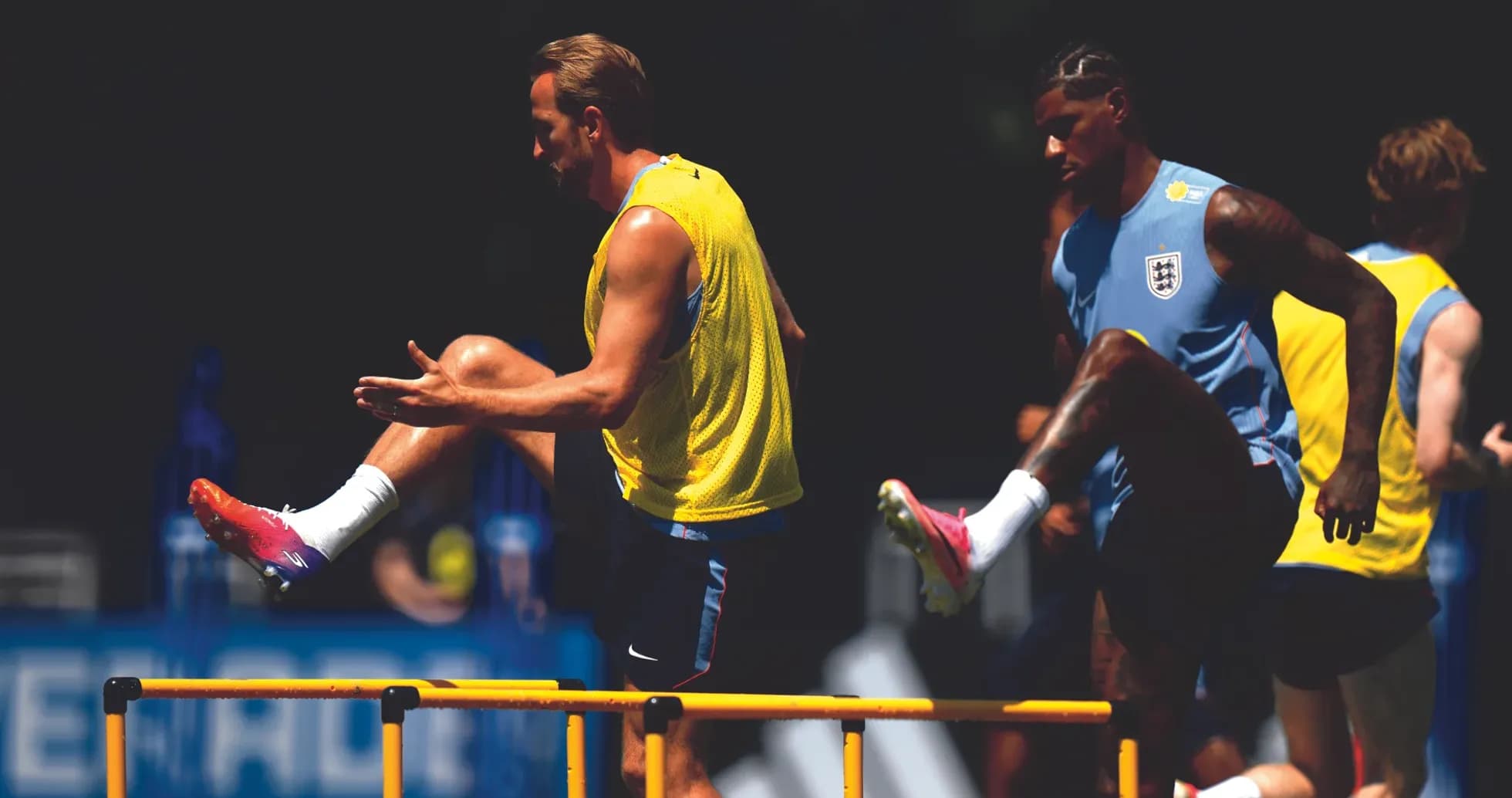
England's World Cup Opener: Attack Shines, Defence Wobbles
England’s attack roared into life in Arlington. The doubts did not.
Thomas Tuchel’s side opened their World Cup campaign with a 4-2 win over Croatia in Texas, a scoreline that flattered the attack and exposed the defence in equal measure. Twice England led in the first half. Twice they were dragged back by an ageing but streetwise Croatia team before finally pulling clear.
The goals, the movement, the tempo – all of that will reassure a nation that has been told this is a new, bolder England. The back line is another story.
A win that asked as many questions as it answered
On paper, England should feel secure. They cruised through qualifying without conceding a single goal in eight matches. That record sits nicely in a pre-tournament brochure. It does not hide what Tuchel saw in Arlington.
The defence wobbled. It hesitated. It looked exactly like what it is: talented, but green and fragile.
Former England defender Gary Neville, now watching from the Sky Sports gantry rather than the right flank, did not sugar-coat it. The first half, he said, would have rattled the coaching staff.
"I think that it will make Thomas Tuchel adjust for maybe games two and three, and make him think slightly differently about how he sort of maybe plays that defence, and how he looks at protecting them," Neville said.
Tuchel has already made one big gamble. He left three seasoned tournament campaigners at home – Real Madrid right-back Trent Alexander-Arnold and the Manchester United pair Luke Shaw and Harry Maguire. Between them, they know what it is to ride out a storm on this stage. England chose a different path.
The risk grew before a ball was kicked. Tino Livramento’s injury forced a late reshuffle and a call-up for Trevoh Chalobah, who arrived with just one cap and no World Cup experience.
Raw edges at the back
Strip the squad list down and the numbers tell their own tale. England’s nine defenders share 191 caps. John Stones owns 90 of them.
Against Croatia, three members of the back four were feeling their way into a World Cup for the first time: the injury-prone Reece James, Ezri Konsa and 21-year-old Nico O’Reilly. At times they looked exactly that – players learning at full speed, under the hottest lights.
The central question now is simple: does Tuchel stick or twist?
The loudest debate surrounds Konsa’s place. Should Manchester City defender Marc Guehi come in alongside Stones? Or does Tuchel keep faith with Konsa, a player he clearly trusts and has leaned on throughout his England tenure?
Tuchel continues to lean heavily on Stones’ experience and composure, even though the defender started only five Premier League games last season before leaving City. For the manager, that calm under pressure still matters.
Not everyone is convinced.
Former England striker Chris Sutton would go the other way entirely. He argues that athleticism, not experience, should define the centre-back pairing at this World Cup.
"I think Konsa and Guehi have better attributes in terms of one-against-one situations than John Stones and there will be times in games when they will be isolated one-against-one against players of the highest class," he told the BBC.
That is the crux of it. This is not just about Croatia. France, Spain and Argentina loom in the distance – teams with pace, trickery and forwards who punish even half-mistakes. The margins will shrink. The duels will be brutal.
Attack unfazed by the noise
Inside the camp, the mood is far less anxious.
Ollie Watkins, who leads the line for England with the same unruffled confidence he shows for his club, brushed aside the concerns when he spoke at the team’s base in Kansas City on Sunday.
"I think people are always going to try and criticise and find certain areas they can pick on but I think defensively we've got world-class players at the end of the day who have won major trophies and played at the highest level possible," he said.
He did not dodge the shaky start against Croatia, but he framed it as nerves, not structural weakness.
"I think maybe we started the game a little bit nervously the other day but you've seen once the nerves are out of the lads' system, I think in the second half we absolutely blew Croatia away."
That second-half surge will encourage Tuchel. England stepped higher, pressed with conviction and suffocated Croatia’s ageing legs. When they turned the screw, the game broke open.
The question is whether that kind of dominance will be available against the tournament’s elite – or even in their next outing.
Ghana next, and the stakes sharpen
Next up are Ghana in Boston. The equation is clear: if England beat the African side and Panama fail to beat Croatia, the Three Lions will reach the last 32 as Group L winners.
On the surface, it looks straightforward. It will not feel that way inside Tuchel’s meeting rooms.
He must decide how much he trusts a back line that has already shown its soft spots. Does he double down on Stones as the guiding voice? Does he unleash the Konsa–Guehi partnership Sutton is calling for? Does he tweak the full-backs to shield the centre more aggressively?
The attack, for now, is carrying the conversation. The defence might end up defining the tournament.
England have announced themselves in the United States with a scoreline that turns heads. Now comes the real examination: can this back four, patched together and still learning, stand firm when the World Cup’s real speed and power arrive?



