England's World Cup Journey: A Historical Perspective
Here’s the blunt truth for England: it probably still isn’t coming home.
That’s not fatalism, just arithmetic. The odds say it’s more plausible they finish fourth after losing to Argentina and France than that they run the gauntlet, beat Argentina and Spain, and lift the trophy.
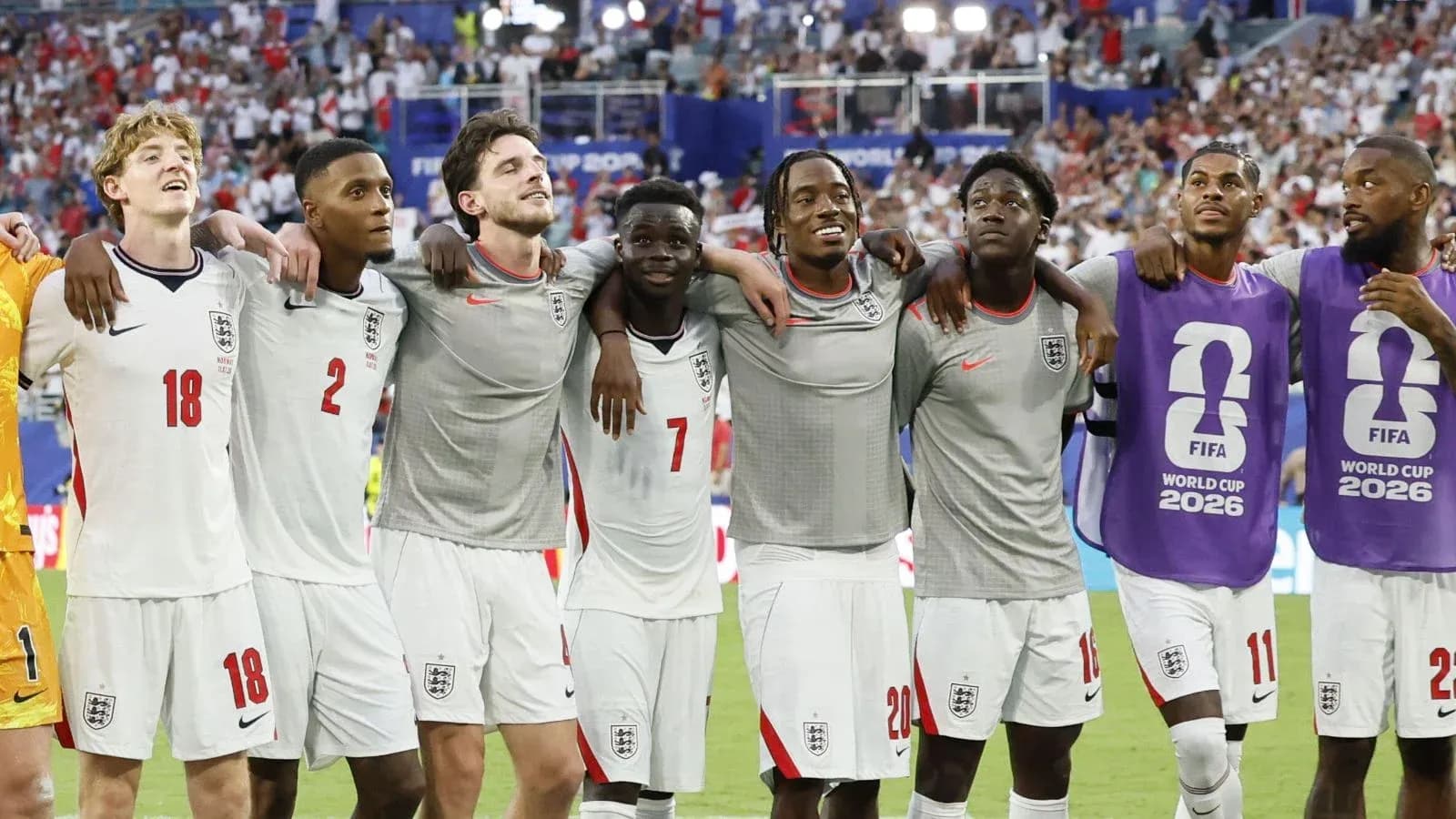
Yet whatever happens under the lights in Atlanta, this is already England’s second-best men’s World Cup. That feels like a line that hasn’t cut through the noise. It should.
A tournament that crept up on everyone
This had all the makings of a very familiar England campaign. The usual script was ready: a quarter-final exit, a muddled performance, and one unfortunate soul appointed the nation’s lightning rod for another four years.
They’ve ripped that up.
They haven’t dazzled from start to finish. They haven’t controlled every game. They’ve had spells that were stodgy, nervy, downright ugly. But so has everyone else. Spain were abject against Cape Verde. France vanished for an hour against Senegal and never really turned up in their semi-final.
You remember England’s wobbles more clearly because you live inside the noise. You’re English in England, or Scottish in Scotland, or, for the truly cursed, Scottish in England. Every misplaced pass is replayed, every tactical tweak dissected.
Strip away the angst and the volume, though, and the record is stark: England have navigated a tougher knockout path than Argentina, who have been distinctly fortunate with how the bracket has fallen. Argentina arrive in Atlanta hardened by history, yes, but hardly by this route.
Only a full-scale humiliation by Lionel Messi and company would change the complexion of this World Cup for England. And history says that kind of collapse simply isn’t in their tournament DNA.
England don’t get thrashed
There are bad days. There are embarrassing exits. There are defeats to teams England should beat. But there are almost never annihilations.
Ignore the third-place play-off – and everyone should, because it’s a ghost fixture that belongs in a museum – and the picture is remarkable. Since 1988, England have lost just one major tournament match by more than a single goal.
One.
Even that infamous defeat to Germany in the last 16 came with an asterisk the size of a VAR control room. They were outclassed, yes, but it should have been 2-2 at half-time. Instead, an officiating calamity helped push football down the technology-obsessed road it still trundles along today.
Think about the consistency that record implies. Since the start of the 1990s, England have missed only two major tournaments. They haven’t won any of the 17 they’ve contested. Yet only once have they been genuinely dumped out, the result beyond doubt long before the final whistle offered mercy.
This is not a team, or a football culture, that folds and accepts a hiding. It grinds, it suffers, it falls short – but it does not often collapse.
The quiet reality: this is their best World Cup away from home
And still, it doesn’t quite feel like England’s second-best World Cup, does it? Nobody seems to be saying it out loud.
On the cold facts, it is. Reaching a semi-final outside your own confederation is a higher bar than doing it on familiar continental ground. This is already the furthest England have ever gone in a World Cup staged outside Europe.
That matters. Tournament football away from home is a different beast: different climate, different rhythms, different pressures. England have handled all of that and still pushed into the last four.
Maybe the muted reaction owes something to the background noise from north of the border.
Scottish frustration and the seeded-draw myth
Scotland have had to watch this tournament end for them four times now. That stings. Their frustration is understandable. But some of the complaints about England’s supposedly “easy” path are built on a deliberate misreading of how seeding works.
Yes, Scotland were unlucky to land both Brazil and Morocco in the group. That’s the brutal reality of sitting in the lower pots: you’re more likely to be thrown in with the sharks.
The real hard-luck stories in a seeded draw are the top sides who end up with another top-10 team in their group, as Brazil did. The more common outcome is exactly what England had: no other top-10 nation in their section.
And those rankings that are suddenly sacrosanct in arguments about England’s path? At the time of the draw, Croatia were ranked 10th. Panama were the highest-ranked team England could have drawn from pot three, behind only Norway – who were never going to share a group with both England and Croatia.
So yes, England have not yet faced a side officially ranked in FIFA’s top 10. But the way people twist the value of those rankings to suit the mood is almost comic. Croatia live in that tier. Mexico at the Azteca is a top-10 level examination in all but name. And nobody, with any conviction, could point to 10 better international sides than Norway right now.
Strip away the rhetoric and the jealousy and there isn’t much left to attack in England’s route. This is roughly the path a seeded team is supposed to take.
They topped their group and got a third-placed side in the last 32. They met Mexico, as the bracket predicted, in the last 16. In a knockout tree that delivered the top four seeds as semi-finalists, the biggest “shock” has been Norway knocking out Brazil – not with miracles, but by being better organised, more coherent, more complete.
Glory, even in failure
The next step may still be a bridge too far. To win this thing, England must go through Argentina’s tournament steel and Spain’s club-level cohesion, back to back. That is a brutal double-header for any nation.
They will likely fall short. The probabilities lean that way. But if they do, it will be a failure of the most elevated kind – the most glorious of England’s many failures in six decades of hurt.
And if this is what failure looks like now, what does that say about where they might be heading next?