England's Thrilling Victory Against Croatia: Defensive Concerns Remain
England 4–2 Croatia, and on the surface it looks emphatic. Four goals, attacking verve, impact from the bench. Yet as the players walked off, the conversation among those who have worn the shirt before them circled back to the same point: this team can be ruthless in front of goal, but it is still far too generous at the other end.
Rooney’s ruthless eye on England’s first lapse
Wayne Rooney has seen enough international football to know when a goal is avoidable. Croatia’s first was exactly that in his eyes.
“We could do so much better with the first goal,” he said, dissecting the move with the cold precision of a striker who spent a career punishing such errors. Jude Bellingham, usually so sharp, was “a bit flat-footed” as the challenge came in. John Stones, Rooney felt, didn’t need to go to ground. There was “no real danger” with Jordan Pickford well placed behind him, yet the centre-back gambled, dived in, and the whole picture changed.
Nico O’Reilly had to shuffle across, the ball was set back, cut across, finished neatly. From a Croatia perspective, it was a slick move. From an England one, it was a chain of small misjudgements that turned a harmless phase into a goal.
Rooney’s gaze inevitably fell on the goalkeeper too. Pickford got a strong hand to the shot. “Could Jordan Pickford do a bit better? I don’t know,” Rooney said, before adding the line every keeper will recognise: if you touch it, you expect to keep it out. “If Jordan is getting a hand on it like he does then he’ll be disappointed.”
A good goal, yes. But in Rooney’s mind, one England never needed to concede.
Richards: England walked into Croatia’s trap
If Rooney focused on the details, Micah Richards went straight for the bigger picture. Both Croatian goals, he argued, were preventable – not just because of individual mistakes, but because of England’s positioning and approach without the ball.
“What England did was played into their hands,” the former defender said. Croatia’s technical players were allowed to get on the ball, to dictate and to drag England into areas they didn’t want to be. England had the legs, the energy, the running power to squeeze higher. They simply didn’t use it enough.
“In terms of energy England were all over Croatia,” Richards pointed out. Shift that intensity “ten or fifteen yards further forward” and those situations never develop. The warning was clear: at this level, if you let gifted midfielders settle, they will find a way to hurt you.
The irony for England is that they have exactly what Richards is calling for: power from the bench, fresh legs, players who can transform the tempo of a game. “Having the flexibility of the energy off the bench is going to be pivotal going forward,” he said. The question now is whether that becomes a proactive weapon, not just a reactive one.
Stones, Konsa and Tuchel’s early dilemma
The spotlight inevitably falls on the centre-backs when a team concedes twice in one half. Thomas Tuchel trusted John Stones and Ezri Konsa at the heart of his defence, but what he got was a performance that never quite settled.
Stones, short of minutes at Manchester City last season, saw plenty of the ball and willingly took on the burden of building from the back. That is what he does. It also carries risk, and at times England looked exposed when possession turned over.
Alongside him, Konsa – a regular under Tuchel since he took charge – showed glimpses of his usual calm. There were moments where his positioning and timing looked exactly as his manager would want. There were others when he appeared short of rhythm next to a partner he doesn’t yet move in total sync with.
Two goals conceded before the interval will linger in Tuchel’s mind as he plans for Ghana. Does he double down on Stones and Konsa, backing them to grow into the tournament? Or does he turn to Marc Guéhi to bring a different balance and, perhaps, a steadier feel to the back line?
It is early, but England’s ambitions are high. The margin for error is not.
Gordon’s grounding message on a night of firsts
Amid the tactical debates and defensive dissection, Anthony Gordon quietly lived out a childhood dream. A first World Cup appearance, a landmark every player imagines in the garden or the park long before it becomes real.
“It has been a crazy couple of weeks and that just topped it off,” he told BBC Radio 5 Live. “First World Cup game, something I have dreamed about as a kid.”
There was no self-indulgence in what followed. “Special, but it is not about me. Self-centredness is a disease and I don’t want to be a part of that.” In a squad loaded with egos and expectations, it was a pointed choice of words.
“It is about the team,” he stressed, immediately name-checking Marcus Rashford, Bukayo Saka and Morgan Rogers for their contributions. The narrative, in Gordon’s mind, is collective, not individual.
On the match itself, he did not shy away from the reality. “A difficult first half – their goal came from nowhere and stunned us a little bit. We came out really strong in the second half and got what we wanted. They were really good and that can't be underestimated when you look at the game.”
England won. Croatia asked questions. Gordon, like his manager, knows both truths can sit side by side.
Rashford changes the game – and sharpens his shop window
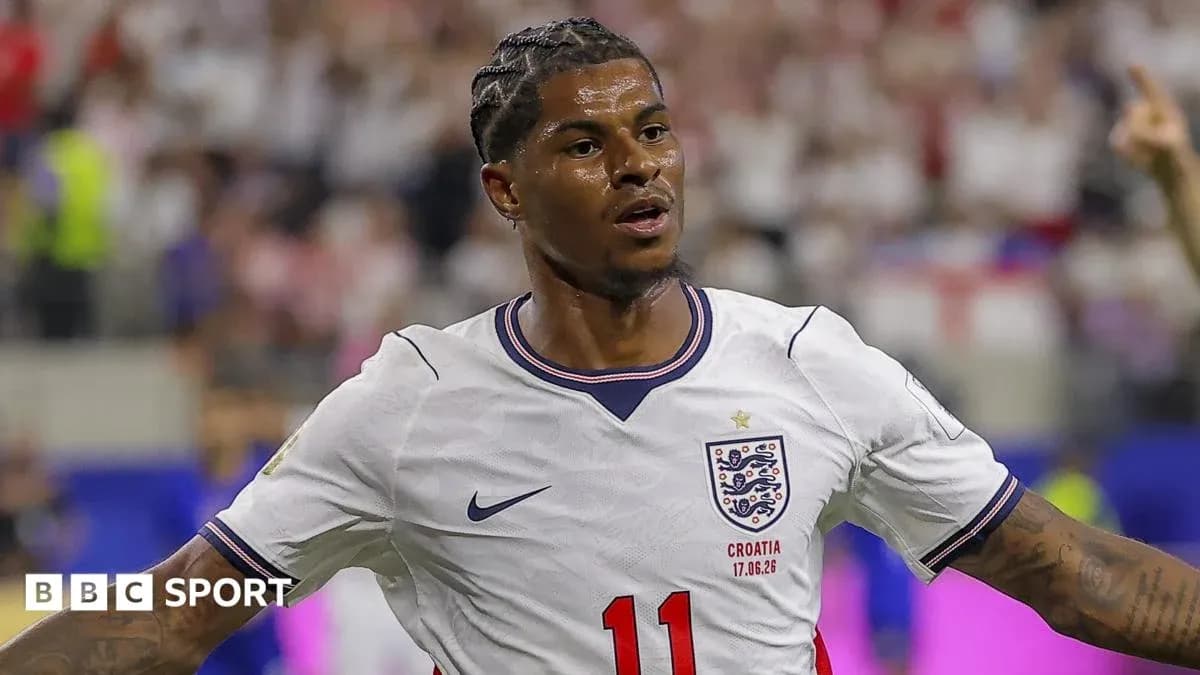
Rashford’s name has hovered over this World Cup for different reasons. Form, confidence, club future – all under scrutiny. Against Croatia, he gave the only answer that really matters for a forward: he scored, and he changed the feel of the contest when he came on.
A goal, a “pretty positive impact” as it was described, and a reminder of what he still brings at the highest level. For England, it was a timely contribution. For Manchester United, it complicates an already knotty summer.
On 1 July, Rashford officially becomes a United player again after Barcelona chose not to trigger a £26m clause to buy the 28-year-old. United’s stance is firm: they want £40m, and they are not interested in another loan to the Camp Nou, which is exactly what the La Liga club would prefer.
His £325,000-a-week salary narrows the field. Only a handful of clubs can realistically move for him, and United cannot force him anywhere he does not want to go. As it stands, the plan is simple: after his mandatory three-week post-World Cup break, they expect him back, likely in time for a training camp in the Republic of Ireland.
There is still plenty of time for the picture to shift. Performances like this, though, tilt the conversation. Each sharp finish, each confident cameo, nudges the dial a little. Is Rashford a player United can afford to lose, or one they must now find a way to rebuild around?