
Egypt Triumphs Over Australia in World Cup Knockout Drama
In the end, it came down to a teenager, a crossbar and a continent holding its breath.
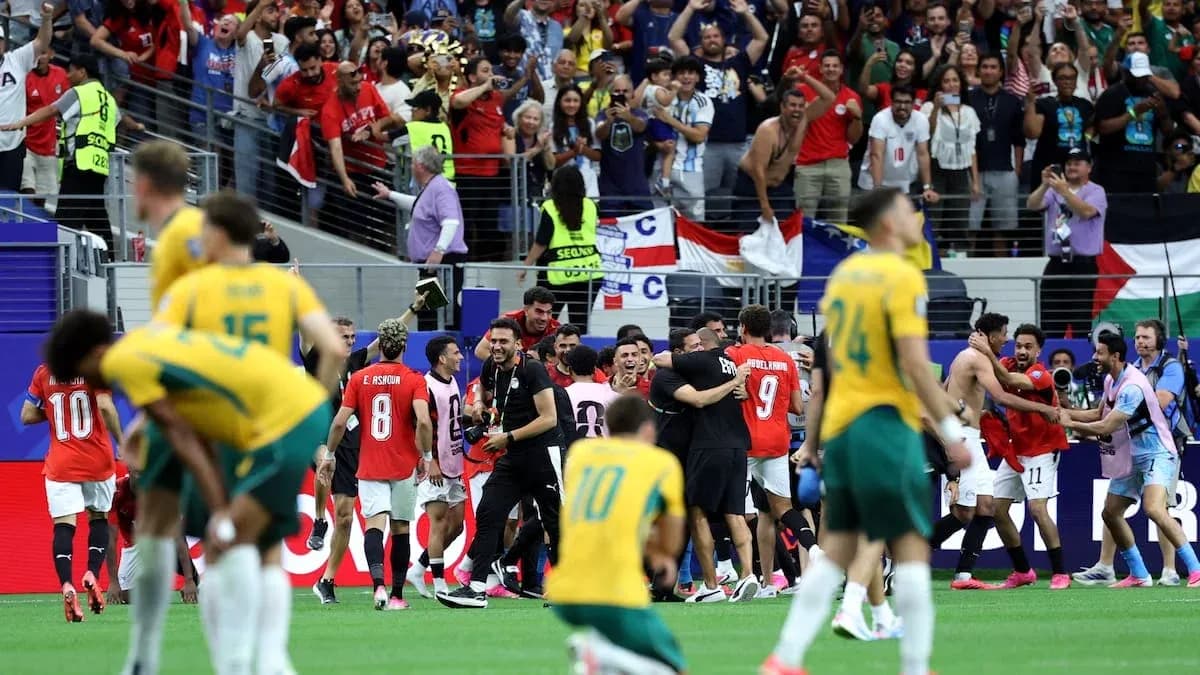
Australia’s World Cup dream died from 12 yards as 18-year-old defender Lucas Herrington crashed his penalty against the bar, opening the door for Egypt’s Abdelmaguid to roll his spot-kick home and send the seven-time African champions into uncharted territory. Mohamed Salah, tears streaming down his face, finally had his World Cup knockout moment. Australia were left on their knees.
A gamble in goal, and a brutal start
Tony Popovic blinked first. As extra time faded and penalties loomed, he made the bold call: off went Patrick Beach, on came Mathew Ryan, the veteran goalkeeper summoned for one last job.
The shootout played out in front of the Egypt end, a wall of noise and whistling hostility. Harry Souttar stepped up first for the Socceroos and lashed his effort over the bar, a wild miss that instantly tilted the contest. The pressure that had simmered all night finally boiled over.
Five penalties followed, all converted. Salah, quiet for long spells in open play, walked up with the air of a man who has carried a nation for a decade and rolled his effort in with icy calm. Australia clung on, but when Herrington’s effort cannoned away off the bar, Abdelmaguid did not hesitate. One clean strike, and Egypt were through. Salah sank to the turf in joy. Australia’s players stared into space.
Early blow rocks the Socceroos
The drama from the spot only told half the story of a night that began with Australia on the front foot and ended with them chasing shadows.
Inside five minutes, Cristian Volpato – the playmaker who chose the green and gold over Italy on the eve of the tournament – rattled the top of the crossbar with a fierce effort. It was a warning, a statement, and for a few minutes Egypt’s back line wobbled.
Then, almost out of nowhere, Hossam Hassan’s side struck.
Nestory Irankunda switched off at the back post, Karim Hafez whipped in a teasing cross, and Emam Ashour stole in unmarked to guide a header home after 13 minutes. It was his second goal of the tournament and Egypt’s first real attack of note. Against the run of play, they led.
For a team that had scored only twice in the group stage, Australia suddenly had to chase the game in front of 70,000 spectators in the air-conditioned home of the Dallas Cowboys. The onus was on them to attack; the anxiety belonged to them now.
Salah subdued, Egypt strike first in history chase
This was a night heavy with context. Neither Egypt nor Australia had ever won a men’s World Cup knockout match. Both sensed history. Both played like they knew what was at stake.
Egypt arrived with a new-found belief after their first-ever World Cup win in the group phase, a 3-1 victory over New Zealand. Yet they looked edgy at the back, unsure in their clearances, vulnerable to Australia’s physical press.
Salah, 34 and coming off a hamstring strain, barely flickered in a bruising first half. He drifted wide, dropped deep, tried to knit play together, but never quite escaped the Australian defenders who took turns leaving a mark on him.
Australia, for all their possession, did little to test Mostafa Shoubir. Their first effort on target came 10 minutes before the break, Aziz Behich scuffing a tame shot straight at the Egypt goalkeeper. Shoubir’s presence carried its own story: his father, Ahmed, had worn the gloves for Egypt at the 1990 World Cup. Now the son stood under the lights, dealing calmly with what came his way.
The half ended on another blow for the Socceroos. Jordan Bos, one of the quickest players in the tournament and a constant outlet on the flank, was left in a heap after a flying, robust challenge from Rabia. He did not reappear after the interval, replaced by Kai Trewin. For a side already short on cutting edge, losing Bos stripped away another layer of threat.
Australia drag themselves back
Seconds after the restart, Australia were almost buried. Omar Marmoush, the Manchester City forward, slid a close-range effort wide when it looked easier to score. It felt like a turning point. Egypt had the chance to kill it. They let Australia live.
The Socceroos clung to that reprieve.
They pushed higher, fought harder in midfield, and forced Egypt into mistakes. The equaliser came from one such moment of chaos. An in-swinging free-kick was hurled into the box, bodies crashed together, and under heavy pressure Mohamed Hany misjudged his header and diverted the ball into his own net.
It was his second own goal of the tournament. For Egypt, a nightmare. For Australia, a lifeline they had barely seemed capable of creating from open play.
The stadium shifted. The noise changed. Suddenly it was Egypt retreating, Australia sensing possibility. Yet still, clear chances were scarce. The match grew scrappier, more attritional, both sides feeling the weight of history and the creeping fear of a mistake.
Egypt finish strong, penalties inevitable
As normal time ticked into stoppage, Salah finally found pockets of space. He linked play neatly in the build-up to a late Egypt surge, and when Ramy broke through, it took an athletic save from Beach to keep Australia alive and drag the contest into extra time.
By then, Egypt had the momentum. They finished the 90 stronger, their passing sharper, their runners more confident. Early in extra time, Salah cut inside onto his weaker right foot and lashed a shot well over, a reminder that even the greats can snatch at the moment when the whole world expects perfection.
Chances thinned out. Legs tired. The air felt heavier. Penalties stopped being a possibility and started feeling like destiny.
Popovic made his move with the clock almost drained, calling for Ryan in the hope that experience and presence would tilt the lottery in Australia’s favour. It was a bold, decisive call.
It was not enough.
Souttar’s miss set the tone, Salah’s coolness restored calm, Herrington’s bar-rattler broke Australian hearts. Abdelmaguid finished the job.
Egypt, who had waited decades just to win a World Cup match, now step into the knockout spotlight with belief, scars and their talisman finally smiling through tears. Australia, so often defined by resilience on this stage, are left to wonder how close they came – and how long it will be before they stand on the brink of history again.



