
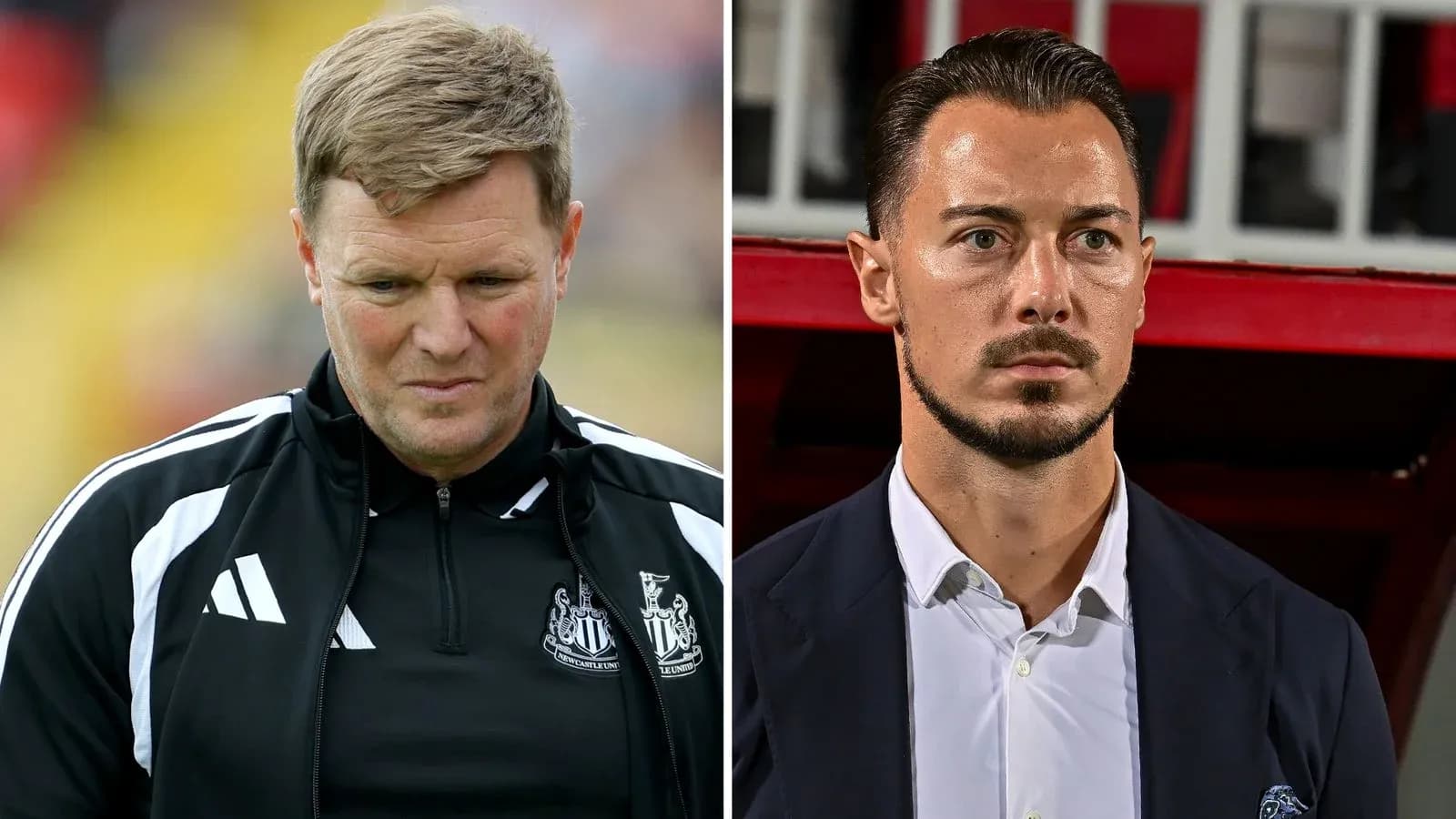
Eddie Howe Leaves Newcastle: A Manager's Departure Before Season Start
Eddie Howe has left Newcastle United. No long goodbye, no farewell lap of St James’ Park. Just a decision, sharpened over weeks of reflection, confirmed after 48 hours of talks with the hierarchy – and delivered less than a month before the new Premier League season starts.
He goes after nearly five years that reshaped the club, with a League Cup in the cabinet and two Champions League qualifications on the ledger. He also goes from a club that has been selling its best players while asking him to keep climbing.
The timing is brutal. The context explains it.
A decision months in the making
Howe had been turning over the idea of walking away for several weeks. He still drove pre-season, still planned for Liverpool on August 23, still fronted up as if he would be the one leading Newcastle out live on television.
The 4-1 defeat to Bristol City on Wednesday night was his final game, but not the trigger. As Sky Sports News’ Keith Downie reported, Howe had already set the wheels in motion. On the way back from that friendly, he informed his coaching staff. The match, damaging as it looked on paper, was irrelevant to the decision.
This was his call. The club tried to change his mind. He chose to step back, to take a break from football, and crucially wanted Newcastle to have a successor lined up before he walked.
There is no public bust-up, no split dressing room, no dramatic sacking. Just a manager who believes he has taken the project as far as he can under the current conditions.
A squad stripped, a manager worn down
Those conditions have changed sharply over the past two summers.
Newcastle have already lost Sandro Tonali and Anthony Gordon in this window, and uncertainty hangs over captain Bruno Guimaraes, who is wanted by Arsenal. Last summer, the club sold Alexander Isak to Liverpool for a British-record £125m.
For a coach who built his Newcastle around a defined core, that erosion matters. As Jay Bothroyd put it, Howe has watched “some of the best players in the Premier League” leave and seen them replaced by “unproven players in the Premier League.”
Newcastle’s recruitment has focused on youth and potential. Bazoumana Toure, a 20-year-old winger from Hoffenheim, has arrived for £42m. Sean Steur, 18, comes in from Ajax for £23m. Ewen Jaouen, a 20-year-old goalkeeper from Reims, has joined for £18.5m.
They are prospects, not guarantees. And when Johan Manzambi chose Aston Villa over Newcastle, that felt like another blow to Howe’s hopes of retooling quickly enough to compete.
He had believed he could take Newcastle forward again this season – if the club recruited at the level required. The steady drip of exits, and the profile of the replacements, helped push him to a different conclusion.
Jaissle in the frame as Newcastle scramble
Newcastle now find themselves in a position they never wanted: head coachless in late July, with the squad due to fly to Spain for a pre-season training camp on Friday and the players not yet formally told of Howe’s departure.
Behind the scenes, they are moving at speed.
Matthias Jaissle, the 38-year-old German coach currently at Al Ahli, is the favourite to replace Howe. Talks are understood to be at an advanced stage. The links are obvious: Al Ahli are one of four clubs owned by Saudi Arabia’s Public Investment Fund (PIF) – the same group that owns Newcastle.
Antonio Conte and Kieran McKenna have also been spoken to, but Jaissle is the man Newcastle are pushing towards as they try to stabilise the situation before the new campaign.
Whoever steps in inherits a fractured picture: a squad in flux, a fanbase stunned, and a club that has slipped from the clarity of its early PIF-era vision into something far more uncertain.
Howe’s last words and the Bruno question
Howe’s final public act as Newcastle boss underlined that uncertainty. Asked about the future of Bruno Guimaraes, he did not offer the kind of cast-iron reassurance supporters crave.
“Assurances – I don't think you can push too hard for those,” he said. He spoke instead about commitment, about how Bruno’s training and performances had been “outstanding,” how he had always played with the fans “by his side,” and how he would “love to see that continue.”
He made his stance clear: Newcastle want to keep all of their best players, and Bruno sits firmly in that category. But he also admitted that not everything is in the club’s control, or the player’s.
“What will be, will be,” he said. Newcastle, he argued, could only look after Bruno when he returns, make sure he trains well and once again “makes a difference as he always has done.”
Those words now read differently. They sound like a manager who knows the forces at play around his squad, and knows he cannot shape all of them.
From revival to rupture
Howe’s legacy at Newcastle is not in doubt.
He took over a club drifting towards relegation and turned it into a Champions League side. He delivered the League Cup, ending a 70-year wait for major silverware. He twice secured top-five finishes in the Premier League and last season guided Newcastle to their deepest run in the Champions League.
He did it while carrying the expectation that comes with state-backed ownership and the scrutiny that follows it. He did it while evolving the team tactically, rebuilding the dressing room culture and reconnecting the club with its support.
Some fans never lost sight of that. “Regardless of last year’s disappointment, Howe has done an unbelievable job,” wrote one supporter, pointing to a squad “pillaged” over the last two seasons and “bargain bin replacements” expected to hit the same heights.
Others were more critical, suggesting his “time was definitely up” or questioning the timing of his decision, asking why he did not step aside before pre-season to give a new manager more runway.
There is also anger directed inwards. One fan accused a “short sighted” section of the support of turning on Howe and players too quickly, arguing that such hostility has contributed to key figures deciding to leave.
The emotional range is wide – disbelief, gratitude, frustration – but the common thread is shock. Few expected this separation to come now.
What next for Newcastle?
The football questions are stark. Without Howe, without Isak, with Gordon and Tonali gone and Guimaraes wanted elsewhere, where does this team land?
Bothroyd did not mince his words. He has shifted his prediction from mid-table to bottom half. “They're way off it,” he said. “They're going to be in a relegation battle this year.”
That is a bleak outlook for a club that recently dined at Europe’s top table and talked openly about building something lasting under PIF.
Newcastle’s owners now face their first true footballing crossroads. They must appoint a head coach who can work within the financial and strategic framework that has led to these high-profile exits, yet still convince ambitious players and a restless fanbase that the project is alive.
Howe leaves with affection from the board, admiration from neutrals and, for many Newcastle fans, the status of one of the club’s greatest managers.
He also leaves a question hanging over Tyneside, one that will define the season to come: was this the natural end of a cycle, or the moment Newcastle’s grand project lost its way?



