
DR Congo Cancels Kinshasa Farewell Amid Ebola Outbreak
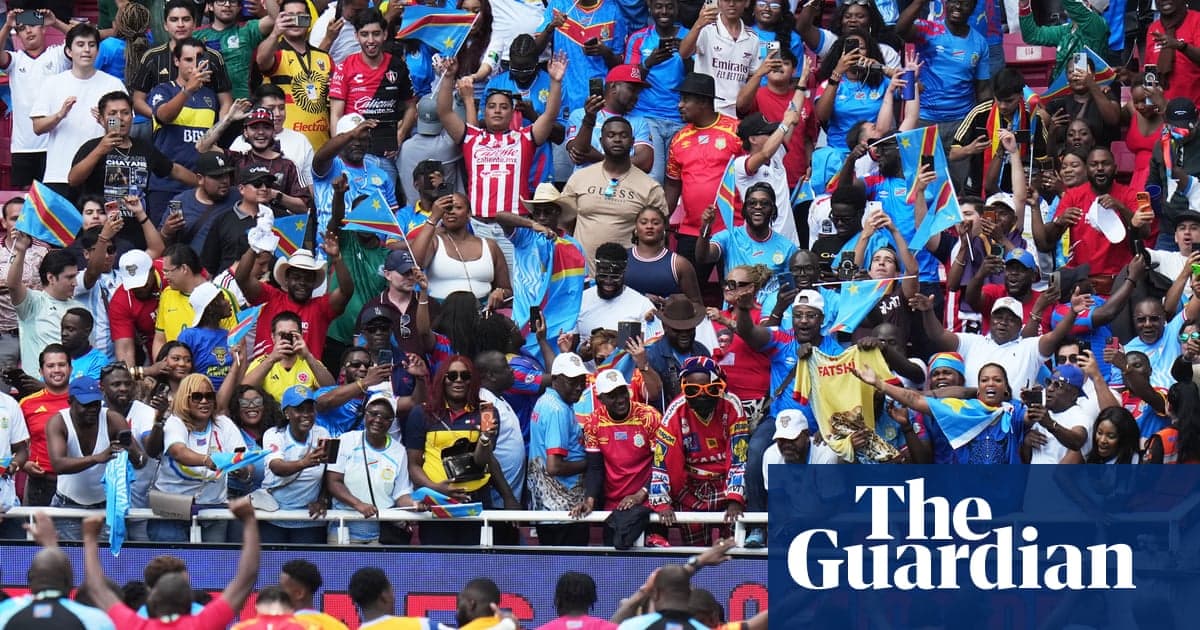
The Democratic Republic of the Congo should have been saying goodbye. A three-day send-off in Kinshasa, a capital dressed in leopard spots and noise, was meant to launch their first World Cup adventure in half a century.
Instead, the farewell has been scrapped. Ebola has intervened.
An outbreak of the rare Bundibugyo strain in the east of the country – blamed for more than 130 deaths and nearly 600 suspected cases – has forced the federation to cancel the Kinshasa camp and shift preparations abroad. The World Health Organization has labelled the situation a public health emergency of international concern. Football, even a World Cup, has had to bend.
Only one phase of Sébastien Desabre’s carefully layered build-up has gone. The rest, for now, holds firm.
“There were three stages of preparation: in Kinshasa to say goodbye to the public, Belgium and Spain with two friendly matches … and the third stage from 11 June in Houston. Only one stage was cancelled – the one in Kinshasa,” team spokesman Jerry Kalemo explained.
So the Leopards will stay on the road. They will face Denmark in Liège on 3 June, then Chile in southern Spain on 9 June, both fixtures confirmed as going ahead. From there, they fly to the United States, where Houston awaits and, with it, Portugal on 17 June in their opening Group K game.
This is not a squad rooted at home. All of DR Congo’s players and their French coach are based abroad, many of them in France. That has suddenly become a logistical blessing. While some staff members who live in the country are “leaving in the next hours”, as Kalemo put it, the core of the group has been training in Europe for weeks, away from the outbreak zone.
Global authorities are already deep in the detail. Fifa has moved into monitoring mode, stating it “is aware of and monitoring the situation regarding an Ebola outbreak and is in close communication with the DRC football association [Fecofa] to ensure that the team are made aware of all medical and security guidance.”
In Washington, the response has been sharper still. The Centers for Disease Control and Prevention has announced that the United States will bar entry to all foreign nationals who have been in the DRC, Uganda or South Sudan in the previous three weeks, a 30-day measure designed to ringfence the outbreak.
World Cup organisers inside the US needed clarity. They have it, at least where the team is concerned. A US official has confirmed that DR Congo’s players and coaching staff will not fall under the CDC ban because they have been based in Europe in the crucial three-week window. Team members, coaches and officials who have not returned to the country recently will be allowed in as normal.
The picture is more complicated for anyone who did travel back. Members of the official World Cup delegation who have been in the DRC during the 21-day period will face the same quarantine rules as US citizens returning from affected nations. There is no such leeway for supporters. Fans hoping to follow the Leopards to the States after recent travel to the region will run straight into the entry ban.
Inside the US government, the World Cup sits under a dedicated White House taskforce housed in the Department of Homeland Security. It has underlined that it is “coordinating closely” across agencies on health and security and is “closely monitoring” the outbreak as the tournament draws nearer.
All of this swirls around a team that has already taken the hard road just to be here. DR Congo booked their place by beating Jamaica in a playoff in Mexico and have been thrown into a demanding Group K. After Portugal in Houston, they head to Guadalajara to face Colombia on 23 June, then close the group against Uzbekistan in Atlanta on 27 June.
For the country, this is a return to a stage that has lived only in black-and-white footage and family stories. Their last World Cup appearance came in 1974, under the name Zaïre. A different flag, a different era. The wait has stretched across generations.
Desabre’s 26-man squad blends Premier League sheen with emerging talent. Newcastle forward Yoane Wissa carries a sharp attacking threat. Sunderland’s Noah Sadiki offers legs and balance in midfield. At the back, West Ham full-back Aaron Wan-Bissaka brings top-level defensive pedigree to a side that will need it against some of the world’s most incisive attacks.
There has been disruption on the way. Hibernian centre-back Rocky Bushiri, initially named in the squad, has withdrawn with a suspected achilles injury, a significant blow to the defensive rotation. His replacement, Kilmarnock’s Aaron Tshibola, keeps the Scottish Premiership link alive in the group and adds versatility, but the change underlines how little margin for error Desabre has as he finalises his plans.
Away from the touchline, power has shifted too.
Véron Mosengo-Omba, once general secretary of the Confederation of African Football, has been elected president of Fecofa. Unopposed, he received 60 of a possible 65 votes, stepping into the role only months after leaving Caf in March following a five-year stint. A long-time ally of Fifa president Gianni Infantino – the pair are university friends and Mosengo-Omba followed him from Uefa to Fifa in 2016 before moving to Caf in 2021 – he now takes control of the federation at the most scrutinised moment in its modern history.
So the script has changed. No roaring send-off in Kinshasa, no final embrace between team and capital before they cross the Atlantic. Instead, a World Cup campaign framed by health bulletins, travel bans and emergency declarations.
The Leopards still go to the United States with a chance to rewrite their football story. The question is whether they can keep the noise of a crisis at home from drowning out the sound of a nation finally returning to the world stage.



