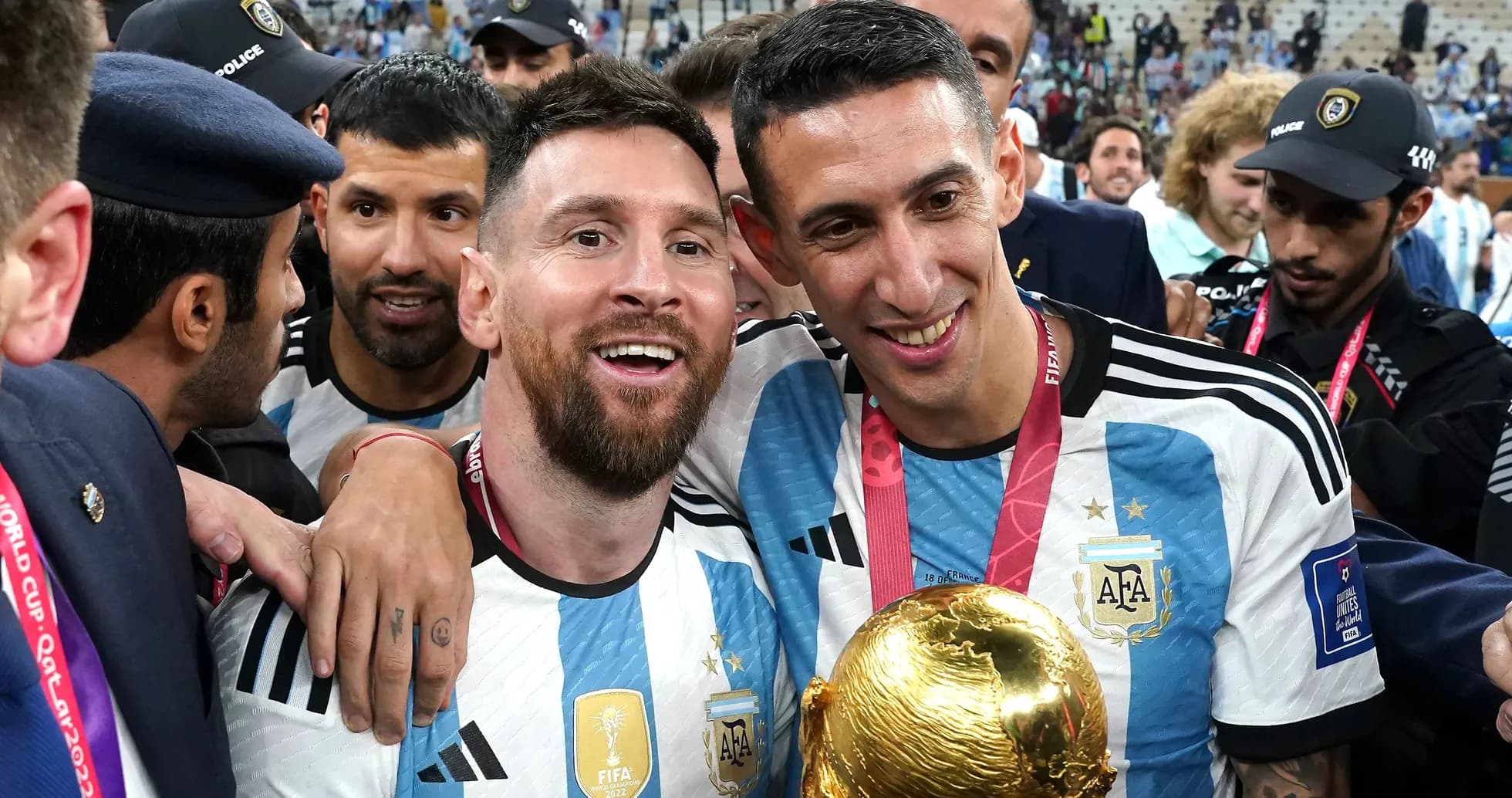
Ángel Di María's Message on Messi and Scaloni's Future
Ángel Di María has never been one for half-measures on a football pitch. He isn’t using them with his words either.
Fresh from Rosario Central’s 2-1 defeat to Belgrano, the veteran winger stepped in front of the microphones and delivered a message that cut straight through the noise surrounding Lionel Messi’s future. The World Cup in 2026 may have closed one chapter, but in Di María’s eyes, it has not closed Messi’s book.
“Leo has to keep going as long as he wants,” he said, with the certainty of a man who has seen Messi at his most human and his most divine. “I think he can continue for many more years. At 39, he's shown that he's one of the best and that he can continue to be one of the best in history. He has no ceiling, there's nothing more for him.”
The words land with extra weight after Leandro Paredes revealed that Messi had viewed the 2026 World Cup final as his farewell to the international game. Argentina’s emotional run, ending in heartbreak, had felt like the closing scene of a decade-long epic. For Di María, though, the protagonist still decides when the curtain falls.
Messi’s future is only one part of the equation. The other sits on the touchline.
Di María’s plea for Scaloni
If Messi remains the soul of this Argentina, Lionel Scaloni is its structure. Di María made that point emphatically, shifting the conversation from his long-time teammate to the man who rebuilt the national team.
“Scaloni is the leader of the national team, I hope he stays for everyone's sake,” he insisted. The numbers back him up: four major trophies, a World Cup, two Copa Américas, and the Finalissima. A golden era, crafted by a coach who inherited chaos and turned it into continuity.
For Di María, Scaloni is not just the manager who brought trophies. He is the architect of what comes next.
“He’s developing a good generation of young players who are coming through now, and every little bit helps. I hope he stays; it's his decision. Scaloni, better than anyone, knows what he wants, but obviously, as an Argentine, I'd like him to continue.”
The message is clear: as Argentina stands at a crossroads, losing both Messi and Scaloni in quick succession would feel less like transition and more like rupture.
A generation that changed everything
Di María’s reflections then drifted back over the journey that took this group from nearly-men to immortals. Before the latest disappointment, they had already scaled the highest peak.
“They deserve more than just applause for everything they've achieved and have continued to achieve,” he said. “Beating England was the culmination of all that. For me, the World Cup ended there, and we gave the country its greatest joy, and that's the most beautiful thing for everyone.”
It is a striking admission. For Di María, that win – that single, seismic result – became a personal full stop. Whatever came after, including the final itself, felt secondary to the release of decades of tension and expectation. The trophy in Qatar, the Copa titles, the Finalissima: all of it fed into a sense that this team had already secured its place in history.
The latest campaign, with its dramatic swings and emotional toll, only deepened that bond between squad and nation.
Suffering, pride, and what comes next
Di María did not hide from the pain of watching from the outside, no longer the ever-present figure in the Albiceleste shirt but still emotionally tied to every minute.
“I suffered through every match, but in the end they drew on their inner strength and that's what led to victories. Finals are finals; sometimes you win, sometimes you don't. This time it wasn't our turn, but I think the lads did the national team proud.”
That line – “finals are finals” – carries the weary wisdom of someone who has lived both sides. Glory in Qatar. Agony elsewhere. The margins that define legacies but do not erase what came before.
So the picture is this: Messi, 39, still, in Di María’s eyes, with no ceiling. Scaloni, the coach who turned a fractured setup into a serial winner, contemplating his own future. A new generation pushing through, but still tethered to the shadows of giants.
Di María has stepped away from the international stage. He knows the feeling of a last dance. Maybe that is why his voice, on Messi and Scaloni, cuts so sharply.
Argentina’s golden era is not yet officially over. The decision on whether it continues now rests with two men who have already given their country everything.