
Curaçao's World Cup Journey: Brenet's Redemption Story
The story of Curaçao’s national team begins long before kick-off on Sunday night. It starts in the Caribbean, runs through Rotterdam and Eindhoven, winds its way across Manchester, Bremen and Hoffenheim, and somehow ends up back under the floodlights against Germany at a World Cup.
For all the island’s colour and footballing pride, only one member of this 26-man squad was actually born on Curaçao. Tahith Chong, once tipped as a future star at Manchester United, carries that distinction. He played 16 competitive games for United before a brief, stuttering loan spell at Werder Bremen in 2021, and now finds himself at Sheffield United, a familiar name in a squad built largely in the Netherlands.
Curaçao’s team is, in many ways, a product of migration. Thousands left the island for the Netherlands over decades, and their children now wear the blue shirt of a FIFA-recognised nation, a status only granted in 2010. The result is a group that feels both new and deeply rooted: Dutch-accented, Caribbean-hearted, and scattered across Europe’s leagues.
Germany’s fingerprints are all over this squad. Chong is one of six players with Bundesliga or German lower-league experience. Gervane Kastaneer once turned out for 1. FC Kaiserslautern, Riechedly Bazoer for VfL Wolfsburg, Roshon van Eijma for Preußen Münster, while Jürgen Locadia and Joshua Brenet both passed through TSG Hoffenheim. Each of them carries a story of chances taken, chances missed, and careers that never quite followed a straight line.
None more so than Brenet.
Brenet’s long road back
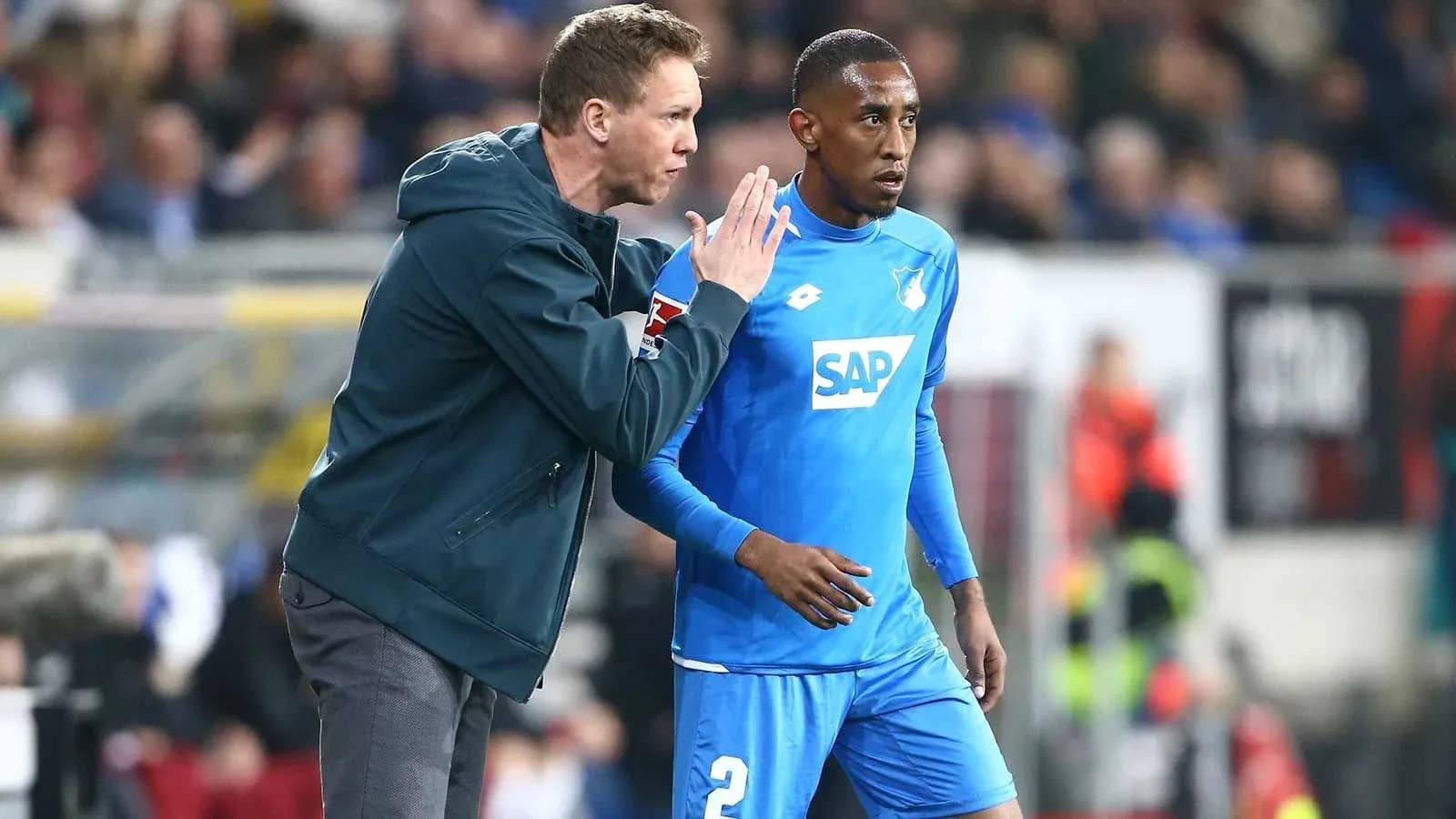
In 2018, Joshua Brenet looked set for the top. A three-time Eredivisie champion with PSV Eindhoven, capped twice by the Netherlands, he earned a €3.5 million move to Hoffenheim. Julian Nagelsmann, now Germany’s national coach, had pushed for the deal. A modern, attacking right-back, Brenet seemed a perfect fit for a team on the rise and about to step onto the Champions League stage.
It unraveled quickly.
Brenet started his Bundesliga life on the bench. Then came the turning point: ahead of Hoffenheim’s first-ever Champions League match against Shakhtar Donetsk, he skipped a video session. Nagelsmann responded by dropping him from the squad entirely. The message was clear. At that level, details matter, and Brenet had ignored them.
He was later brought back into the fold, but only at the edges. Cameos, not trust. Starts, not status. When Nagelsmann left, any remaining goodwill went with him. Alfred Schreuder, now Nagelsmann’s assistant with the DFB, barely used Brenet. Sebastian Hoeneß went further and demoted him to the reserves in the Regionalliga Südwest, Germany’s fourth tier.
On the pitch, his career stalled. Off it, his reputation suffered. Repeated disciplinary issues, including persistent lateness, hardened perceptions of a player wasting his talent. Hoffenheim searched for a buyer and found none. In 2022, he slipped away on a free transfer to Twente Enschede, a once-promising career reduced to a cautionary tale.
For a while in Enschede, the story seemed to flip. Brenet impressed again, his performances hinting at the player he might still become. Then he blew it.
In January 2023, he was caught driving without a licence twice in two weeks. He had already lost that licence in 2020 after a drink-driving offence. The pattern was impossible to ignore. In court, the presiding judge delivered a damning verdict: “He clearly has no regard for authority. It seems to me as though he is continuing to play football after receiving a red card.” The sentence came in 2024: one month in prison.
Brenet already had a suspended sentence on his record from 2021, which included a fine and community service for domestic violence. The new prison term for driving without a licence was later converted to community service on appeal, but Twente had seen enough. They terminated his contract.
From there, his career fragmented. He joined Al-Rayyan in Qatar, playing only six times in the 2024/25 season. Then came a short stay at Livingston FC in Scotland, followed by another move, this time to Kayserispor in Turkey for the second half of the campaign. Clubs kept changing. The questions around him did not.
A different shirt, a different stage
And yet, here he is, at a World Cup, wearing Curaçao’s colours.
Despite his history with the Netherlands—multiple youth caps and a senior debut in the 2016 World Cup qualifiers—FIFA eventually granted his switch to represent the country of his parents. It marked a fresh chapter, not a clean slate, but a chance to write something different.
Since his debut for Curaçao in 2024, Brenet has scored six goals in 17 appearances. For a right-back, those numbers jump off the page. He started the final warm-up game against Aruba on that familiar flank and found the net again, a reminder of his attacking instincts and the quality that once drew Nagelsmann’s attention.
Now, at 32, he stands on the brink of a surreal reunion. On Sunday at 7 pm, Curaçao open their World Cup campaign against Germany. On the opposite bench: Nagelsmann and Schreuder, the two men who once decided he was not worth the risk at Hoffenheim.
For Curaçao, the match is about far more than one defender’s past. It is about an island that has exported its people and, through them, its footballing identity. It is about a squad built in Dutch academies and German training grounds, walking out under a Caribbean flag on the sport’s biggest stage.
For Brenet, though, the stakes feel personal. A career marked by self-inflicted wounds has led him back, improbably, to face the coaches who moved on without him. This time, there is no video session to skip, no bench to disappear into.
Only Germany, the World Cup, and a final chance to show what he does with the whistle blown and the ball at his feet.



