Crystal Palace vs Everton: High-Stakes Premier League Clash
In 2026 at Selhurst Park, Crystal Palace host Everton in a late Premier League fixture in Regular Season - 36. In the league phase, Palace sit 15th on 43 points with a -6 goal difference (36 scored, 42 conceded), while Everton are 10th on 48 points with a neutral goal difference (44 scored, 44 conceded). With Palace still needing to lock in safety and Everton pushing to secure a top-half finish and keep faint European hopes alive, this becomes a high-stakes mid-table clash with clear implications for relegation risk on one side and upward mobility on the other.
Head-to-Head Tactical Summary
The recent head-to-head record tilts towards Everton, with a pattern of tight games and late swings.
On 5 October 2025 at Hill Dickinson Stadium in Liverpool (Premier League, Regular Season - 7), Everton beat Crystal Palace 2-1. Palace led 1-0 at half-time, but Everton turned it around to win 2-1 by full time.
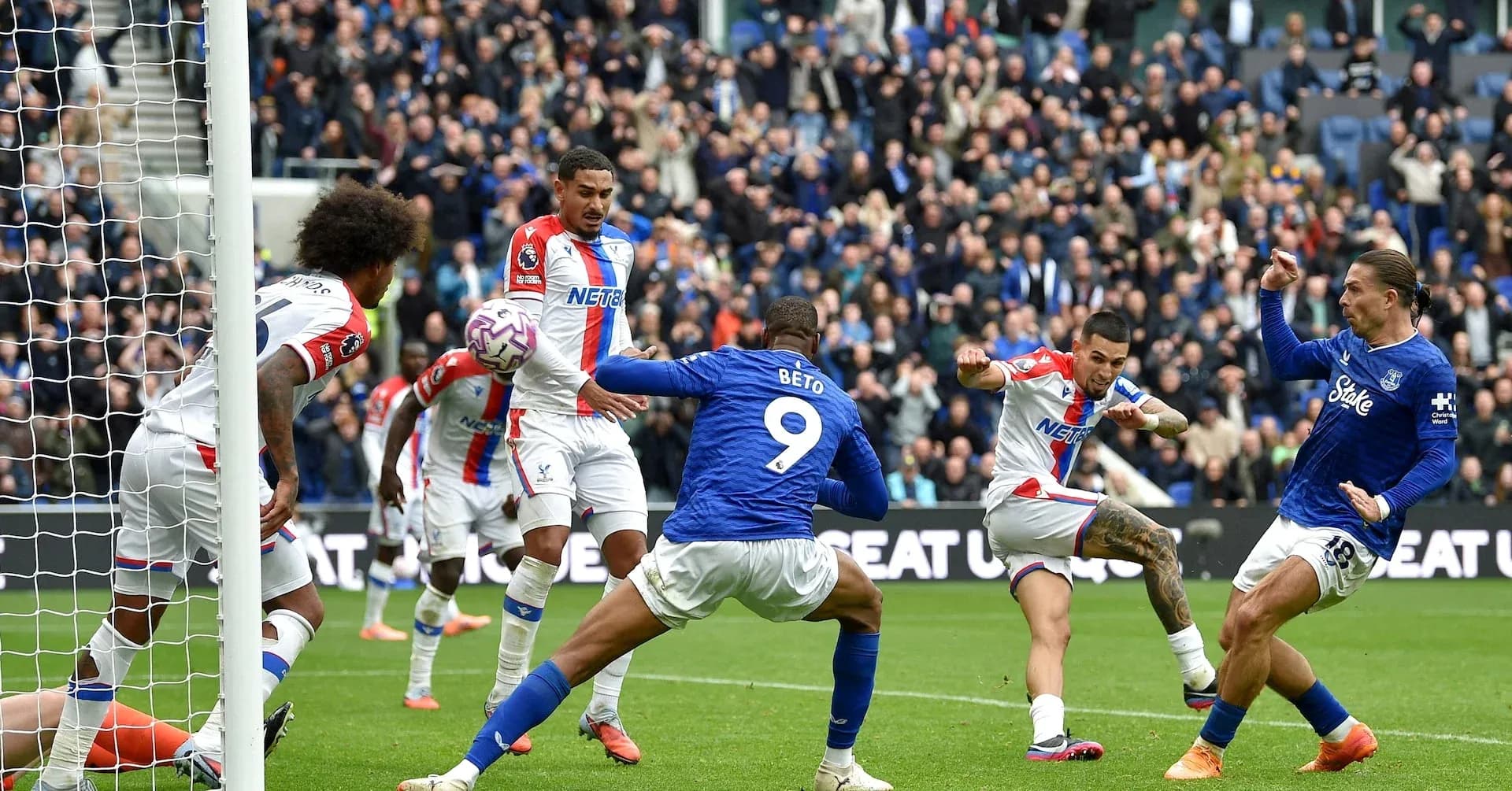
On 15 February 2025 at Selhurst Park in London (Premier League, Regular Season - 25), Everton again won 2-1. They were 1-0 up at half-time and held on to edge Palace by the same margin.
On 28 September 2024 at Goodison Park in Liverpool (Premier League, Regular Season - 6), Everton recorded another 2-1 home win over Palace, overturning a 0-1 half-time deficit to finish 2-1.
On 19 February 2024 at Goodison Park (Premier League, Regular Season - 25), the sides drew 1-1. It was 0-0 at half-time before both teams scored after the break.
In cup play, on 17 January 2024 at Goodison Park (FA Cup, 3rd Round Replays), Everton won 1-0 against Palace, leading 1-0 at half-time and seeing the tie out without conceding.
Across these five meetings, Everton have three 2-1 league wins (two in Liverpool, one at Selhurst Park), one 1-0 FA Cup win at home, and one 1-1 league draw, underlining their ability to edge one-goal games against Palace in both venues.
Global Season Picture
- League Phase Performance: In the league phase, Crystal Palace are 15th with 43 points from 34 matches, scoring 36 and conceding 42. Their home record is 4 wins, 8 draws, 5 losses, with 16 goals for and 19 against at Selhurst Park. Everton are 10th with 48 points from 35 matches, scoring 44 and conceding 44. Away from home they have 7 wins, 4 draws, 6 losses, with 19 goals for and 20 against. Palace’s negative goal difference and modest home scoring underline a cautious but limited attack (36 goals in 34 games), while Everton’s perfectly balanced goals for and against (44-44) show a more open profile but without dominance in either box.
- All-Competition Metrics: Across all phases of the competition, Crystal Palace average 1.1 goals scored and 1.2 conceded per match (36 for, 42 against in 34 games), with 12 clean sheets but 11 matches where they failed to score. That points to a streaky, low-margin team that can be solid but often blunt in attack. Everton, across all phases of the competition, average 1.3 goals scored and 1.3 conceded per match (44 for, 44 against in 35 games), with 11 clean sheets and 9 matches without scoring, reflecting a slightly more productive but equally vulnerable side. Palace’s card profile shows a concentration of yellow cards between minutes 31-60 and 61-90, while Everton pick up a significant share of their yellows late (76-90), suggesting both sides can become more aggressive and exposed as matches wear on. No explicit possession or xG values are provided, so their tactical control has to be inferred from results and goal patterns rather than direct metrics.
- Form Trajectory: In the league phase, Crystal Palace’s form string is LLDWD, meaning two straight losses followed by a draw, a win, then another defeat. That inconsistency, with only one win in the last five, keeps them hovering near the lower pack and makes this home game a potential pivot away from danger. Everton’s league phase form is DLLDW: a defeat, then two draws, another loss, and a win. They have only one win in five as well, but the two draws mean they have been harder to beat than Palace in the same stretch. Both teams arrive in mixed form, but Palace’s back-to-back losses at the start of that run highlight slightly more downward pressure.
Tactical Efficiency
Across all phases of the competition, Crystal Palace’s goal profile (1.1 scored, 1.2 conceded per match) and relatively high number of clean sheets (12) versus failures to score (11) indicate a conservative, low-variance game model: defensively competent but with limited attacking efficiency. Their biggest wins (2-0 at home, 0-3 away) and heaviest defeats (0-3 at home, 4-1 away) show that when games open up, they can both exploit and suffer from transitions, but most of their season has been decided by narrow margins.
Everton’s across-all-phases averages (1.3 scored, 1.3 conceded) point to a more balanced but higher-tempo profile, with their biggest wins (3-0 at home, 0-2 away) and defeats (1-4 at home, 2-0 away) suggesting they are willing to accept risk to create chances. Their use of a 4-2-3-1 in 21 matches underlines a structure designed to support a central striker with multiple advanced options, which fits the pattern of repeatedly turning around deficits against Palace in recent 2-1 wins.
Without explicit Attack/Defense Index or Poisson data in the comparison block, the best proxy is the goals and clean-sheet data across all phases. Everton’s slightly higher scoring rate and similar defensive record compared with Palace translate into a marginally superior attacking efficiency, especially away from home where they have 7 wins and average 1.1 goals scored and 1.2 conceded. Palace’s reliance on structure (3-4-2-1 in 30 matches) and their lower scoring average suggest that if the game becomes stretched, the underlying efficiency metrics favour Everton, while a low-scoring, controlled contest at Selhurst Park narrows the gap and leans on Palace’s home resilience.
The Verdict: Seasonal Impact
In the league phase, this fixture has asymmetric stakes. For Crystal Palace, a home win would push them towards the mid-40s in points, effectively eliminating any realistic relegation threat and allowing them to approach the final rounds without pressure. It would also break a recent pattern of poor results (LLDWD) and finally reverse a run of painful one-goal defeats to Everton, potentially validating their 3-4-2-1 structure as a sustainable plan going into 2027.
For Everton, three points away would move them deeper into the top half, consolidate a buffer over the mid-table pack, and keep a late European push mathematically alive. Given their away record in the league phase (7 wins, 4 draws, 6 losses) and their strong recent head-to-head record, a victory here would confirm them as one of the more reliable travelling sides outside the title contenders, strengthening the case for continuity in their 4-2-3-1 approach.
A draw would maintain the status quo: Palace would edge closer to safety but remain looking over their shoulder, while Everton would likely see the top seven drift further away, turning their final matches into more of a positioning exercise than a genuine European chase.
From a seasonal lens, then, this match is less about the title race and more about defining ceilings and floors: Palace trying to close the door on relegation narratives and prove they belong in the mid-table core, Everton attempting to turn solid underlying numbers across all phases into a tangible step towards the upper tier of the Premier League standings. The result will heavily shape how both clubs frame their 2026 campaigns — as consolidation years or missed opportunities.