Cruz Azul vs Club America: A 4-3 Classic Showdown
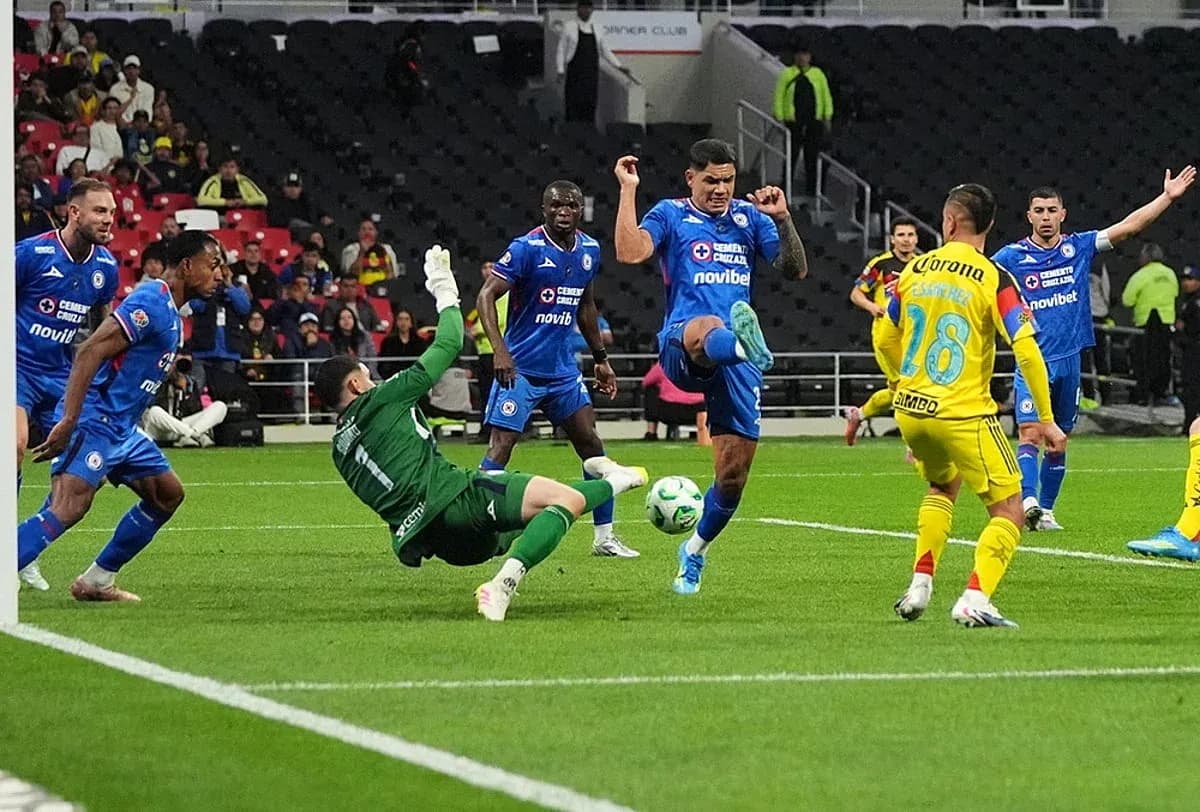
The night at Estadio Banorte delivered a clásico worthy of the noise. Under Luis Enrique Santander Aguirre’s whistle, Cruz Azul and Club America turned an Apertura - 8 league fixture into a wild 4-3 spectacle, a match that distilled both sides’ seasonal identities into ninety breathless minutes.
Heading into this game, the table had framed the narrative neatly: Club America in 3rd on 16 points, Cruz Azul just behind in 4th on 15. America’s overall goal difference of 9 came from 15 scored and only 6 conceded, a profile of control and defensive authority. Cruz Azul, more volatile, carried a goal difference of 2 from 16 scored and 14 allowed, suggesting chaos at both ends. Over 90 minutes, the match followed Cruz Azul’s script, not America’s.
Joel Huiqui’s choice of a 5-4-1 for Cruz Azul was not a conservative retreat but a springboard. With K. Mier behind a back five of É. Lira, W. Ditta, A. García, J. Orozco and O. Campos, the structure promised width in the build-up and density in the box. In front, a four-man midfield line of J. Paradela, A. Palavecino, J. Márquez and C. Rodríguez supported lone forward N. Ibáñez.
This was not a random selection; it echoed the season’s underlying numbers. Heading into this game, Cruz Azul’s overall attack averaged 2.0 goals per match, with 1.8 at home and 2.3 on their travels. Their goals were distributed with a pronounced first-half and early second-half punch: 25.00% between 31-45 minutes, 18.75% between 46-60, and a further 18.75% from 76-90. Huiqui’s 5-4-1, with Paradela and Rodríguez as creative hubs, was designed to hit in those surges, then retreat into a compact shell.
Across the halfway line, G. Almada stayed true to Club America’s seasonal template, rolling out a 4-2-3-1 that has been their default (used in 6 of 7 league matches). R. Cota anchored a back four of D. Espinoza, I. Reyes, R. Juárez and K. Álvarez, with a double pivot of É. Sánchez and A. Cervantes. Ahead of them, the attacking trio of I. Violante, Raphael Veiga and B. Rodríguez floated behind central striker H. Martín.
This alignment mirrored America’s statistical profile: overall they had been scoring 2.1 goals per match (2.7 at home, 1.8 away) and conceding just 0.9 in total. Their attacking peak was brutally clear: 33.33% of their goals came between 76-90 minutes, with another 20.00% each in the 16-30 and 46-60 windows. Almada’s 4-2-3-1 is built to control, then accelerate late, with Veiga and B. Rodríguez as the primary accelerators.
First Half
The first half, however, was a tactical ambush. Cruz Azul’s high-octane start exploited the one defensive soft spot America had shown in the data: 50.00% of America’s goals conceded had arrived between 31-45 minutes. That window aligned perfectly with Cruz Azul’s own 25.00% scoring share in the same period. The result was the 3-0 half-time scoreline: the “critical intersection” where Cruz Azul’s offensive peak met America’s only real defensive vulnerability.
The personnel made that intersection vivid. J. Márquez, nominally a midfielder in this setup but listed as a defender in the season’s metrics, has been one of Cruz Azul’s most complete two-way pieces: 3 goals, 1 assist, 21 tackles and 1 successful block, plus 12 interceptions. His timing in stepping into midfield duels and breaking lines with passes underpinned the first-half dominance. Ahead of him, Ibáñez justified his status as a top scorer with 3 league goals and 21 shots, 14 on target. His movement dragged Reyes and Juárez into uncomfortable zones, opening lanes for Paradela and Rodríguez to arrive from deep.
Paradela and Rodríguez formed the “engine room” in possession. Rodríguez, the league’s leading creator with 5 assists and 36 key passes, dictated the tempo from the right half-space, constantly finding Paradela between the lines. Paradela, with 2 goals, 4 assists and 20 key passes, attacked the inside-left channel. Together, they turned Cruz Azul’s 5-4-1 into a 3-2-4-1 in attack, pinning America’s full-backs and forcing Cervantes and Sánchez into reactive positions.
Second Half
For America, the “Hunter vs Shield” duel revolved around H. Martín and a Cruz Azul defense that, heading into this fixture, had been conceding 1.8 goals per match overall, with 1.8 at home. Martín’s 3 goals and 1 assist, plus 68 duels contested and 7 tackles, made him more than a penalty-box finisher. Yet in the first half, he was starved, with Cruz Azul’s back five compressing the central lane and Márquez screening.
After the break, the match bent back toward America’s usual pattern. Their late-game surge, reflected in that 33.33% share of goals between 76-90 minutes, came alive as Veiga and B. Rodríguez found more space. Veiga’s season numbers — 1 goal, 2 assists, 20 key passes — showed in his ability to thread balls into Martín and combine with Violante. On the flank, B. Rodríguez, also on 3 league goals with 12 shots (8 on target) and 15 key passes, attacked the gaps behind Campos and Lira.
Cervantes, a quiet but crucial figure, embodied America’s balance and edge. His profile — 305 passes at 92% accuracy, 8 tackles, 5 interceptions and 2 yellow cards plus 1 yellow-red — speaks of a midfielder who both builds and breaks. In a match that threatened to boil over, his disciplinary history was a reminder that America walk a fine line in midfield intensity. Cruz Azul, by contrast, had spread their cautions more evenly across their creative core: Paradela, Ibáñez, Rodríguez and Márquez all carried two yellows each this season, a sign that Huiqui’s side defend on the front foot.
Penalties have been a fragile hinge for both teams this campaign, and that context colored the tension in the box. Cruz Azul had taken 3 penalties overall and scored only 1, missing 2 — a 33.33% conversion rate that forces them to chase goals from open play. Club America were only slightly better: 2 penalties overall, 1 scored and 1 missed. H. Martín, their taker, has felt that pressure, with one success and one failure from the spot.
Following this result, the statistical prognosis for both squads shifts subtly but meaningfully. Cruz Azul’s biggest win of the season had already been a 4-3 at home; repeating that scoreline against a defense that had previously conceded just 6 goals in total underlines their identity as the league’s chaos merchants. Their late-game vulnerability remains — 35.71% of their goals conceded arrive between 46-60 minutes and 21.43% from 76-90 — but their capacity to outscore those flaws is real.
For Club America, this 4-3 away defeat becomes the outlier that reveals a crack. Their biggest away loss before this was 4-3 as well, and the pattern is telling: when their structure is stretched, they can be dragged into shootouts that neutralize their superior defensive averages. The red card pattern — a single dismissal this season arriving between 76-90 minutes — hints at how late-game desperation can tip them over the disciplinary edge.
In narrative terms, this match felt like two philosophies colliding at full speed. Cruz Azul’s high-risk, high-reward approach, powered by the creativity of Rodríguez and Paradela and the all-action presence of Márquez and Ibáñez, overcame America’s more measured 4-2-3-1, built around Veiga’s craft, B. Rodríguez’s dynamism and Martín’s work rate. On the night, the numbers that had forecast a tight, controlled top-four duel instead produced a seven-goal thriller that may redefine how both managers calibrate risk when the next clásico rolls around.