Clásico Nacional: America vs Chivas Match Analysis
Under the lights of Estadio Banorte, this Clásico Nacional arrived with both giants already humming at a high tempo. Club America, third in Liga MX Apertura on 17 points with a goal difference of 9 from 17 scored and 8 conceded overall, had been ruthless at home: 4 games, 3 wins, 1 draw, 10 goals for and only 2 against. Guadalajara Chivas, second with 18 points and the same overall goal difference of 9 (17 for, 8 against), travelled as one of the league’s most balanced sides: unbeaten away with 2 wins, 3 draws, 8 scored and 4 conceded on their travels.
The 2–2 draw that unfolded felt less like a single match and more like a clash of seasonal identities. America’s campaign had been defined by late surges and attacking relentlessness; Chivas’ by structure, resilience, and a capacity to bend without breaking. The scoreline—0–2 at half-time, 2–2 at full-time—mirrored that narrative arc.
America lined up in their now-familiar 4-2-3-1, a shape they had already used 7 times this season. R. Cota anchored the back, shielded by a back four of D. Espinoza, E. Lara, M. Vázquez and C. Borja. In front of them, I. Reyes and A. Cervantes formed the double pivot, the hinge between control and chaos. Ahead, the three creative sparks—A. Zendejas wide right, Raphael Veiga as the central orchestrator, and B. Rodríguez from the left—floated behind lone striker H. Martín.
Opposite them, G. Milito doubled down on Guadalajara’s structural identity with a 3-4-2-1, one of two three-at-the-back systems they have alternated between this season. J. Rangel stood behind a defensive trio of D. Aguirre, D. Campillo and L. Romo. Across midfield, R. Ledezma and B. González patrolled the flanks, while O. Govea and R. González held the interior. Higher up, Santiago Sandoval and R. Alvarado supported R. Marín, whose season has blended graft with end product.
First Half
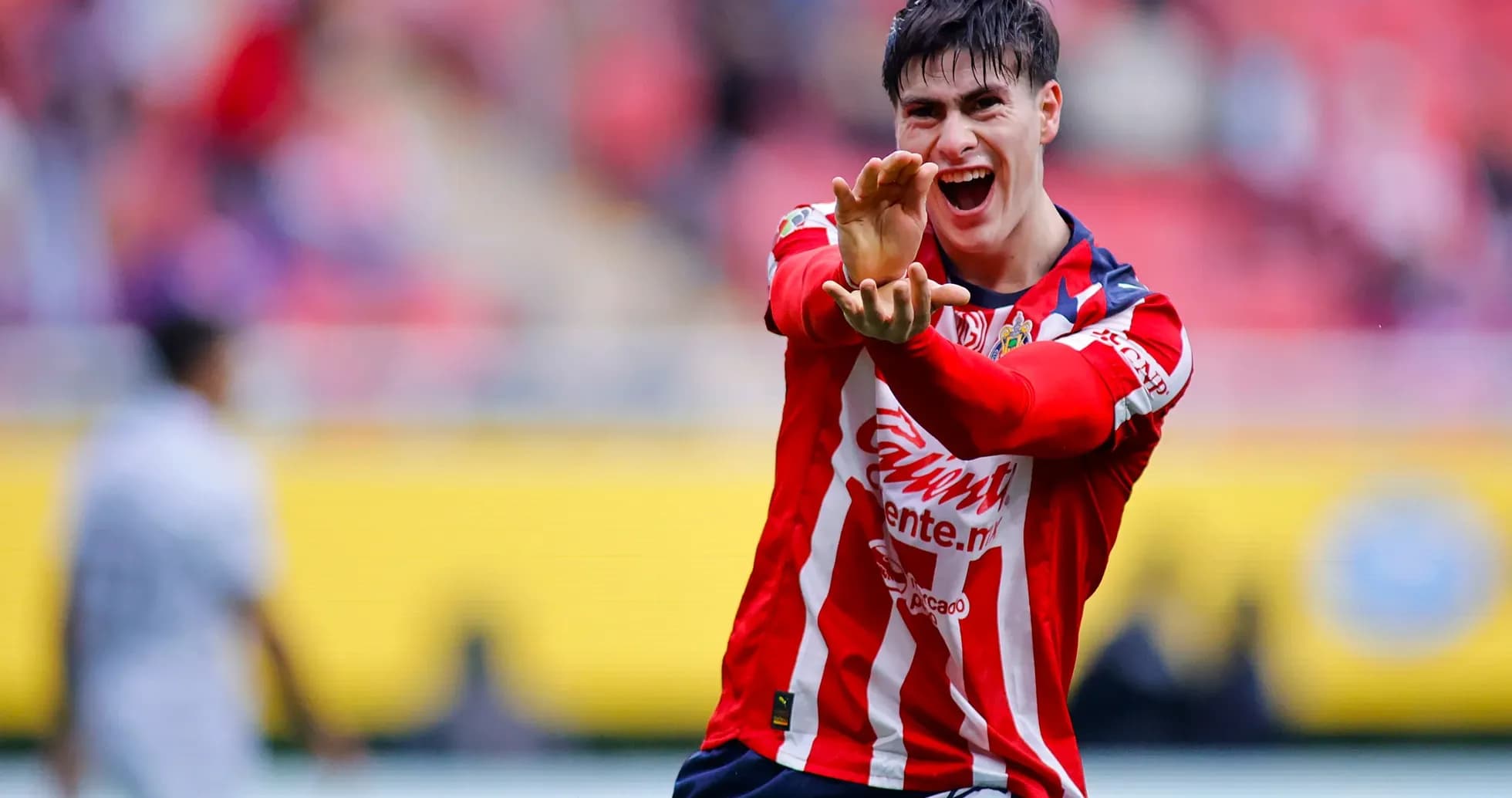
The first half belonged to Chivas’ geometry. Their 3-4-2-1 compressed central spaces where Veiga and Martín usually thrive. O. Govea and R. González stepped aggressively into America’s double pivot, forcing Reyes and Cervantes into hurried decisions. With America’s season-long tendency to concede heavily between 31 and 45 minutes—50.00% of their goals against have come in that window—Chivas’ timing was ruthless. Their structural superiority in that phase played straight into one of America’s few true defensive voids.
R. Alvarado, already a key figure in the league with 3 goals, 426 passes at 89% accuracy and 15 key passes overall, became the fulcrum of Chivas’ early dominance. His drifting between the lines dragged Lara and Vázquez into uncomfortable territory, opening lanes for R. Marín to attack the channels. Marín’s season numbers—2 goals, 2 assists, 7 shots, 4 on target—reflect a forward who doesn’t need volume to be decisive. In this first half, his movement complemented Alvarado’s craft, stretching a back four that prefers to defend facing play rather than tracking runners.
Second Half
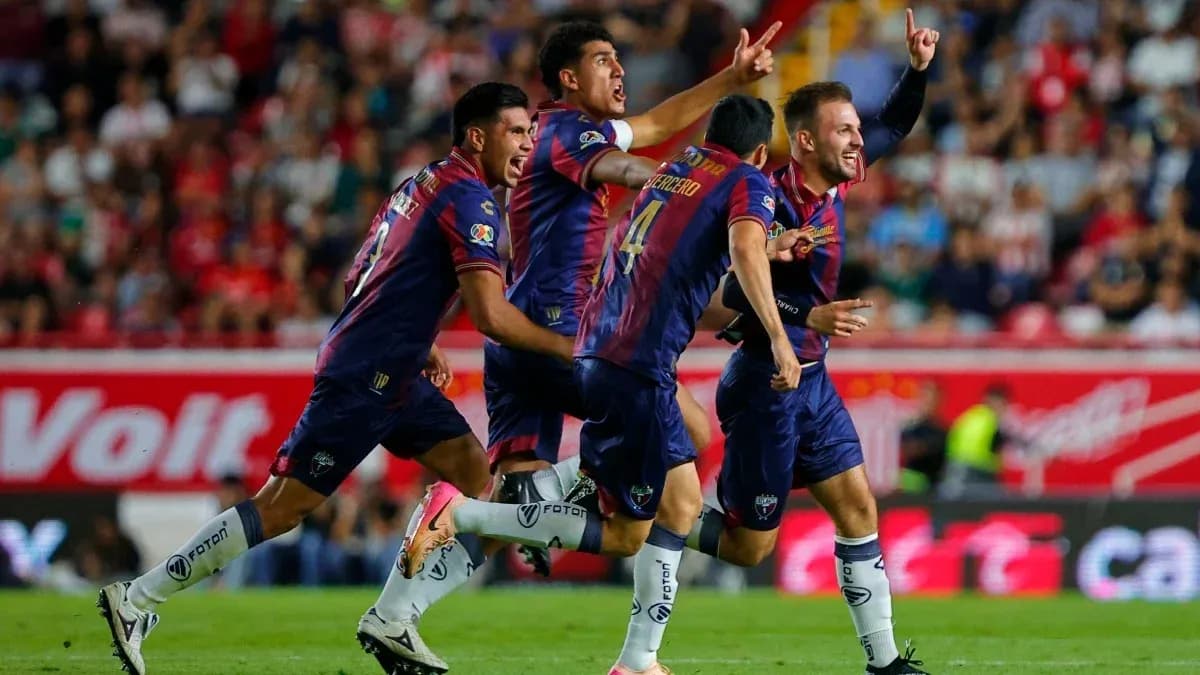
If the first half exposed America’s fragility in that 31–45 minute band, the second half became a showcase of their defining trait: late-game relentlessness. Across the season, 29.41% of their goals have come between 76 and 90 minutes, with another 23.53% between 61 and 75. Those numbers are not statistical noise; they describe a team built to escalate. As fatigue crept into Chivas’ wing-backs and central midfield, America’s attacking quartet began to find the half-spaces that had been closed earlier.
This is where the “Hunter vs Shield” dynamic crystallised. America’s overall attacking output—17 goals in 8 games, averaging 2.5 at home—ran into a Chivas defence conceding only 0.8 goals per game away and just 8 overall. For 45 minutes, the shield held. But once Veiga started to receive higher and turn, and B. Rodríguez began to isolate defenders, that balance tilted.
Rodríguez’s season tells its own story: 3 goals, 1 assist, 17 shots (8 on target), 19 key passes, 34 dribble attempts with 15 successes, and 4 shots blocked defensively. He is not just a finisher; he is a volume creator and a relentless ball-progressor. In the second half, his constant probing from the left forced Chivas’ back three to stretch horizontally, creating gaps for Martín to attack.
Martín, with 3 goals and 2 assists this campaign, plus 16 key passes and 11 shots (7 on target), represents America’s most complete reference point. His penalty record this season—1 scored, 1 missed—mirrors America’s broader fragility from the spot (2 penalties total, 1 scored, 1 missed). That psychological edge could have tilted against him in a high-pressure setting, but his movement and back-to-goal play helped pin Chivas deep as the comeback gathered pace.
In the engine room, Veiga’s influence grew as the match opened. With 1 goal, 2 assists, 20 key passes and 249 completed passes at 87% accuracy overall, he is America’s metronome and scalpel in one. Once Chivas’ midfield line tired, his ability to receive between their central trio and wing-backs turned the match territorial. Every time he turned on the half-turn, Chivas’ back three had to retreat five yards; every retreat invited America’s full-backs and wingers higher.
Discipline was always going to be a sub-plot. America’s yellow-card spread is fairly even, but they carry a clear red-flag late: 100.00% of their red cards this season have arrived between 76 and 90 minutes. Chivas, meanwhile, cluster their yellows late—40.00% between 76 and 90 minutes—and have seen their only red in the 46–60 band. In a match that swung emotionally, those trends mattered. As America surged late, the risk of a late dismissal hovered over them; for Chivas, defending deeper under pressure invited the kind of duels that often bring bookings and free-kicks in dangerous zones.
From a statistical prognosis standpoint, the draw feels like a meeting point of two powerful but contrasting profiles. America’s overall scoring average of 2.1 goals per game, combined with a defence conceding 1.0, marks them as a high-variance, high-ceiling side. Chivas, at 1.9 scored and just 0.9 conceded overall, project as marginally more controlled and defensively reliable, especially away.
Yet the match narrative suggests that in a playoff or knockout scenario, the marginal edge may tilt towards America’s late-game scoring spikes, particularly against a Chivas side whose disciplinary curve bends sharply upwards in the final quarter of an hour. If this fixture was a preview of a future 1/4 final meeting, the lesson is clear: Chivas must kill the game before 60 minutes; America must survive the 31–45 minute storm.
In total this campaign, both clubs have built the foundations of title challenges. But this 2–2 at Estadio Banorte underlined a more nuanced truth: structurally, Chivas may be the steadier machine; dynamically, America are the side more likely to twist a match’s fate in the final act.