Craig Gordon’s World Cup Farewell Highlights Career of Resilience
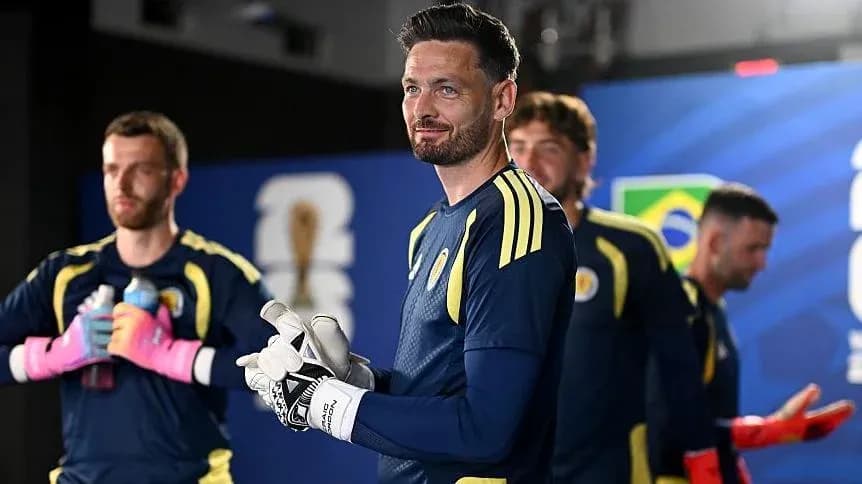
By the time Craig Gordon walked away from the Scotland squad at this summer’s World Cup, he had already won the toughest battle of his career. The medals, the caps, the finals – they all sit on one side of the scale. On the other is a double leg break at 39 years of age and the decision, against all logic, to fight back.
Rory Loy knows exactly what that fight looks like. The former striker, speaking on the BBC’s Scottish Football Podcast, lived the same nightmare. Same injury. Same sickening snap of the shin. The difference was time.
“I did the same thing, but I did it when I was 20, 23,” Loy said, reflecting on Gordon’s journey. At that age, players believe they are indestructible. The body heals quicker, the mind is wired for comebacks, not conclusions. Careers still feel like open roads.
Gordon’s break came when most goalkeepers are already thinking about coaching badges and farewell appearances. Late 30s. A stage where every landing is calculated, every dive carries risk. He chose not to bow out quietly. He chose surgery, rehab, the long days in the gym and the longer nights wondering if it was worth it.
Loy did not sugar-coat what that process demands.
“The shin bone just snaps basically,” he explained. “So it needs to heal and then obviously your whole biomechanics, the way you walk, the way you move, the way you do everything, it just changes.”
That is the part supporters rarely see. Not the cast, not the crutches – the reprogramming. A player learns how to run again, to plant a foot again, to trust a limb that once gave way. Loy needed orthotics in his boots just to adapt to a new way of moving. Every step becomes a reminder of what happened.
For a goalkeeper, the equation is even harsher. Every save asks the question: will the leg hold?
“To do it at his age, in his late 30s and still manage to come back from it… trust me, I know how difficult it is to come back from that injury, psychologically as well as physically,” Loy said. “It’s not easy.”
Yet Gordon did come back. Not as a token presence, not as a sentimental pick, but as a goalkeeper still capable of elite, match-defining saves. He forced his way back into the Scotland picture, then onto the plane for a World Cup, and chose that stage to close his international career.
For Loy, that comeback says everything about Gordon’s mentality.
“For him to go through that type of thing at the age he was at and still have the motivation to come back and play football just sums up the type of mindset he had,” he said.
The numbers on Gordon’s career are impressive enough – the clubs, the trophies, the caps. What lingers, though, is the image of a veteran goalkeeper refusing to let a broken leg write his final line.
Because beyond the steel plates, the altered biomechanics and the orthotics, one thing never changed.
“The level of goalkeeping and saves he had was incredible,” Loy concluded.
In the end, that is how Craig Gordon leaves the stage: not as the player who broke his leg at 39, but as the goalkeeper who refused to let it break him.