Como's Statement Win Over Parma in Serie A
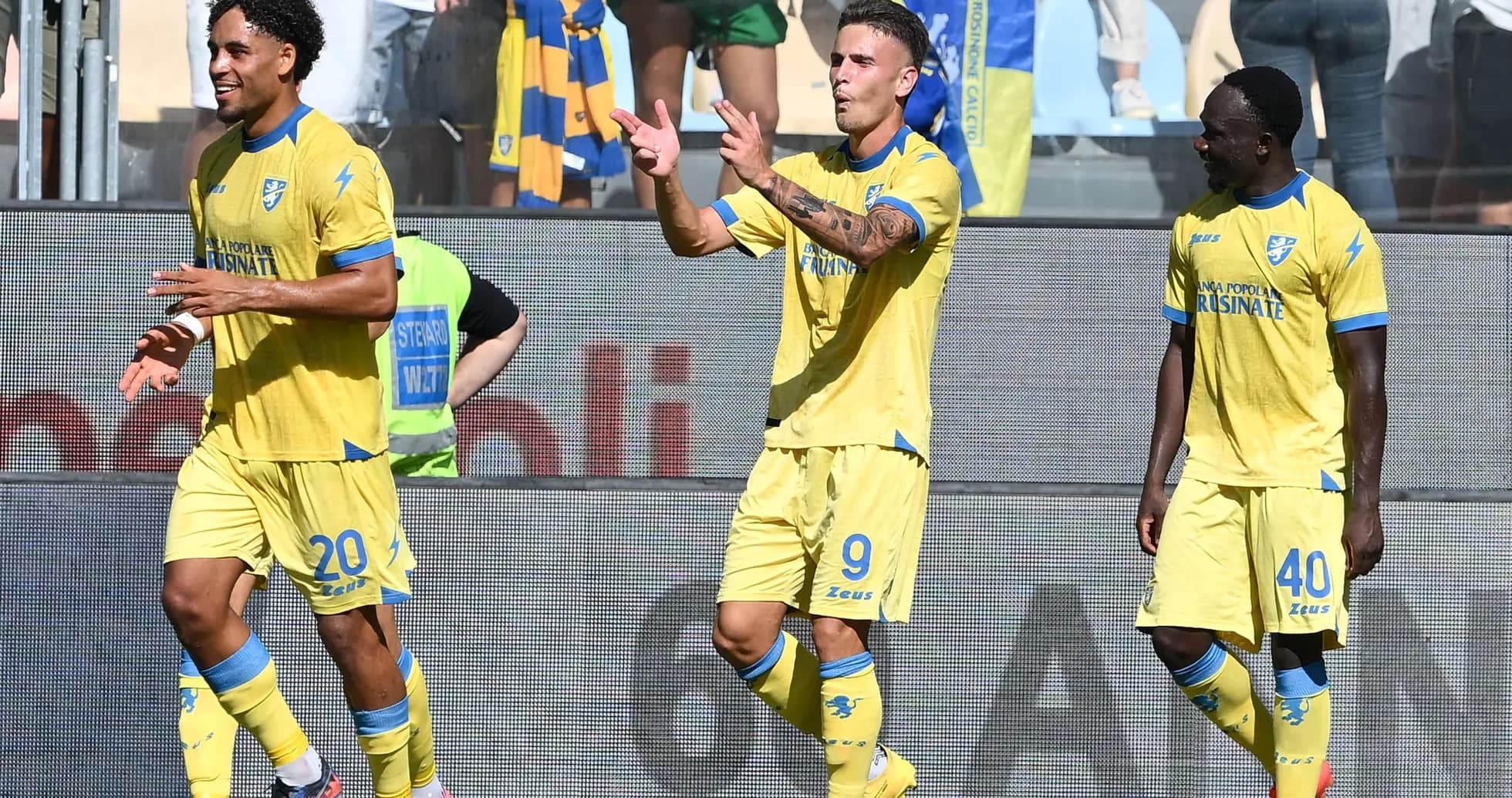
Under the lights of Stadio Giuseppe Sinigaglia, this felt less like a newly promoted side finding its feet and more like a project arriving ahead of schedule. Como’s 2–1 win over Parma in Serie A’s Regular Season - 4 was not just three points; it was a statement that Cesc Fabregas’ team already has a clear identity, structure, and hierarchy.
I. The Big Picture – Como’s early authority, Parma’s early anxiety
Following this result, Como sit on 10 points from 4 matches, with a goal difference of +5, built from 9 goals scored and 4 conceded overall. They remain unbeaten, with 3 wins and 1 draw, and their form line of DWWW underlines a side that has learned quickly how to manage different game states. At home, they have now played 1 league match, won it, scored 2 and conceded 1 – a continuation of an attacking trend that has seen them average 2.3 goals overall and 2.0 at home.
Parma, by contrast, leave Como with just 1 point from 4 games, a goal difference of -4 (2 scored, 6 conceded overall), and a form pattern of LLDL that reflects a team still searching for balance. On their travels they have played 2, lost both, scoring 1 and conceding 4, with an away goals-against average of 2.0 that again proved their undoing.
The tactical canvas was clear from the first whistle. Fabregas stayed loyal to the 4-2-3-1 that has defined Como’s early-season structure, while Carlos Cuesta doubled down on Parma’s 3-4-2-1, a shape designed to protect central areas and hit on transition but one that can be punished when the wing-backs are pinned deep.
II. Tactical Voids – Absences and discipline
Both sides arrived with one notable absentee each. For Como, J. Addai was unavailable with an Achilles tendon injury, robbing Fabregas of another wide option who could have stretched Parma’s back three even further. For Parma, H. Nicolussi Caviglia’s groin injury removed a potentially important midfield organiser at a time when their structure without the ball is already fragile.
From a disciplinary perspective, the pre-match data painted contrasting pictures. Como’s yellow cards this season have been split evenly between the 46–60 and 76–90 minute windows (50.00% each), suggesting a team that tends to pick up bookings in the heat of second-half adjustments and late-game duels. Parma’s distribution has been more scattered but with a clear late-game spike: 40.00% of their yellows have arrived between 76–90 minutes, another 20.00% from 61–75 and 20.00% from 46–60, plus 20.00% in stoppage time between 91–105. It tells the story of a side that increasingly defends under pressure as matches wear on, often on the wrong side of the duels.
III. Key Matchups – Hunters and shields
The most compelling duel was always going to be Como’s attacking quartet against Parma’s back three and screen. In the “Hunter vs Shield” narrative, the hunters were numerous.
At the tip of the Como shape, M. Kean started as the lone forward, but the real creative and scoring menace came from the line of three behind him. Assane Diao, stationed on the right as one of the three attacking midfielders, has already emerged as one of Serie A’s most dynamic young attackers. Heading into this game, he had 2 goals and 1 assist in 3 appearances, with 7 shots (3 on target), 6 successful dribbles from 12 attempts, and 6 key passes. His ability to receive wide, drive inside and combine with the central playmaker made him a constant reference point.
Central to that structure is M. Baturina, who also arrived among the league’s leading contributors with 2 goals and 1 assist from midfield, 90 completed passes at 87% accuracy, and 3 key passes. As the nominal No. 10 in this 4-2-3-1, he stitched together Como’s phases: dropping towards the double pivot of M. Perrone and L. Da Cunha to help progression, then ghosting between Parma’s lines to find pockets behind V. Sierro and M. Keita.
On the left, A. Diao (Assane Diao in the data, listed here as A. Diao in the lineup) and N. Paz formed a fluid interchange, with Paz operating between the lines and Diao stretching the flank. Their movement forced Parma’s right-sided defender Diego Carlos and wing-back S. Britschgi into constant decisions: step out and leave space behind, or hold the line and allow Como’s midfielders to turn.
For Parma, the shield was built around the trio of Diego Carlos, M. Troilo and E. Delprato, with Sierro and Keita as the first screen. On paper, a back three plus double pivot should be able to congest central zones and deny the likes of Baturina time. In practice, Como’s structure pulled them apart. With Y. Couto and Kaiki pushing high from full-back, Parma’s wing-backs were repeatedly forced into deep defensive positions, leaving the midfield pair exposed in transitions.
Up front, Parma’s own “hunters” – E. B. Toure, S. Lontani and N. Elphege – were tasked with exploiting the space behind Como’s aggressive full-backs. The idea was clear: soak pressure, then spring quickly into the channels around J. Ramon and M. O. Kempf. But with Como’s double pivot controlling central turnovers and the home side rarely failing to score (0 matches without a goal overall so far), Parma’s attacking trident spent long spells isolated.
IV. The Engine Room – Control vs resistance
The match was ultimately decided in midfield. Perrone and Da Cunha provided the platform: one sitting slightly deeper to protect the centre-backs, the other stepping into the half-spaces to overload Parma’s pivots. Their work allowed Baturina to play higher, where his passing and intelligence have already placed him among the league’s leading creators.
Parma’s response through Sierro and Keita was honest but reactive. Without Nicolussi Caviglia, they lacked a true metronome to slow the game, recycle possession and give their forwards repeat platforms. As Como’s pressure built, Parma’s midfielders were drawn into more duels and more fouls, fitting the pattern of a side that accumulates cards as the game stretches.
V. Statistical Prognosis – A project with structure vs a side under reconstruction
From a numbers perspective, Como’s trajectory is unmistakable. Overall, they average 2.3 goals for and 1.0 against, with no defeats in 4 and no clean sheets yet, which hints at a proactive, front-foot side that accepts defensive risk in exchange for attacking volume. They have not failed to score once this season, and their biggest away win of 4–1 and home high of 2–1 show that their attacking patterns travel.
Parma’s profile is the mirror image: 0.5 goals for and 1.5 against overall, no wins, and 2 matches without scoring. They have yet to keep a clean sheet, and their heaviest away defeat of 2–0 aligns with what happened here – conceding multiple times, struggling to sustain attacks, and relying on sporadic moments rather than sustained pressure.
If we project forward on this evidence, Como’s 4-2-3-1, anchored by Baturina’s craft and Assane Diao’s dynamism, looks sustainable. The lack of clean sheets is a concern, but their control of territory and their ability to share goals among multiple threats suggest that their positive goal difference is no accident.
Parma, meanwhile, need structural tweaks. The 3-4-2-1 can work, but only if the midfield screen becomes more secure and the wing-backs can push higher without leaving the back three exposed. Until they address their late-game defensive strain and sharpen their cutting edge, the numbers – and nights like this in Como – will continue to pull them towards the wrong end of the table.