Colombia's Tactical Victory Over Ghana in World Cup Round of 32
Colombia’s 1-0 win over Ghana at Arrowhead Stadium in this World Cup Round of 32 tie was a textbook example of territorial control and structured pressing translating into scoreboard security, even if not into the margin their dominance suggested. With 61% possession, a 20–8 shot advantage and an xG of 2.18 to 0.26, Nestor Lorenzo’s side imposed their 4-3-3 for long stretches, pinning Ghana’s 4-1-4-1 deep and largely depriving Jordan Ayew of service. Yet the narrow scoreline kept the game tactically live, hinging on Colombia’s capacity to manage transitions and Ghana’s attempts to stretch the field with substitutions and wide runners.
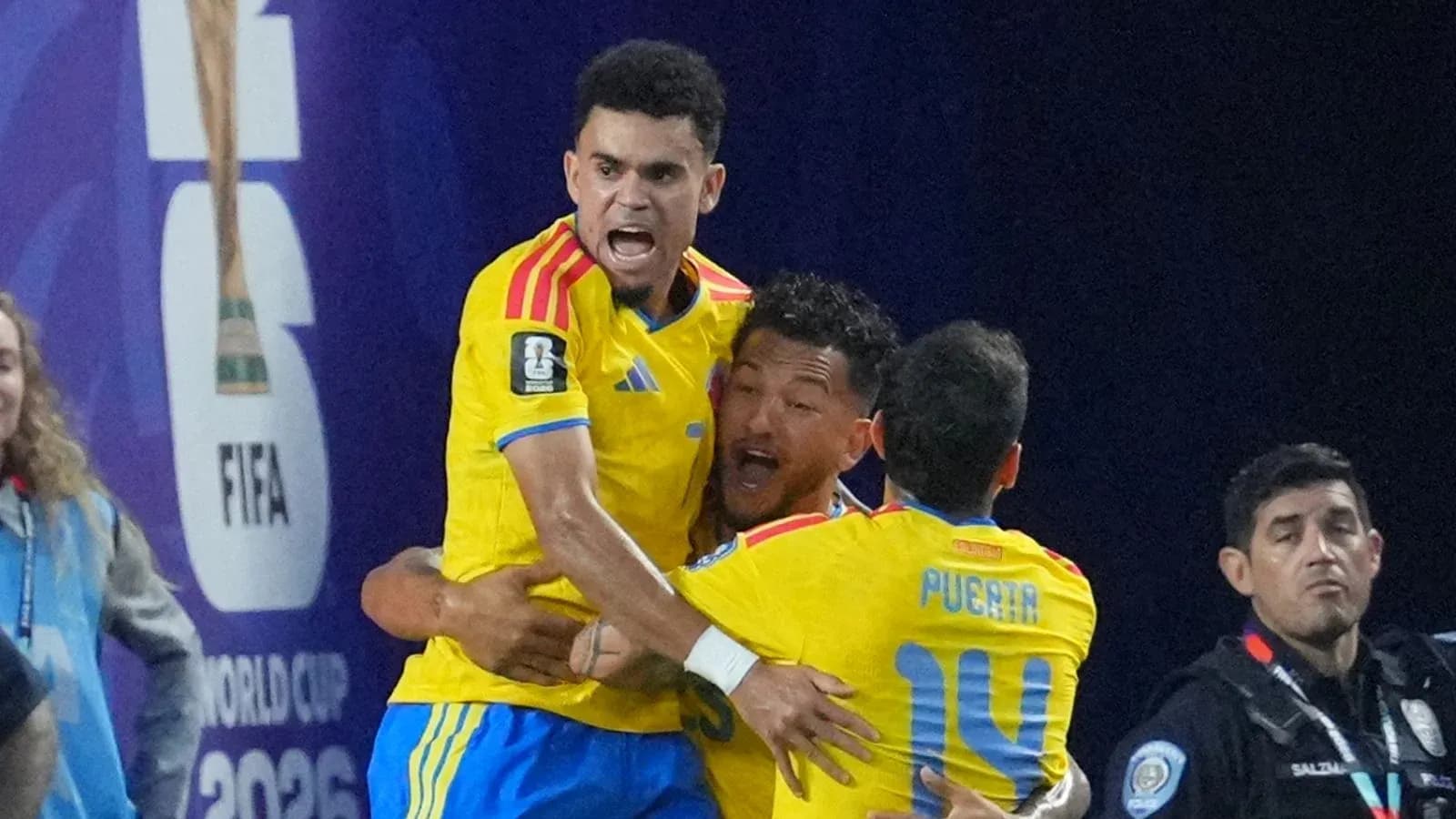
The decisive moment came early, shaped as much by structure as by individual quality. In the 14th minute, Jhon Arias, operating as the advanced midfielder in Colombia’s three, finished a move assisted by Luis Javier Suárez, who had entered unusually early for Jhon Córdoba at 8’. The pattern reflected Colombia’s intent: interior overloads to free the right half-space, with Arias arriving from midfield rather than starting in the last line. Before that, Arias had already been heavily involved between the lines, but his 12’ yellow card for “Tripping” underlined how aggressively Colombia’s midfield counter-pressed after losing the ball.
Ghana’s response was more reactive and hinged on managing Colombia’s wide threats. Carlos Queiroz’s 4-1-4-1, with Thomas Partey as the single pivot, aimed to screen central zones and funnel play wide, trusting the back four and Jordan Ayew’s work rate to survive extended defending. Marvin Senaya’s early substitution at 13’, replaced by Alidu Seidu, was a key adjustment: Queiroz clearly wanted a more combative, defensively secure right-back to handle Luis Díaz and the Colombian rotations on that flank.
Colombia’s front three of Luis Díaz, Jhon Córdoba (then Luis Javier Suárez) and James Rodríguez started as a nominal 4-3-3 but behaved more like a 4-3-2-1 in possession. James frequently dropped into the right half-space, Arias drifted to connect inside, and Daniel Muñoz pushed high from right-back, creating a triangle that overloaded Ghana’s left side. On the opposite flank, Johan Mojica provided width while Luis Díaz alternated between hugging the touchline and cutting inside to attack the left half-space.
The numbers support this territorial tilt: 12 of Colombia’s 20 shots came inside the box, and they forced Ghana into 5 blocked shots, evidence of how often the African side had to defend deep in their own area. Yet Colombia’s finishing and decision-making in the final third did not fully match their buildup. A key moment came in the 56th minute, when a potential goal by Luis Díaz was disallowed by VAR for offside. The sequence again showcased Colombia’s vertical threat from wide positions, but also how fine the margins were between a comfortable 2-0 cushion and the fragile 1-0 that persisted.
Out of possession, Colombia’s 4-3-3 morphed into a compact 4-1-4-1, with Jefferson Lerma anchoring in front of Davinson Sánchez and Jhon Lucumí. Gustavo Puerta and Arias pushed higher to press Ghana’s double interior line of Caleb Yirenkyi and Kwasi Sibo. The foul count—14 for Colombia versus 10 for Ghana—illustrated the intensity of their counter-press and their willingness to break play when Ghana threatened to escape. Richard Ríos’ 78’ yellow card for “Tripping” after coming on for James Rodríguez at 46’ was emblematic: a fresh midfielder used to reset the pressing intensity and close down central lanes as the game became more stretched.
Ghana’s attacking structure struggled to progress through Colombia’s mid-block. With only 2 shots inside the box and 0 shots on goal, their 8 total attempts were mostly low-quality efforts from distance. Partey’s role as a lone pivot left him outnumbered against Colombia’s three, and Ghana’s wide midfielders—Antoine Semenyo and Iñaki Williams—often received with their backs to goal, under immediate pressure. The mid-second-half substitutions were Queiroz’s attempt to tilt that balance.
At 62’, Queiroz introduced Abdul Fatawu Issahaku for Iñaki Williams and Elisha Owusu for Kwasi Sibo, effectively refreshing both the right flank and central midfield. Fatawu’s directness and Owusu’s presence aimed to add verticality and more secure circulation. Fatawu’s 66’ yellow card for “Unsportsmanlike conduct” and Seidu’s 76’ yellow for “Tripping” reflected Ghana’s growing urgency and occasional overreach as they tried to disrupt Colombia’s rhythm and accelerate transitions. Later, at 79’, Ernest Nuamah replaced Jordan Ayew and Prince Kwabena Adu came on for Caleb Yirenkyi, pushing Ghana into a more aggressive, multi-forward look, but Colombia’s defensive line held firm.
Goalkeeper dynamics were unusual. Camilo Vargas (Colombia) did not register a single save, underlining how effectively his back four and midfield screened danger; Ghana finished with 0 shots on target. Yet Vargas’ goals prevented figure of 1.92 suggests that the model rated the situations he faced—particularly crosses, defensive pressure moments and potential shooting windows—as potentially dangerous even if they never produced official shots on goal. At the other end, Lawrence Ati Zigi (Ghana) made 7 saves, a strong return given Colombia’s 8 shots on target and xG of 2.18. His 1.92 goals prevented matched Vargas’ figure, highlighting how often he bailed out his defence, especially as Colombia increased volume in and around the box.
From a possession and passing standpoint, Colombia’s control was clear: 586 total passes with 532 accurate (91%) compared to Ghana’s 376 passes and 312 accurate (83%). This gap was not just sterile circulation; it underpinned Colombia’s ability to keep Ghana pinned back and to reset attacks after initial waves were repelled. The 3–2 edge in corners further illustrates territorial advantage, even if set pieces did not directly decide the tie.
Discipline slightly favoured Colombia numerically—2 yellow cards to Ghana’s 3—but the pattern told a tactical story. Colombia’s bookings (Arias for “Tripping” at 12’, Ríos for “Tripping” at 78’) were largely tied to aggressive counter-pressing and midfield duels. Ghana’s, by contrast, mapped to defensive strain and frustration: Yirenkyi’s 49’ “Holding” as Colombia broke lines, Fatawu’s “Unsportsmanlike conduct” at 66’ amid rising tension, and Seidu’s late “Tripping” as he tried to contain Colombian wide attacks.
Ultimately, Colombia’s 1-0 win was a blend of structural superiority and game management rather than ruthless finishing. Their 4-3-3 delivered sustained pressure, high passing accuracy and a clear chance volume edge, while Ghana’s 4-1-4-1 never fully solved the overloads around Partey or generated enough support for Ayew and the later forwards. The narrow scoreline flattered Ghana relative to the underlying metrics, but also highlighted how Colombia, despite their control, left the door slightly ajar in a knockout context where efficiency can be as decisive as dominance.