Colombia Advances to World Cup Round of 16 with Win Over Ghana
Jhon Arias needed only one chance.
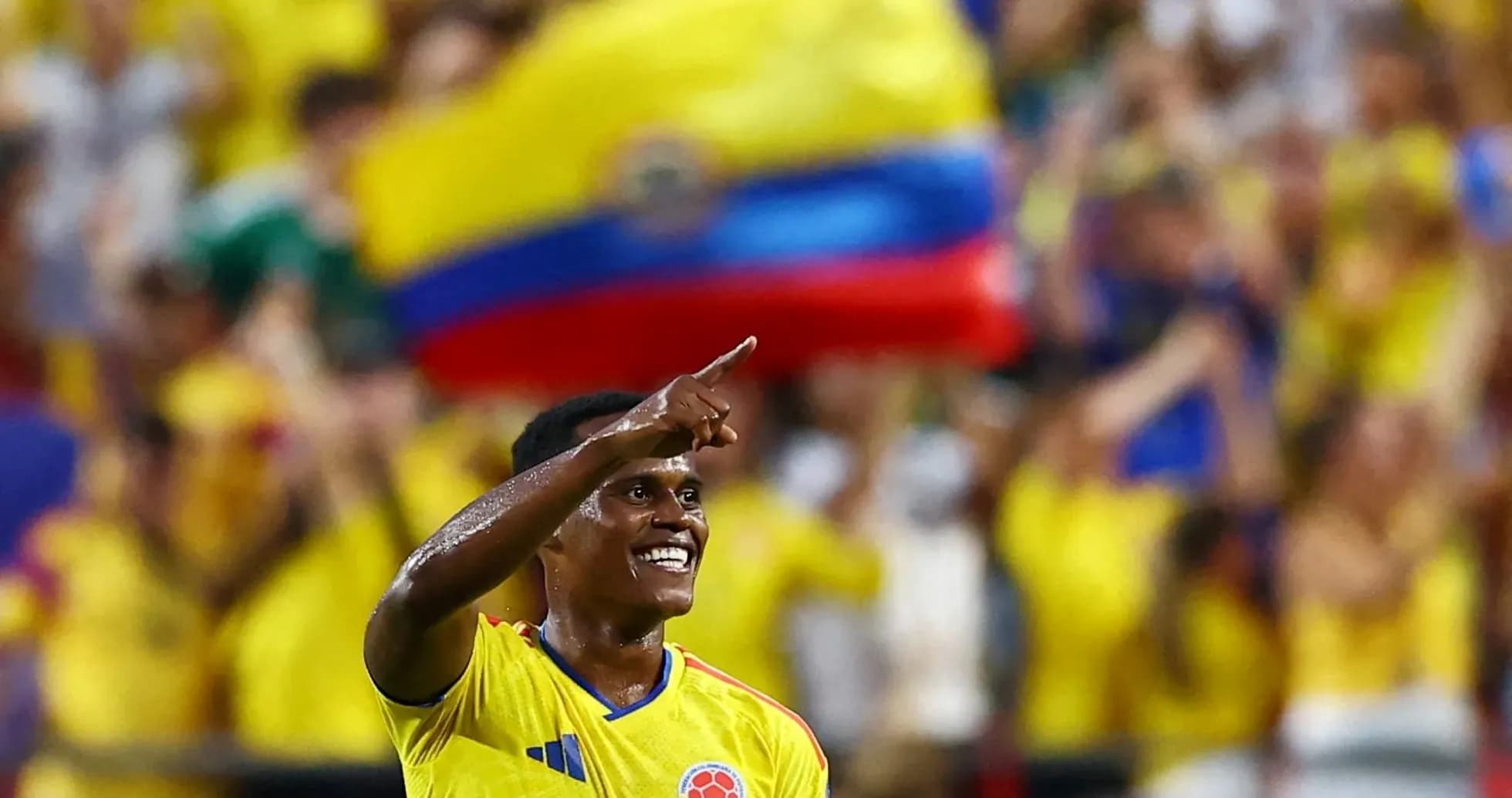
In the stifling Kansas City heat, with the air hanging heavy and shirts sticking to backs, the winger arrived unmarked at the far post, opened his body and passed the ball into the bottom corner. Fourteen minutes gone, one moment of clarity in the haze, and Colombia were on their way to the World Cup round of 16 with a 1-0 win over Ghana that felt far more comfortable than the scoreline suggested.
A surprise partnership, a familiar result
The move that decided it started with a problem. Jhon Cordoba pulled up early, clutching what looked like a groin injury in the eighth minute. Plans torn up, Luis Suarez thrown on sooner than expected.
Six minutes later, the substitute reshaped the night.
Suarez peeled wide, took his time, and whipped a precise cross to the back post. Somehow, Ghana’s defence lost Arias completely. In a penalty area packed with bodies, he found a pocket of silence. One touch, guided, not blasted, and Lawrence Ati-Zigi was beaten.
Colombia had their lead. They never really looked like giving it back.
A home game thousands of miles from home
Officially, this was Kansas City. In reality, it felt a lot closer to Barranquilla.
Tens of thousands of Colombia supporters turned the stadium into a yellow cauldron. Scarves whirled. Black-and-white sombrero vueltiao hats doubled as makeshift fans in the oppressive 30-degree Celsius heat. Every Colombian touch drew a roar. Every Ghanaian attack was met with a wall of noise.
“Vamos Colombia! Esta noche tenemos que ganar!” rolled down from the stands in relentless waves. They demanded a win. The players delivered one with authority.
Colombia, ranked far above a Ghana side sitting 60 places below them, played like the superior team from the first whistle. They were sharper in possession, more cohesive without the ball, and far more dangerous in the final third.
Diaz turns the screw, Ghana hang on
Luis Diaz, as ever, was the spark that kept Ghana’s back line on edge.
He cut in and lashed a shot into the side netting before the break, a warning that the lead might not stay at one. Early in the second half, he thought he had killed the contest, sliding home Arias’s low cross and wheeling away in celebration. The flag went up. Offside. The party paused, but only briefly.
Colombia did not retreat to protect what they had. Nestor Lorenzo’s side kept pushing, kept running, kept asking questions.
Ati-Zigi answered as many as he could. The Ghana goalkeeper produced a string of sharp saves late on, standing up in one-on-ones, clawing away low drives, and turning what could have been a rout into a respectable score. Each stop drew a murmur of frustration from the Colombian end, followed by another surge of encouragement.
Ghana offered resistance, but rarely real danger. Antoine Semenyo was their most lively outlet, working the channels, trying to bully his way into shooting positions. Colombia’s defence simply refused to let him see the whites of the goalkeeper’s eyes. Lines stayed compact, tackles were timed, and when Ghana did cross, the danger was snuffed out quickly.
Disciplined, organised, ruthless in the key moments: Colombia looked like a team that knows exactly who it is.
Dangerous outsiders no longer in the shadows
This win did not appear from nowhere. Colombia had already topped Group K, unbeaten against Portugal, Uzbekistan and DR Congo, yet somehow managed to slip under the global radar. That anonymity is vanishing fast.
Here, in draining conditions and with expectation rising, they showed a different kind of authority. Not the chaos of a wild group-stage shootout, but the calm of a side that scores once, shuts the door and walks away with the result.
The numbers around them are starting to matter. The unbeaten run stretches on. The bracket opens up. They become the fourth South American nation into the last 16, joining surprise package Paraguay – fresh from stunning Germany – and the heavyweight pair of Brazil and Argentina, who have both had to survive scares of their own.
Colombia’s ceiling? History says the quarterfinals, reached in 2014. The way they are moving through this tournament, that old marker suddenly looks less like a limit and more like a target to be passed.
Next comes Switzerland on Tuesday in Vancouver. Cooler air, different continent, new challenge.
Same question: can anyone stop this quietly relentless Colombian side before they announce themselves as more than just “dangerous outsiders”?