
Colombia Advances to Last 16 After Narrow Win Against Ghana
Colombia are back in the World Cup knockout rounds, again. A 1-0 win over Ghana in Kansas City carried them into the last 16 for the third successive tournament, another measured step from a team that looks comfortable on this stage, if not yet ruthless.
They have gone as far as the quarter-finals before, in Brazil in 2014. They reached the last 16 in 2018. This time, Switzerland await in Vancouver on July 7, with a place in the last eight – and a meeting with either Argentina or Egypt – dangling as the prize.
Chaos, then clarity
The game barely had time to settle before it lurched into unwanted history.
On eight minutes, Jhon Córdoba pulled up and knew straight away his night was done. Néstor Lorenzo turned to Luis Suárez, a like-for-like change on paper, but one that would shape the night. Five minutes later, Ghana suffered the same fate. Marvin Senaya went down, Alidu Seidu came on, and the contest had lost two starters before the clock hit 15.
No World Cup match on record had seen both teams forced into substitutions so early. It could have fractured the rhythm. It didn’t.
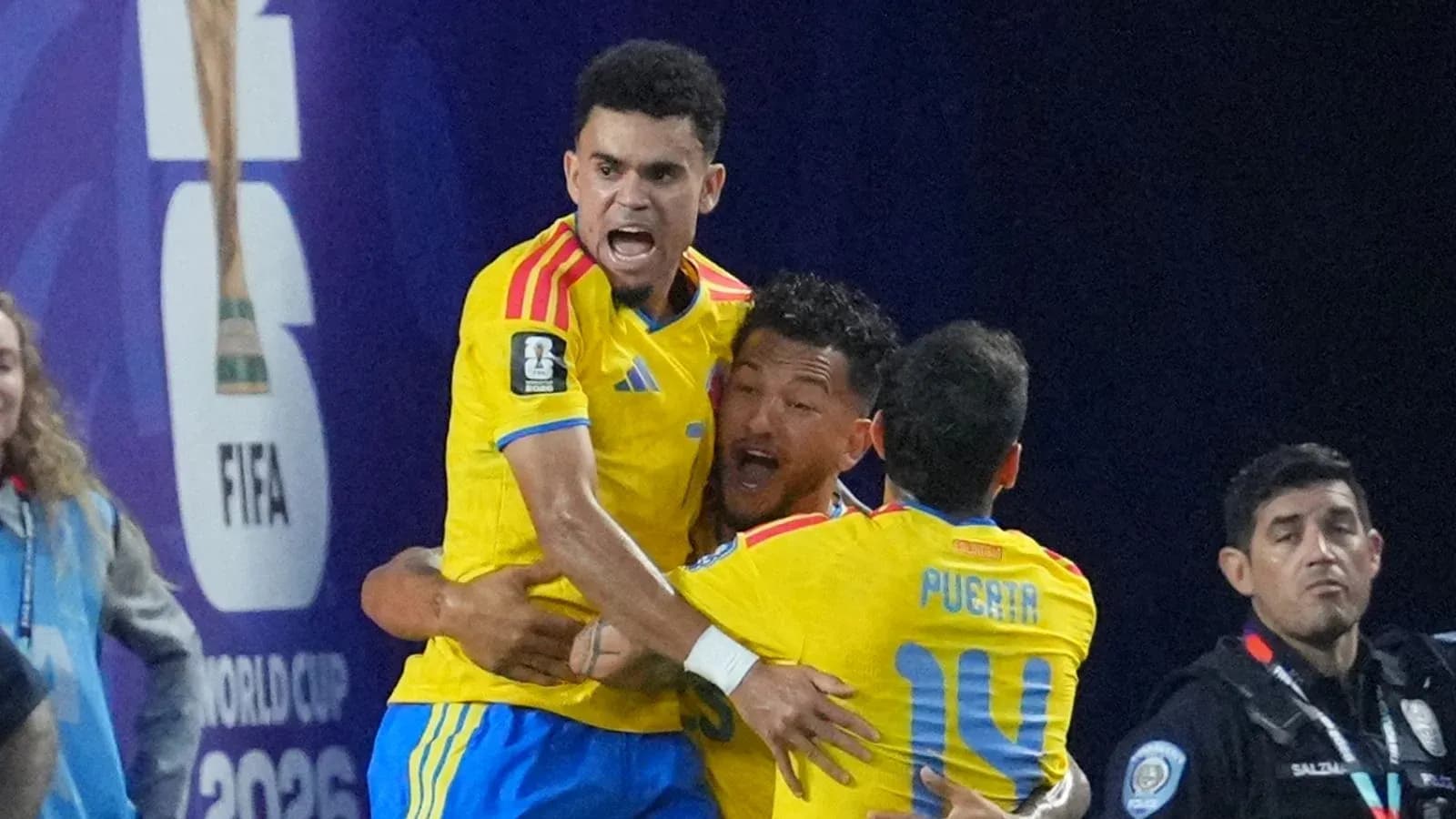
The response from Colombia was cold and clinical. On 14 minutes, Suárez, barely introduced, peeled wide on the right and wrapped his left foot around a teasing cross. Ghana’s back line hesitated, the midfield failed to track the run, and Jhon Arias – once of Wolves, now the sharpest mind in the box – ghosted into space and guided a deft header beyond Lawrence Ati Zigi.
One chance, one goal, and Colombia in front. Just like that.
Diaz drives, Ghana drift
From there, the pattern hardened. Ghana, whose compact low block had served them well in the group stage, sank deep and waited. Colombia pushed the ball around with purpose, probing, dragging black shirts from side to side, looking for gaps that rarely opened fully but always seemed on the verge of doing so.
Luis Díaz, as ever, lit the fuse on the counter. Just before the break he drove at the heart of Ghana’s defence, shifted the ball and whipped a shot inches wide. It felt like a warning that the second was coming.
Suárez then glanced a header past the far post, another reminder that Ghana were hanging on. The biggest escape arrived in first-half stoppage time. Johan Mojica rose at the back post, met a cross with a firm header and looked certain to score, only for Ati Zigi to spring to his right and claw the ball away with a superb, strong-handed save.
Colombia went down the tunnel 1-0 up, but it should have been more. The numbers told the same story: 2.19 expected goals by the end, yet only Arias’ early strike to show for it.
A second goal that never quite came
The pressure did not ease after the interval. Colombia came out with the same intent, Ghana with the same caution.
Just before the hour, the stadium thought the contest was over. Jefferson Lerma, raiding in from midfield, whipped a low ball across the six-yard box. Díaz slid in at full stretch and turned it into the net. The celebrations were instant, the finish emphatic.
Then the flag went up.
The assistant’s raised arm cut through the noise. Offside. No second goal. No breathing space.
Colombia kept coming. Díaz buzzed around the final third, Davinson Sánchez threatened at set pieces, half-chances flashed wide or were blocked at the last. Yet for all the near misses, there was barely a murmur of danger at the other end.
Ghana’s attack never truly arrived. Thomas Partey had fired an early warning shot from 25 yards in the first minute, skidding just wide, but that proved their high point. After that, Colombia’s back line controlled the space, smothered transitions and forced Ghana into sterile possession or hopeful balls that went nowhere.
The 1-0 lead, narrow on the scoreboard, felt far larger in reality.
Quintero changes the temperature
With the game drifting towards a controlled but slightly wasteful Colombian win, Lorenzo turned to craft. On 72 minutes, Juan Fernando Quintero stepped off the bench for Arias and immediately changed the temperature of the night.
At 33, playing his club football with River Plate, Quintero no longer covers every blade of grass. He doesn’t need to. He simply found the right ones.
In just 24 touches, he stitched Colombia’s attacks together with a calm authority. Nineteen passes attempted, nineteen completed. Five chances created – more than any other player on the pitch, despite his limited time on it.
He dropped into pockets between Ghana’s lines, rolled defenders with a feint, and slid passes into spaces that had not existed a second earlier. One rising strike from distance almost tore into the top corner, a thunderous effort that had Ati Zigi beaten but flew just wide of the right-hand post. Had it dipped inside, it would have walked straight into the conversation for goal of the tournament.
The goal never came, but the message did: Colombia have a conductor waiting in the wings.
A step forward, with a warning attached
The job was done. Colombia are in the last 16, deservedly so. They dominated territory, dictated tempo and barely allowed Ghana a clear sight of goal. The defensive control was impressive, the structure sound.
Yet the missed chances linger as a warning.
Against Ghana, a toothless side on the night, one goal was enough. Against Switzerland, and potentially Argentina or Egypt beyond that, such waste might not be forgiven. The margins will tighten, the opponents will bite harder on every mistake.
Lorenzo will know it. He will also know he has an answer in Quintero, a player who turned a comfortable win into a reminder of Colombia’s attacking ceiling.
Vancouver now awaits. The stage gets bigger, the stakes sharper. Does this Colombia side have the killer touch to match their control – and is it time for Quintero to walk out from the bench and into the spotlight?



