Chelsea Women: Navigating a Season of Change
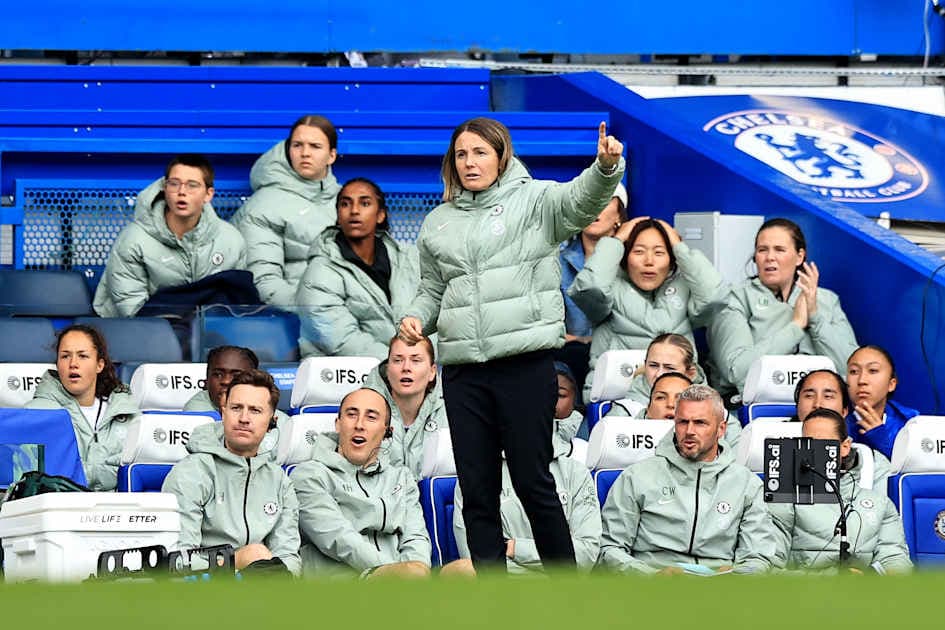
Chelsea have grown used to measuring seasons in silver. Sonia Bompastor knows it better than anyone.
A domestic Treble in her first campaign after arriving in the summer of 2024 set a brutal standard. It felt like Chelsea had simply swapped one serial winner in the dugout for another and kept marching. This year has told a different story.
Yes, the trophies are still there. The Women’s League Cup has been retained. A third-place finish secures a return to the Women’s Champions League. The team is in the Women’s FA Cup semi-final. On paper, that is a season many clubs would frame on the wall.
At Chelsea, it triggers a debrief.
“We have been so used to winning so many games, trophies, and titles,” Bompastor reflected. “But this season we couldn't achieve as much as we did previously.”
The honesty is deliberate. The club has already begun what she calls “a lot of reflections” to ensure next year looks and feels different.
This is not a crisis. It is a recalibration.
A giant under pressure
Chelsea have spent the last decade setting the pace in the women’s game, a benchmark others measured themselves against. That dynamic is shifting. The rest are closing in.
“The competition is becoming bigger and bigger,” Bompastor said.
The gap, once yawning, now narrows both in England and across Europe. Clubs are investing properly: in facilities, in staff, in players. The old assumption that Chelsea would simply outgun everyone, every week, no longer holds.
“Chelsea have been a club who have been showing the pathway,” she added. “Right now, most of the clubs are catching up and making sure they can compete against us.”
The tone isn’t defensive. It is a warning to themselves. If you blaze the trail, you cannot stand still when the pack finally finds your footprints.
So the key question inside Cobham is a blunt one: how do you maintain long-term success at a club that has already tasted almost everything there is to win?
Fewer competitions, higher stakes
New rules add a twist. Because Chelsea have qualified for the Women’s Champions League next season, they will not feature in the League Cup in 2026/27. One domestic trophy route disappears. The calendar changes shape.
This season, Chelsea have been stretched across four fronts. Next season, there will be three. That sounds lighter. It isn’t, not when the level of every remaining competition keeps rising.
“You build a squad to have the depth to compete in every competition,” Bompastor explained.
The squad is stacked with internationals, players who already carry heavy national-team workloads. The challenge is no longer just about numbers. It is about having the right tools, the right profiles, to handle the intensity of an increasingly unforgiving Women’s Super League and a Champions League that punishes any dip.
No easy weekends in England
Bompastor knows the contrast better than most. Her time at Lyon came with domination baked in.
“When I was at Lyon, 80 per cent of the games, we could play at 60 per cent, and it was enough for us to win,” she said.
She could rotate heavily, throw in academy products, and still expect three points. The domestic league rarely pushed Lyon to their limit until the very biggest games.
England has hit her differently.
“That’s not the case here. Here, you have to compete in every league game because every match brings you a challenge in different ways.”
Sometimes it is physical: direct, relentless, second balls and duels. Sometimes it is the sheer scale of the opposition: big clubs with deep squads and serious budgets. Sometimes it is tactical: compact blocks one week, high pressing the next. There is no rhythm of easy wins to coast through.
“You need to make sure you are ready for every game,” she stressed. “There is no space for you to drop a little bit because when you do that, you lose or you drop points.”
The margin for error has shrunk. Chelsea have felt it.
The next evolution
All of this feeds into a summer that will shape the next phase of Chelsea’s era in the women’s game. Two seasons into Bompastor’s reign, both campaigns have carried the label “transitional” from inside the club. The first brought a Treble. The second, by Chelsea’s own lofty standards, has been more complicated.
Yet the pattern is clear: this is not a manager or a club clinging to past glories. It is one interrogating them.
“Our job is to reflect and to make sure we make the right decisions for the future,” Bompastor concluded.
The trophies on the shelf say Chelsea remain a force. The tone from the head coach says they are not remotely satisfied. With Europe back on the agenda and the domestic chase tightening around them, the next decisions will reveal whether this was a brief wobble in an era of dominance, or the start of a very different kind of fight.