Chelsea's Tactical Victory Over Tottenham: A 2-1 Analysis
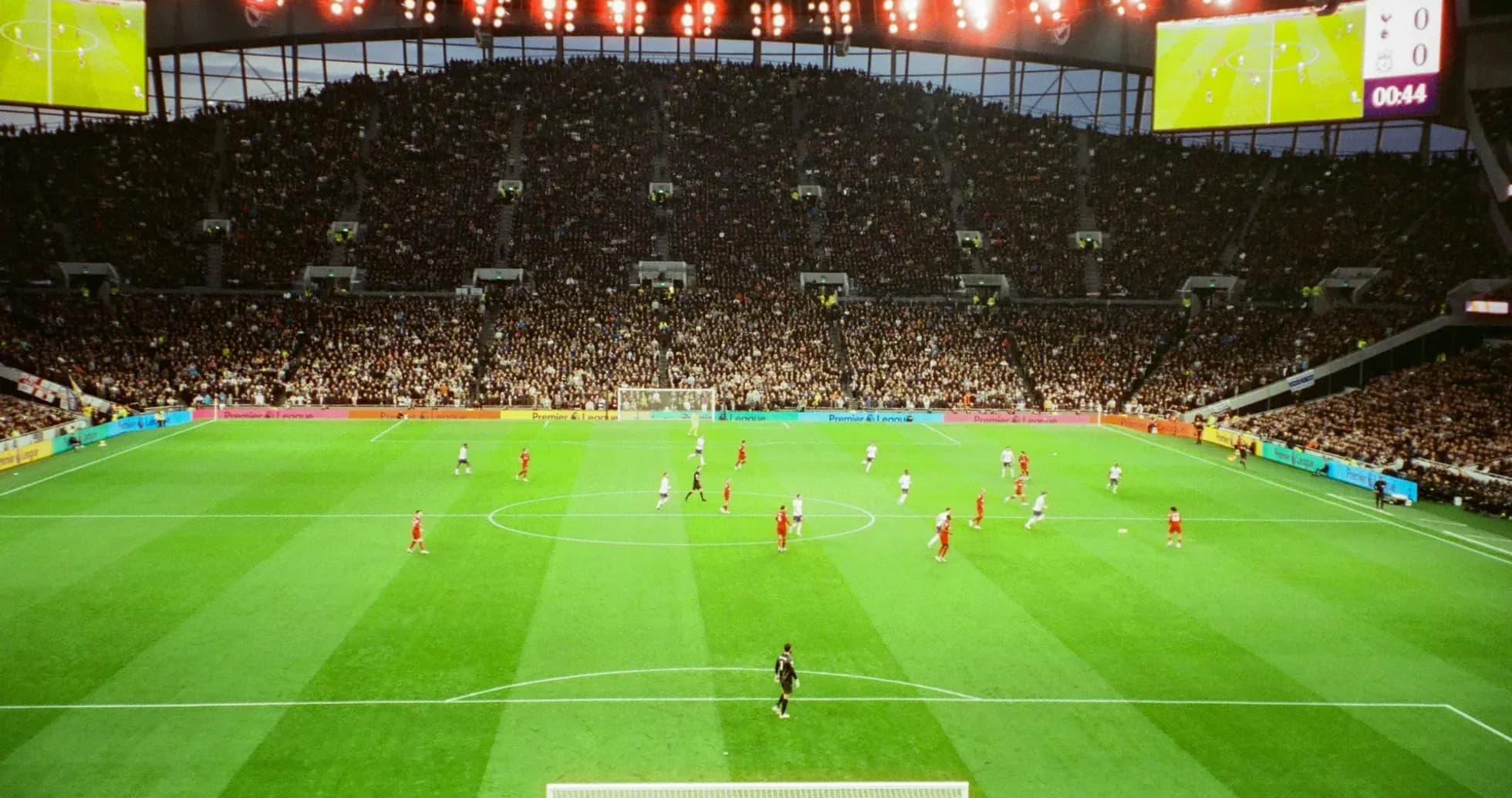
Chelsea’s 2-1 win over Tottenham at Stamford Bridge was a tactical contest defined by structure versus volume. Both sides lined up in a 4-2-3-1, but used the shape in markedly different ways: Chelsea to compress space and spring selective transitions, Tottenham to dominate territory and accumulate pressure.
Out of possession, Chelsea’s double pivot of Andrey Santos and Moisés Caicedo sat very tight to the back four, creating a narrow 4-4-1-1 without the ball. The wingers Pedro Neto and Enzo Fernandez worked back inside the full-backs to deny Tottenham’s No. 10, Conor Gallagher, and the half-space runs of Mathys Tel and Randal Kolo Muani. That compactness explains why Tottenham, despite 56% possession and 538 passes, were forced into a lot of their activity in front of the block: they generated 9 total shots but only 3 on target, and just 1 blocked shot, suggesting Chelsea largely kept them shooting from controlled zones even when they did reach the box.
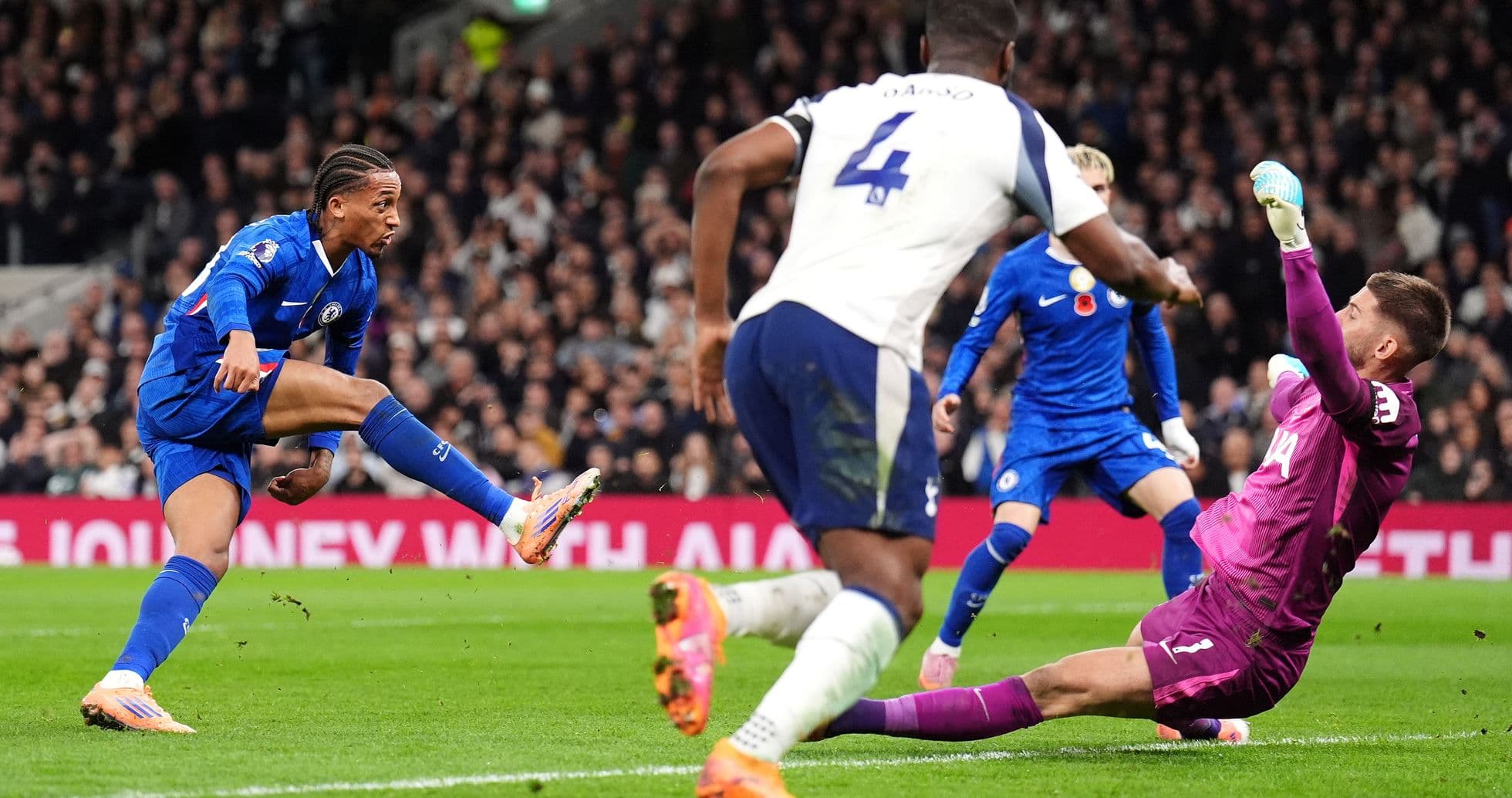
In contrast, Chelsea’s 44% possession was used pragmatically. They produced the same number of total shots as Tottenham (9), but with a more balanced shot map: 4 shots on goal, 3 off target, and 2 blocked. The first goal on 18 minutes, Enzo Fernandez finishing from a Pedro Neto assist, encapsulated their plan: win the ball with the double pivot, play early into Neto between the lines, and exploit the spaces around Tottenham’s advanced full-backs. Neto’s starting role as a nominal right-sided midfielder in the 4-2-3-1 became more of a free attacking conduit, drifting into central pockets and dragging markers out, which opened lanes for Cole Palmer and Liam Delap to threaten the inside channels.
The second Chelsea goal on 67 minutes, Andrey Santos arriving to score from an Enzo Fernandez assist, highlighted a key mid-game adjustment. As Tottenham pushed their full-backs higher and their double pivot of Rodrigo Bentancur and João Palhinha stepped up to compress Chelsea’s build-up, Santos began timing late surges beyond the first line of pressure. Instead of both pivots holding, Caicedo increasingly stayed as the single screen while Santos joined the second wave. That shift allowed Chelsea to exploit the vacated space behind Tottenham’s midfield line, and the 2-0 lead was a direct reward for that risk.
Defensively, Chelsea’s back four were aggressive in duels but disciplined in line management. Marc Cucurella and Jorrel Hato, the two full-backs, had to cope with both overlapping runs from Pedro Porro and Destiny Udogie and the inside movements of Tel and Kolo Muani. The card pattern tells the story of the game’s physical edge as Tottenham chased: Tottenham’s three yellows all came for “Foul”, reflecting their attempts to disrupt Chelsea’s counters. Chelsea’s four yellows were more varied — Jorrel Hato for “Time wasting” on 79 minutes, Marc Cucurella for “Argument” on 85 minutes, Liam Delap for “Foul” on 87 minutes, and Dário Essugo for “Foul” at 90+2’ — underlining how game-state management and emotional spikes entered Chelsea’s late-game approach as they protected the lead.
The substitution pattern around 69–74 minutes marked Tottenham’s tactical gamble. Roberto De Zerbi introduced James Maddison, Djed Spence, and Pape Matar Sarr in a triple change: R. Kolo Muani (OUT) for J. Maddison (IN), Destiny Udogie (OUT) for Djed Spence (IN), and João Palhinha (OUT) for P. M. Sarr (IN). This effectively rebalanced the 4-2-3-1 into a more aggressive, playmaker-led structure, with Maddison taking central creative responsibility and Sarr adding forward thrust from deeper areas. The payoff came almost immediately on 74 minutes, when Richarlison scored from a P. M. Sarr assist to make it 2-1. The goal illustrated Tottenham’s improved verticality: Sarr breaking lines from midfield, Richarlison occupying the central defenders more aggressively.
However, Chelsea’s bench management from Calum McFarlane was equally decisive in closing the game. At 74 minutes, T. Chalobah (IN) came on for J. Acheampong (OUT), adding a more experienced defensive presence on the right side. At 81 minutes, M. Sarr (IN) replaced W. Fofana (OUT), another move aimed at fresh legs and aerial security in the defensive line. Then, at 89 minutes, a triple attacking rotation — A. Garnacho (IN) for P. Neto (OUT), Dário Essugo (IN) for C. Palmer (OUT), and S. Mheuka (IN) for L. Delap (OUT) — allowed Chelsea to add energy and pressing in the front line rather than pure ball retention. Those late changes contributed to breaking Tottenham’s rhythm in the closing stages, even if they did not add attacking threat.
In goal, R. Sanchez (Chelsea) and A. Kinsky (Tottenham) each recorded 2 saves. The underlying numbers are revealing: Chelsea scored 2 goals from 0.63 xG, while Tottenham scored once from 1.72 xG. Both goalkeepers posted the same goals prevented figure of -1.08, indicating that neither overperformed their shot-stopping; instead, the finishing variance and shot quality distribution defined the scoreline. Chelsea were more clinical from fewer high-quality chances, whereas Tottenham’s higher xG came from volume and territory rather than ruthlessly efficient finishing.
In possession, Tottenham’s 538 passes, 473 accurate (88%), underscore their control of the ball, but Chelsea’s 425 passes, 355 accurate (84%), show they were not overwhelmed; they simply chose a more direct, vertical rhythm. Tottenham’s 8 shots inside the box versus Chelsea’s 4 suggest they did manage to penetrate the penalty area more often, yet Chelsea’s block and recovery structure limited the danger of those entries, reflected in Tottenham’s modest 3 shots on target.
Set pieces and rest defense were another subtle battleground. Tottenham’s 4 corner kicks to Chelsea’s 3 show a slight edge in sustained pressure, but Chelsea’s compact 4-2-3-1 rest defense behind the ball meant they rarely got exposed in transition after attacking phases. Conversely, Tottenham’s higher full-backs and more expansive spacing left them vulnerable to precisely the sort of quick combinations that produced Chelsea’s first goal.
Overall, the tactical story is of Chelsea winning the game-state battle: compact without the ball, sharp in transition, and adaptable with their double pivot roles, against a Tottenham side that controlled the ball but could not consistently convert structural dominance into clear, decisive chances.