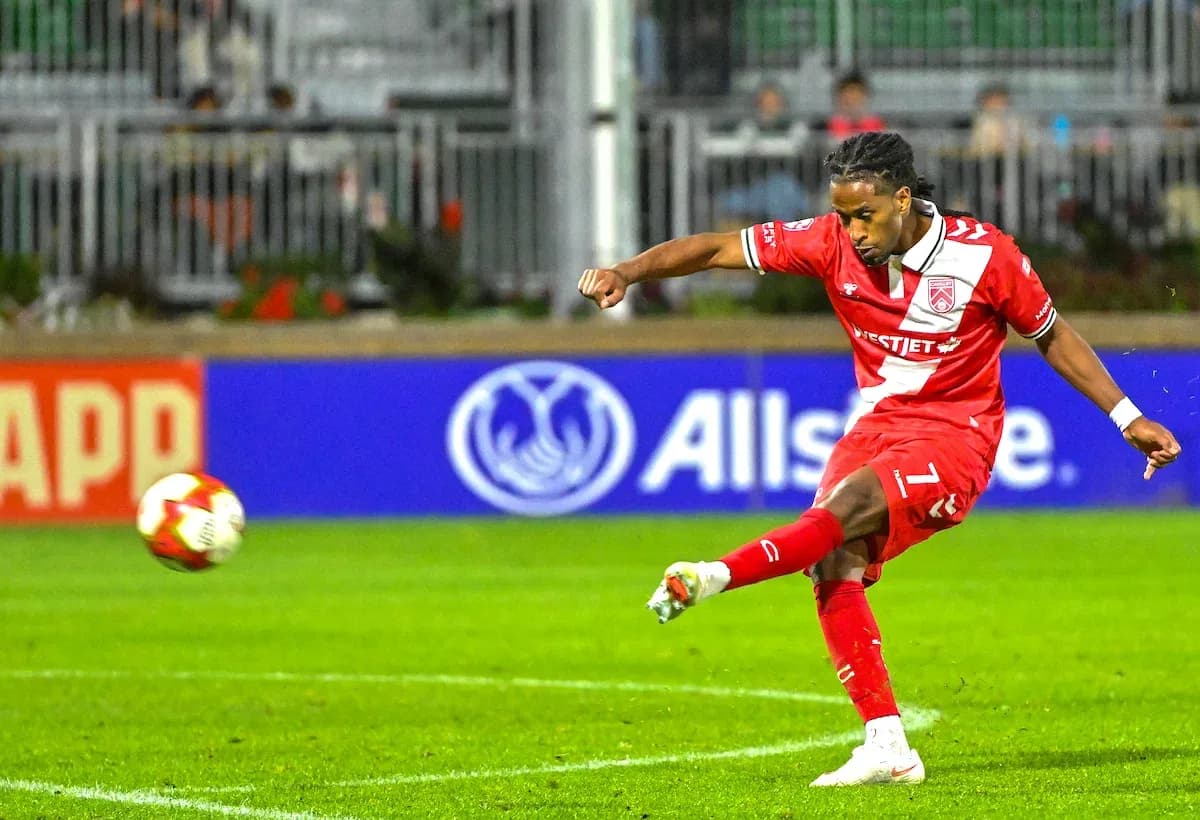
Cavalry FC Dominates Supra du Quebec 6-0 in CPL Clash
Under the lights at ATCO Field, Cavalry FC did more than underline their status as league leaders; they delivered a six-goal statement that crystallised the gap between a ruthless, well-drilled contender and a still-fragile Supra du Quebec side. In a Canadian Premier League Group Stage clash that finished 6–0, the patterns of an entire season were compressed into 90 minutes.
Heading into this game, Cavalry sat top of the table with 53 points from 23 matches, built on a formidable overall goal difference of 35, the product of 48 goals scored and only 13 conceded. At home they had been almost untouchable: 12 games, 9 wins, 3 draws, no defeats, with 30 goals for and just 7 against. Supra arrived in Foothills County in sixth place, their overall goal difference of -13 reflecting 31 goals scored and 44 conceded. On their travels they had been adventurous but exposed: 12 away matches, 4 wins, 2 draws, 6 defeats, with 20 goals for and 27 against.
The lineups told the story of intent. Tommy Wheeldon Jr. set Cavalry in a 4-4-2, a more direct, front-foot configuration than their frequently used 4-2-3-1. N. Ingham anchored the side in goal, protected by a back four of B. Kamdem, A. Didic, D. Klomp and A. Pearlman. In midfield, the blend was carefully calibrated: the athletic screen of E. Kobza and N. Myroniuk inside, with the dynamism of G. Ntignee and the vertical running of N. Edwards wide. Up front, the pairing of A. Musse and Robert Owen Antoniuk promised movement between the lines rather than a static focal point.
Supra du Quebec answered with a 4-3-3 that, on paper, had enough technical quality to compete. J. Milli started in goal behind a back line of C. Auguste, M. Chretien, Z. Brault-Guillard and the attack-minded D. Abzi. The midfield triangle of A. Sissoko, Alessandro Biello and S. Rea was designed to control possession and feed a lively front three of L. Kwemi, I. Conde and N. Santos. But if the structure looked balanced, the underlying numbers warned of fragility.
Cavalry’s seasonal attacking profile is built on sustained pressure and late-game acceleration. Overall, they average 2.1 goals per match, with 2.5 at home, and their minute-by-minute scoring distribution peaks brutally after the interval. Between 61–75 minutes they have scored 24.49% of their league goals, and another 24.49% arrive between 76–90. They are a side that squeezes opponents until the final whistle. Supra, by contrast, concede heavily in exactly those zones of the game: 16.28% of their goals against fall between 61–75 minutes, and a punishing 30.23% between 76–90. It is the critical intersection of this fixture: Cavalry’s late surge against Supra’s late collapse.
Defensively, Cavalry’s structure is as impressive as their attack. Overall, they concede just 0.6 goals per match, 0.6 at home, with 10 clean sheets in 23 games and no home defeat all season. Their only real vulnerability comes late, with 41.67% of their conceded goals arriving between 76–90 minutes. Supra’s attack, meanwhile, is capable but inconsistent: 1.3 goals per match overall, 1.7 on their travels, with a relatively even spread of scoring but a noticeable clustering in the 31–45, 61–75 and 76–90 ranges (each 21.88%). On a different night, that late-game threat might have exploited Cavalry’s one defensive soft spot. Here, the contest was over long before that window opened.
Individually, the match brought several key narratives into focus. At the back for Cavalry, the partnership of D. Klomp and A. Didic looked like the spine of a champion. Klomp, already one of the league’s standout defenders with 4 goals, 7 successful blocks and 15 interceptions across the season, again marshalled the line with authority. Didic, who has contributed 2 goals and 3 assists from centre-back, continued to operate as both aerial dominator and deep playmaker, his long passing a quiet but constant release valve.
On the flanks, A. Pearlman’s emergence as a reliable, front-foot full-back was evident. Across the campaign he has won 65 of 104 duels and blocked 2 shots, and here he pushed high to lock Supra’s wingers into their own half. In midfield, E. Kobza’s season-long profile as an enforcer – 18 tackles, 4 blocked shots and 10 interceptions, plus 7 yellow cards and one second booking – framed the battle zone. He set the tone with aggressive pressing and crisp distribution, ensuring Cavalry could sustain wave after wave of attacks.
Higher up, the creativity of G. Ntignee and the direct threat of A. Musse embodied Cavalry’s attacking identity. Ntignee’s 3 assists and 41 attempted dribbles in league play mark him out as a line-breaking carrier; his ability to receive under pressure and drive at defenders repeatedly unbalanced Supra’s block. Musse, with 3 goals and 2 assists this season, again drifted intelligently between wide and central channels, linking with Antoniuk and dragging Supra’s centre-backs into uncomfortable positions.
For Supra, the defeat exposed the structural strain on their defensive leaders. D. Abzi, who has 9 yellow cards and one second booking this season, again walked the tightrope between aggression and over-commitment. His forward surges left space behind, and against a side that scores 16.33% of its goals between 46–60 minutes and then accelerates, those gaps were ruthlessly attacked. On the opposite flank, C. Auguste – a defender with 28 tackles and 19 interceptions this campaign – spent more time firefighting than stepping out to intercept.
In the middle, Alessandro Biello’s profile as a combative passer with 31 tackles, 24 interceptions and a red card this season hints at his dual nature: organiser and risk-taker. But pinned back by Cavalry’s pressing, he and A. Sissoko struggled to connect with S. Rea, whose 40 key passes and 3 assists typically make him Supra’s creative metronome. Star forward L. Kwemi, with 7 league goals and 17 key passes, was starved of the kind of service that has made him one of the division’s most efficient attackers.
Discipline was another undercurrent. Cavalry are no strangers to cards – H. Paton, even from the bench on this occasion, has 8 yellows this season, while Kobza and Pearlman each sit on 6 – but their aggression is usually channelled into controlled pressing. Supra’s card profile is more chaotic: Abzi’s accumulation, Chretien’s 6 yellows and one second booking, and Biello’s straight red earlier in the season all speak to a back line that too often defends on the edge.
From a statistical prognosis perspective, this result felt less like an outlier and more like an emphatic confirmation. Cavalry’s home scoring average of 2.5 goals and their overall defensive record always suggested a multi-goal win was likely; a 6–0 scoreline simply stretched those trends to their extreme. Supra’s away concession rate of 2.3 goals per match, their late-game collapses and their limited clean-sheet record on their travels pointed toward exactly the kind of unraveling that unfolded here.
Following this result, the tactical lesson is stark. Cavalry’s squad is built for sustained pressure: defenders who can pass and block, midfielders who can both tackle and progress, and wide players who can carry the ball into the most dangerous minutes of the match. Supra du Quebec, by contrast, remain a side whose technical quality in midfield and attack is undermined by structural and psychological fragility at the back. On this night in Foothills County, those season-long truths were written in six unanswered goals.