
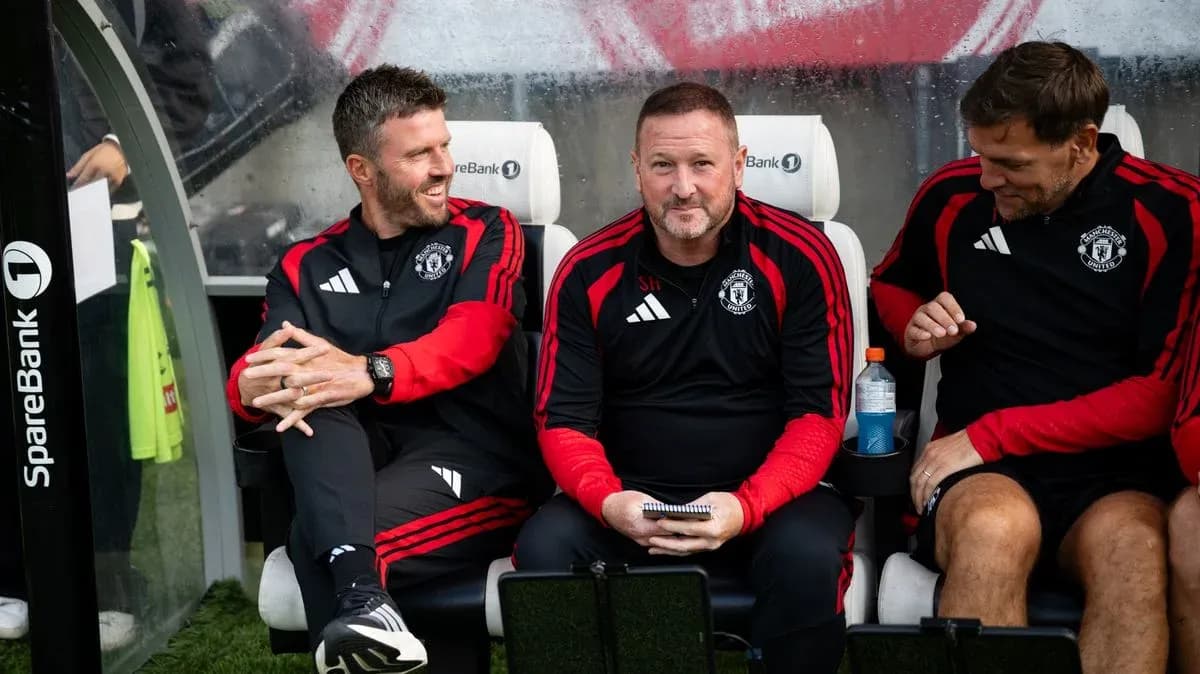
Michael Carrick's Vision for Manchester United: Control Over Chaos
Michael Carrick is swimming against the tide. In a league obsessed with brawn, duels and dead balls, he wants Manchester United to win games with the ball at their feet.
A League of Fights, Not Flows
Look across the Premier League last season and the pattern was obvious. Matches broke down into a series of individual skirmishes. Man-marking schemes dragged players all over the pitch, turning games into 11 separate contests. Win more of those, win territory, win set-pieces. That was the logic.
Control? Rhythm? They were often the first casualties.
Even Manchester City, the standard-bearers of midfield dominance under Pep Guardiola, found it harder to suffocate opponents through possession. The pace of games surged, the intensity climbed, and space for playmakers shrank to almost nothing. Midfielders who wanted to dictate with short passes and tempo-setting touches discovered that the league had moved onto something more direct, more chaotic.
The numbers back it up. Two seasons ago, four teams averaged more than 60% possession, and six topped 58%. Last season, only City crept above 60% — 60.5%, and just — with Chelsea the only other side to clear 58%. The trend is stark: fewer teams caring about keeping the ball, more teams caring about winning the duels that decide where it ends up.
Carrick’s Counter-Cultural Plan
Into that landscape steps Carrick with a very different idea of what United should be.
United have just lost Casemiro, a midfielder built for the current Premier League: strong in duels, comfortable in the scrap, happy to patrol the chaos. He has gone on a free, and instead of replacing his physical presence like-for-like, the club have pivoted.
The rebuild in the middle of the pitch has focused squarely on technique.
Andrey Santos and Youri Tielemans have arrived. Both know the Premier League. Both understand its pace and its collisions. But that’s not why they are here. They are here because they can pass. Because they see the game. Because Carrick wants a midfield that can dictate, not just disrupt.
Their profiles fit a clear pattern. High-level technical midfielders. Wide passing ranges. Comfort taking the ball in tight spaces and moving it with purpose. Old Trafford’s summer business tells its own story: United are being built to control games again.
Carrick has gone even further. Mason Mount, once seen primarily as an advanced midfielder, has been reimagined as a deep-lying option. Dropping him back is a deliberate move: another passer closer to the build-up, another player who can help United set the pace rather than chase it.
This is Carrick’s first real chance to shape the squad in his image. His first full pre-season to drill his ideas. His first transfer window with genuine tactical intent behind it.
A Midfield in His Own Image
It all makes sense when you remember the player he was.
Carrick, at his peak, lived in that deep pocket of midfield where the game slows down for the few who truly understand it. He wasn’t about sliding tackles or lung-busting runs. He was about angles. About receiving the ball, turning out of pressure, and passing United into control.
He played in a side that usually had plenty of the ball. His value came with it, not without it.
That is the version of United he is trying to recreate now.
His spell at Middlesbrough offered an early glimpse. In the Championship, he built a team that wanted to use the ball, not surrender it. Aidan Morris arrived to add yet more passing quality to that midfield. Boro often controlled matches, moved opponents around, and imposed their rhythm.
The criticism? Control didn’t always translate into enough incision in the final third. Neat patterns, not always enough punches landed.
Carrick will know that. He will know that at United, control alone is never enough. Old Trafford demands that the ball be used with purpose, not just kept.
Bucking the Trend
That is what makes this coming season so intriguing.
At a time when possession is harder than ever to sustain, when teams press in packs and chase transitions, Carrick is trying to build a side that leans into the ball rather than away from it. While others double down on athleticism and duels, United’s midfield is being assembled to think first, then tackle.
It is a gamble against the prevailing logic of the league.
The question now is not whether Carrick can make United more comfortable in possession. His track record suggests he can. The real test is sharper, more unforgiving: in a Premier League that thrives on chaos, can a team built to control the game still find a way to dominate it?



