Carlo Ancelotti Reflects on Brazil's World Cup Exit
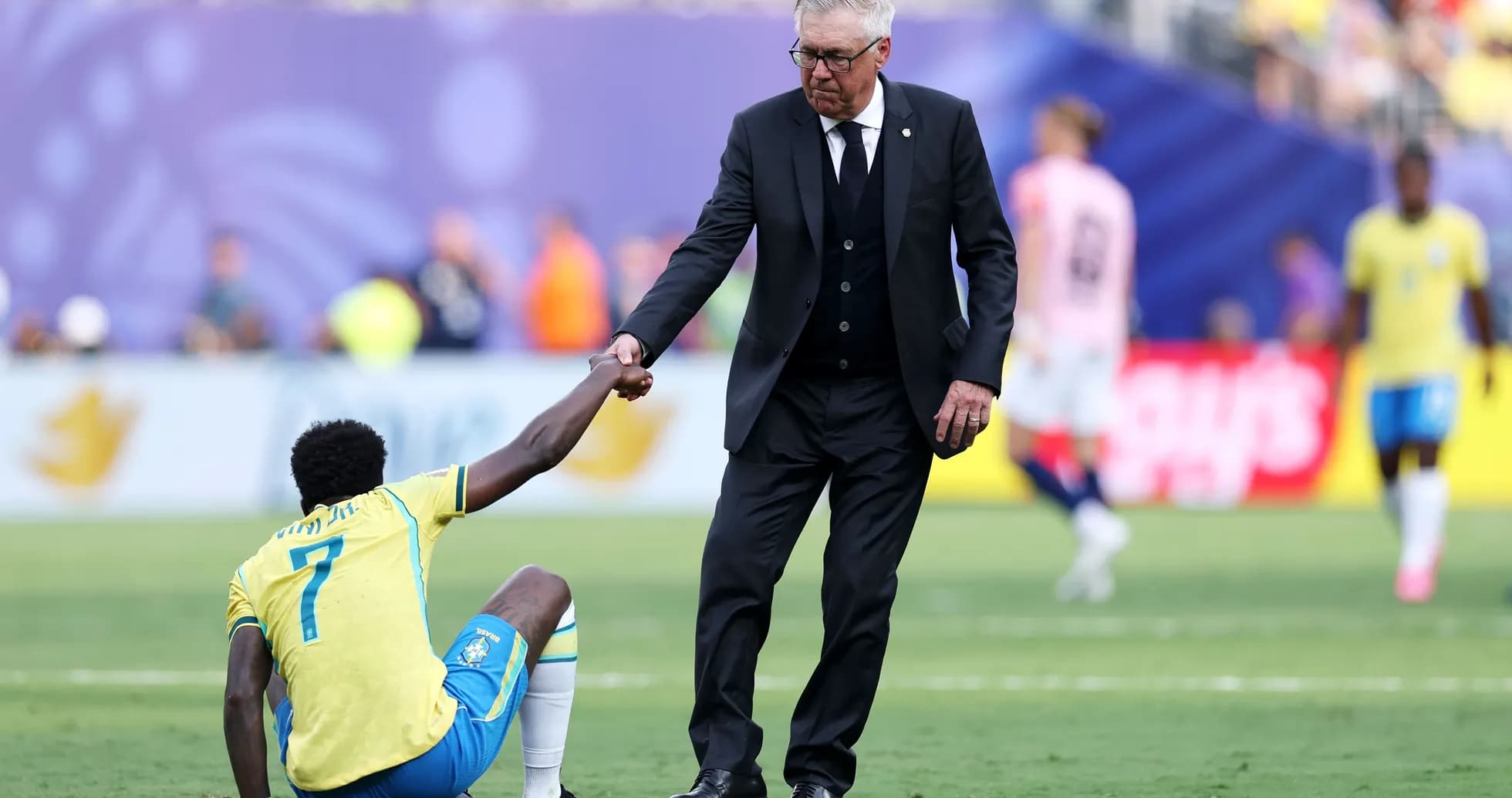
Carlo Ancelotti has lived enough nights at the sharp end of football to know that World Cups are rarely lost on a single moment. Yet when he looks back at Brazil’s exit to Norway in the round of 16, he keeps returning to one detail that sounds almost trivial.
The water break.
Not Erling Haaland’s late goal. Not the selection debate that followed. A brief pause in the second half, when Brazil were 1-0 up and, in his mind, in control.
“I think we lost the World Cup during the water break against Norway,” the Brazil coach told ESPN. “Because the team was in control of the flow of the match until that moment.”
A pause that changed everything
Until that stoppage, Ancelotti was convinced Brazil had the game where they wanted it. Norway had plenty of the ball, but largely in harmless areas. Brazil, he felt, were dictating the rhythm.
Then came the break. The players drank, regrouped, listened. The coach watched – and misread.
“Perhaps my mistake was here, when I thought the team had lost control of the match when that was not the case,” he admitted. Convinced the tide had turned, he moved to adjust his line-up. The changes came, the structure shifted, and the game slipped away.
Norway, who had used a similar possession-heavy approach against England earlier in the tournament, grew bolder. Brazil, no longer as settled, were punished. Haaland struck in the 75th minute, and Ancelotti knew what that meant.
“In the World Cup, when they score a goal against you in the thirtieth minute of the second half, it is very difficult to recover,” he said. “But we did have a chance to recover.”
They did not take it. Norway held on for a 2-1 win. Brazil were out, still chasing a world title that has eluded them since 2002.
Injuries and a shifting plan
Ancelotti is not hiding behind the idea of a single turning point. He knows the preparation was battered long before kick-off in that knockout tie.
“The plan drawn up last year changed slightly because of injuries,” he explained. Then he listed them: Militão, Rodrygo, Estêvão, Wesley before the World Cup, Raphinha during it. Each absence forced a tweak, a compromise, a new idea.
Even so, he remains proud of the broader work.
“I think the work done over a year was excellent,” he said. “Logistically, the Brazilian team was very well organised in terms of the hotel, the stadium and the training ground. I think the players’ performance throughout the year was positive. I also think the 26 players who were called up were the most suitable to be there.”
The structure, the squad, the environment – in his view, the foundations were right. The execution in one high-pressure spell was not.
The Neymar question
If the water break was the moment in Ancelotti’s mind, the public debate quickly settled on another: Neymar’s introduction.
He came on late, with Brazil chasing the game, and the reaction was brutal. Critics claimed his entrance “upset the balance” of the team, that the side bent too much around him just when they needed clarity and cohesion.
Ancelotti is unmoved.
“No,” he said when asked if he regretted the call. “When Neymar came on at that moment, I took off Ryan and brought on Endrick as a right winger, thinking that Neymar was capable of creating a goal, or showing his skills at that moment, in the 70th minute. That is what I intended to do against Japan.”
The Japan match offers a glimpse into his thinking. Against a team sitting deep and breaking only on the counter, he had a different script in mind.
“Why did I bring on Gabriel Martinelli against Japan? Because the team was completely in control of the match. Japan relied only on counter-attacks. The aim was not to score a goal, rather I was thinking of bringing on Neymar in extra time against Japan.”
There, the plan was to unleash Neymar when legs were heavy and spaces opened. Against Norway, with the control slipping in his eyes, he accelerated the move.
“I brought Neymar on a little early to regain control of the match,” Ancelotti said. It was a coach gambling on a talent he trusted, not a sentimental nod to a star name.
The weight of the decision
Ancelotti knows how these calls look in hindsight. If Neymar had conjured a moment of brilliance, the narrative would be very different. Instead, the substitution became a symbol of a night when Brazil’s shape frayed and their composure cracked.
He did not hide from the pressure that comes with such choices.
“You also have to think about the decisions you have to take,” he reflected. “I heard Thomas Tuchel say he came in for heavy criticism, and the truth is that you have to make a very difficult decision. It is a moment full of tension, and you do not always get it right.”
On Neymar himself, there is no ambiguity.
“I think Neymar should have been brought on, he had to come on at that moment because he was performing well, trained well, and prepared well. I liked his sporting spirit. I think he helped the team. But, with him coming on, there was no need to change the structure of the team.”
That last line hangs in the air. The player was not the problem, the coach implies. The reaction around him was.
For Ancelotti, the story of Brazil’s World Cup is not one of chaos or collapse, but of a finely balanced plan knocked off course by injuries, a misread pause, and one decisive strike from Haaland. The question now is simple and unforgiving: how many more chances will this generation – and this coach – get to put that right on the game’s biggest stage?