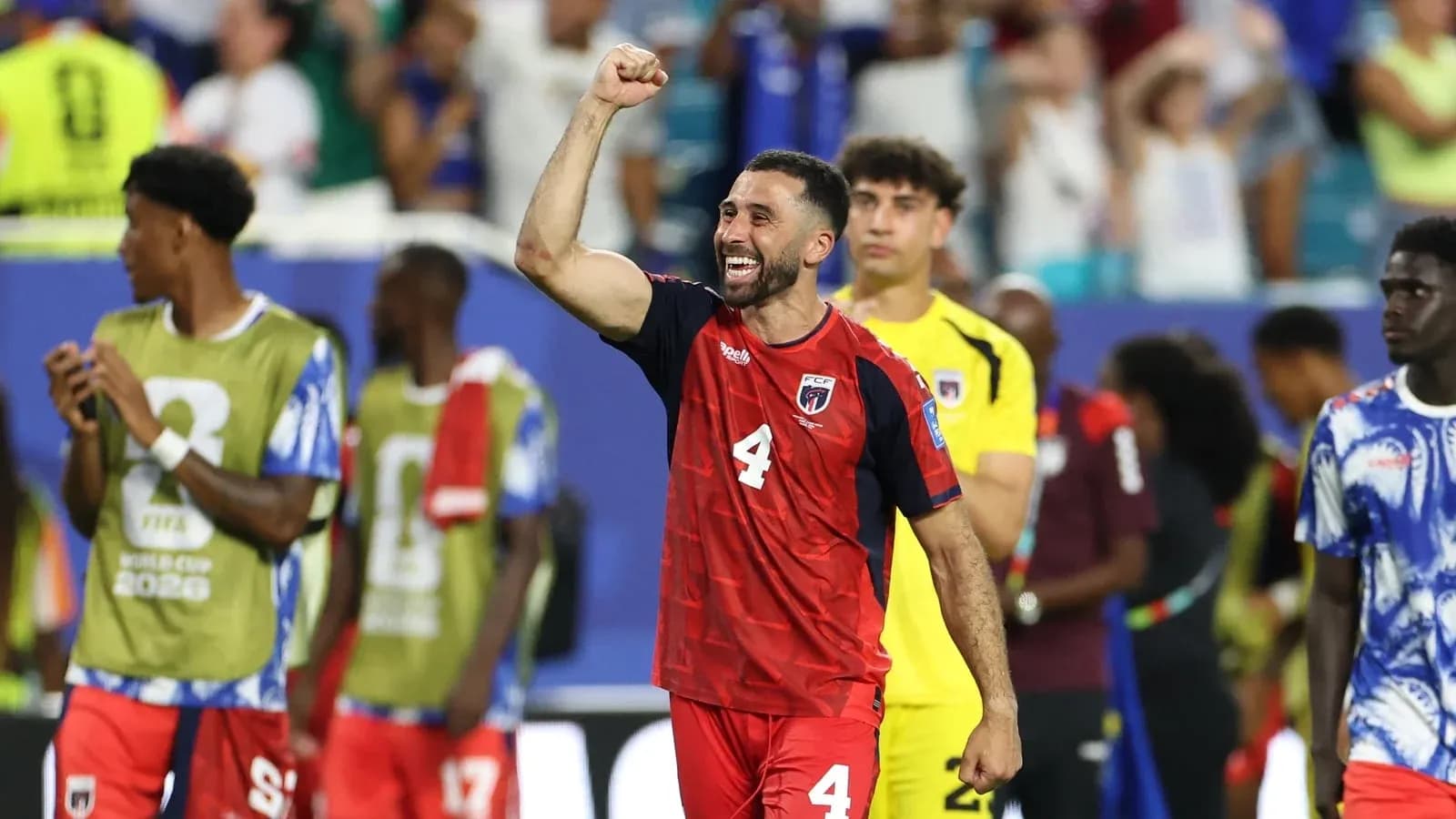
Cape Verde's World Cup Dream: Pico Lopes Leads the Charge
In Houston tonight, under the thick Texan heat and the glare of a World Cup spotlight, Pico Lopes walks out for Cape Verde with two nations on his shoulders.
On the islands off the coast of Senegal, it will be 11pm when the anthem plays, a late-night vigil for a country living a first World Cup dream. In Ireland, where Lopes grew up, it will be 1am. Pubs will be closed, alarms set, curtains half-drawn as friends, old team-mates and the diehards sacrifice sleep to watch him on RTÉ2.
Cape Verde need only a draw against Saudi Arabia to reach the knockout stages at their debut finals. A win would be historic. A point would still be enough. Either way, a tiny footballing outpost stands on the brink of the last 16.
For Irish fans, the story feels familiar.
Echoes of Yokohama
Twenty-four years ago in Japan, it was Ireland who faced Saudi Arabia with everything on the line. Robbie Keane, Gary Breen and Damien Duff scored in Yokohama to fire Mick McCarthy’s side into the knockout rounds of the 2002 World Cup. Back then, in a Dublin classroom, a young Lopes watched on a wheeled-in TV as Ireland did the job.
Now it is his turn to face the Saudis with progression at stake.
“Wouldn't it be amazing now if history repeated itself and that was the sort of win that took us to the next phase,” Lopes said in the build-up.
The symmetry is striking. A defender who captains Shamrock Rovers, born in Ireland to Cape Verdean parents, now stands where his childhood heroes once stood: final group game, against Saudi Arabia, win and you’re through.
The difference? This time, the green shirts are on the other side of the story.
Giant steps, one point at a time
Cape Verde arrive at this decisive night with their confidence earned, not imagined.
They opened with a magnificent 0-0 draw against Spain, a result that turned heads far beyond Praia and Dublin. They conceded just one free-kick in the entire game, a statistic that speaks of discipline, concentration and a refusal to be overawed by reputations.
Then came Uruguay. Cape Verde not only scored their first ever World Cup goal, they did it in style. Kevin Pina’s free-kick put them ahead and, though the match finished 1-1, the point felt like another marker laid down. This team belong here.
“The mood is good,” Lopes said. “It's a final group game, but we're going into it with everything to play for.
“It's all in our hands, so we know what a win will do for progress to the next round, so we're really looking forward to just attacking the game from the start.”
He stopped short of calling it expected, but not of calling it earned.
“I wouldn't say expected but it's a position that we wanted to be in. We knew it would be difficult but we knew we could achieve it if we believed it.
“We knew the first two games would be very difficult. To pick up two points out of them was huge and it probably gives us that little bit of a lift going into the final game as well given the format of the competition.”
They have already stared down Spain and Uruguay and walked away unbeaten. Now comes a different kind of test.
Respect for Saudi Arabia, belief in the plan
The danger tonight is obvious: assume Saudi Arabia are a softer touch and you’re on the plane home.
Lopes has no intention of falling into that trap.
“It's a great opportunity for us and we can't get drawn in thinking that's going to be an easy game or a foregone conclusion,” he warned. “I think Saudi Arabia are a really good team. They have some real quality in the side that can hurt you. We won't be getting carried away yet. Just focus on the game at hand and hopefully we can get it done.”
His coach, Bubista, struck a similar tone. No inferiority complex. No wide-eyed awe. Just a clear sense that Cape Verde have earned their place among the elite.
“We are very happy to be able to participate in the World Cup,” he said. “Football belongs to everyone. It does not belong only to wealthier countries.
“Saudi Arabia are a very organised team. They have great transitions, it is a difficult opponent, but we will rely on our organisation. We have confidence in our plan.”
That plan has already frustrated Spain and unsettled Uruguay. Compact without the ball, brave with it, clever on set pieces. It is not romantic underdog chaos; it is structured, drilled, and increasingly sure of itself.
Ireland’s adopted team
Back home, the Republic of Ireland’s own World Cup hopes ended in the play-offs against Czechia. Czechia have already gone home. Irish fans needed a new story, a new colour to wear, a new team to care about.
They did not have to look far.
With Lopes at the heart of Cape Verde’s defence and captain of Shamrock Rovers, the Irish connection is obvious. The emotional connection has grown game by game.
“I'm very aware,” Lopes said. “A lot of my friends, a lot of my family, send me stuff every day and it's incredible. I'm really overwhelmed with the support of Irish people.
“To really get behind it and back it and adopting nearly Cape Verde as a second country. I think someone mentioned the 33rd county. It's brilliant. I'm looking forward to thanking everyone when I am home.”
Cape Verde, the 33rd county. A line that started as a joke has started to feel like something more. Irish fans, denied their own World Cup, have thrown themselves behind a team that plays with organisation, heart and just enough daring to make you believe something special might be brewing.
A night that can change everything
So it comes down to this: one game in Houston, one result needed.
On the islands, families will gather around TVs and radios, chasing history deep into the night. In Ireland, alarms will buzz in the dark, kettles will click on, and another generation will watch Saudi Arabia in a World Cup decider – only this time, they will be cheering for a different shade of blue.
For Cape Verde, this is not just about a last-16 place. It is about proving that football really does belong to everyone, that a small archipelago can walk into a World Cup and refuse to play the tourist.
For Pico Lopes, it is about stepping out of the memory of a classroom TV in Dublin and writing his own Yokohama moment.
The stage is set. Now we find out if history really does have room for a sequel.