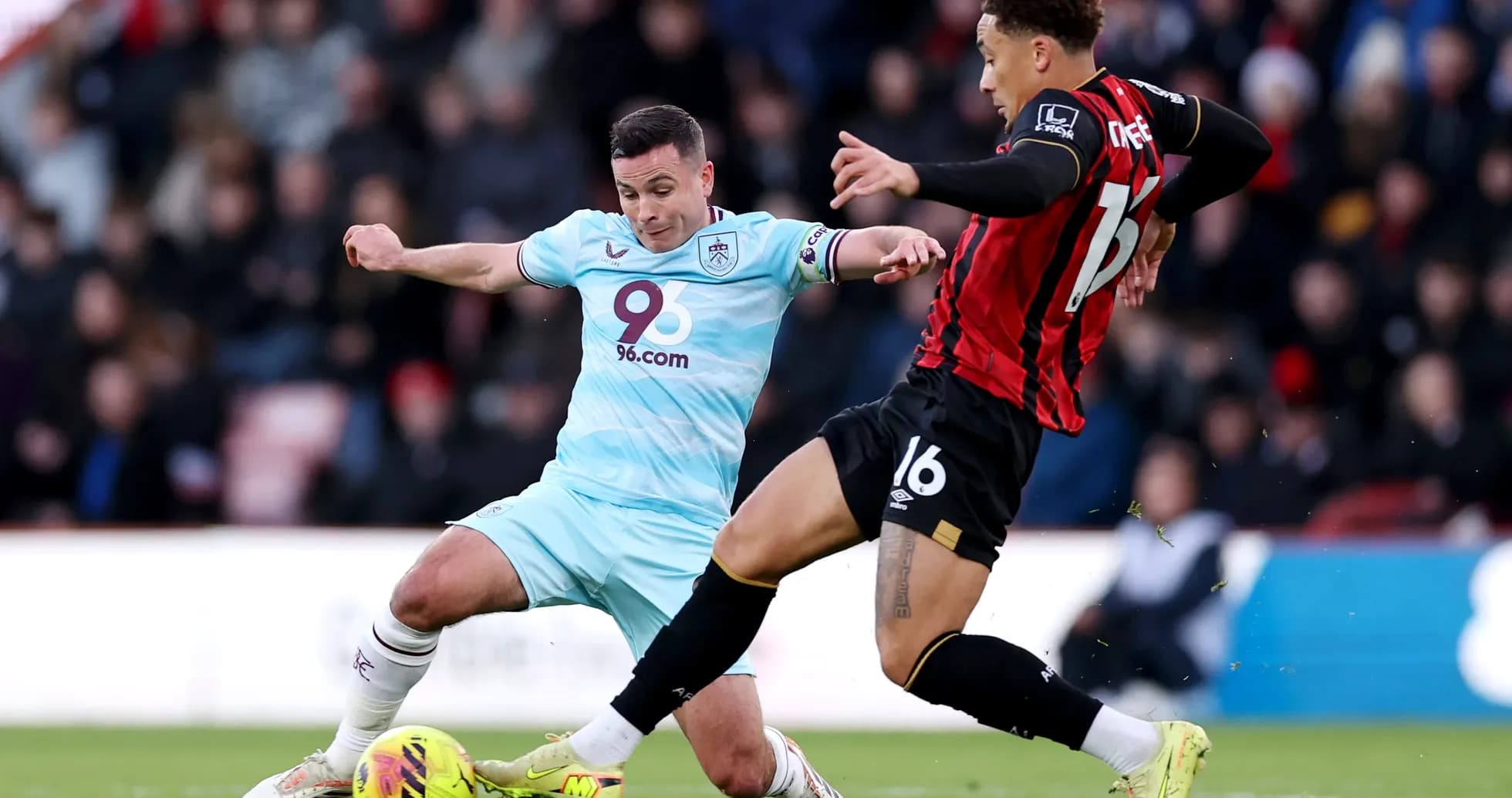
Burnley vs Bournemouth: Premier League Survival Showdown
On 14 March 2026, Turf Moor stages a meeting that could shape both ends of the Premier League table. Burnley, 19th with 19 points, host mid-table Bournemouth, who sit 9th on 40 points. The gap between them is a yawning 21 points, but the stakes are sharper for the home side: this is about survival, momentum, and belief. For Bournemouth, it is about consolidating a quietly impressive campaign and keeping European dreams flickering into spring.
Burnley’s reality is stark. Four wins from 29 matches, a goal difference of -26 and a form line of LLDWL underline a team living on the brink. Bournemouth, by contrast, arrive with a resilient DDDWD run, hard to beat and increasingly streetwise. Yet Turf Moor has a habit of turning tight margins into emotional afternoons, and this has all the ingredients of exactly that.
Form guide and statistical landscape
Strip away the narrative and the numbers tell a clear story. Burnley’s problems are structural rather than streak-based.
At home, Burnley have played 14 league games, winning just 2, drawing 4 and losing 8. They average 1.1 goals scored and 1.6 conceded per match at Turf Moor (15 for, 23 against). Three home clean sheets show they can shut things down on their day, but six blanks at home reveal a chronic struggle to turn possession into penetration.
Across all venues, Burnley’s 32 goals from 29 games (1.1 per match) are outweighed heavily by 58 conceded (2.0 per match). Their defensive line has been stretched and exposed, particularly away from home, but even at Turf Moor the back three or five has not consistently looked secure.
Bournemouth’s profile is more balanced, and crucially, more adaptable. Overall, they have 9 wins, 13 draws and only 7 defeats from 29 matches. They score 1.5 goals per game (44 in total) and concede 1.6 (46 against), but those figures split very differently home and away.
On the road, Bournemouth have 3 wins, 6 draws and 5 defeats in 14 away matches. They score at a healthy 1.6 goals per game away (23 in 14) but concede 2.2 (31 in 14). That combination – adventurous attacking, leaky defending – points towards an open, transition-heavy contest at Turf Moor if Burnley are brave enough to engage.
Both sides carry penalty confidence: Burnley have converted 2 of 2 in the league, while Bournemouth are a perfect 3 of 3. Discipline could be a sub-plot too. Burnley’s yellow cards spike late in games, particularly from minute 76 onwards, while Bournemouth accumulate a high proportion of bookings in the final quarter-hour and added time. A tense finish feels almost built into the data.
Tactical patterns: structure versus control
Burnley’s season statistics show a team still searching for the right tactical identity. They have used seven different formations, with 3‑4‑2‑1 (8 times) and 5‑4‑1 (7 times) the most common, supported by spells in 4‑2‑3‑1 and 4‑3‑3. That flexibility can be a strength, but here it reads more like tactical restlessness.
At Turf Moor, a back five (either 3‑4‑2‑1 out of possession or 5‑4‑1) seems likely, especially against Bournemouth’s fluid front line. The wing‑backs will be crucial: they must press Bournemouth’s full‑backs aggressively without leaving the half‑spaces vacant for runners like Antoine Semenyo or Eli Junior Kroupi to exploit. Burnley’s biggest home wins this campaign have come when they’ve compressed the middle and sprung quickly into wide channels; replicating that compactness is non‑negotiable.
Bournemouth, by contrast, are system-stable. They have lined up in 4‑2‑3‑1 in 27 of their 29 league games, occasionally switching to 4‑1‑4‑1. That continuity has bred clear automatisms: double pivots that know when to drop or step, full‑backs that time their overlaps, and an attacking midfield band that interchanges lanes.
Away from home, Bournemouth’s 4‑2‑3‑1 often morphs into a 4‑4‑2 without the ball, with the No.10 stepping up to press the centre-backs. Against a Burnley side that can be ponderous in their first phase, expect Bournemouth to set traps in midfield, inviting passes into congested zones and then breaking quickly through Semenyo and Kroupi.
Burnley’s defensive averages suggest they struggle when forced into repeated emergency defending – 2.0 goals conceded per match, and their worst away defeat a 5‑1. Bournemouth’s best away win, 0‑2, speaks to their capacity to be ruthless when they manage game tempo and space.
Head-to-head: recent history and psychological weight
The last five meetings between these sides form a tight, intriguing cluster.
On 20 December 2025 at Vitality Stadium, Bournemouth and Burnley shared a 1-1 draw in the league, a result that underlined the Cherries’ resilience and Burnley’s inability to turn parity into precious wins.
Earlier at Turf Moor on 3 March 2024, Bournemouth left with a 0-2 league victory, having led 0-1 at half-time. That result will linger in the minds of Burnley’s players and supporters alike: Bournemouth were organised, clinical and comfortable on a ground that once felt an away‑day ordeal.
Go back to 28 October 2023, and Bournemouth edged a 2-1 home league win after a 1-1 half-time scoreline, another example of their ability to navigate tight contests against Burnley.
The FA Cup offers a split narrative. On 7 January 2023, Burnley produced a 2-4 away win at Vitality Stadium, leading 1-3 at the interval and showcasing a more fearless, front‑foot version of themselves. But on 9 February 2021 at Turf Moor, Bournemouth claimed a 0-2 FA Cup victory after a 0-1 half-time lead.
Across this closed set of five matches, Bournemouth have three wins, Burnley one, and one draw. Bournemouth have scored 8 and conceded 6. Crucially, Bournemouth have twice come to Turf Moor and won 0-2, in February 2021 and March 2024. There is no aura of intimidation for the visitors here; if anything, there is a template.
Team news: absences that shape the game
Burnley’s injury list is long and brutal. Zeki Amdouni (knee), Jordan Beyer (thigh), Armando Broja (injury), Josh Cullen (knee), Connor Roberts (groin), Mike Tresor Ndayishimiye (ankle) and Axel Tuanzebe (Achilles) are all ruled out. That strips depth from every line: defensive options are thinner, central midfield loses a key organiser in Cullen, and attacking rotations are heavily compromised without Amdouni and Broja.
To compound matters, M. Edwards is listed as questionable with a knock, further clouding Burnley’s ability to change games from the bench. For a side already battling form and confidence, this is a significant handicap.
Bournemouth are not untouched by injuries but are in better shape. Lewis Cook (hamstring), Ben Doak (hamstring), Justin Kluivert (knee) and J. Soler (injury) are all out. Cook’s absence removes a calming, metronomic presence in midfield, while Kluivert’s dynamism between the lines will be missed. However, Bournemouth’s attacking depth – and their settled structure – should allow them to absorb these losses more comfortably than Burnley.
Key players: Semenyo and Kroupi as game‑tilters
Bournemouth’s cutting edge is increasingly defined by Antoine Semenyo. With 10 league goals and 3 assists from 20 appearances, operating nominally as a midfielder but effectively as a wide forward or second striker, he is the visitors’ primary threat. His 42 shots, 27 on target, underline both volume and accuracy, while 25 key passes show he is not just a finisher but a creator.
Semenyo’s duels (297 attempted, 121 won) and dribble numbers (72 attempts, 33 successful) hint at a player who will happily carry Bournemouth up the pitch in transition. Against a Burnley back line that can be dragged out of shape by direct runners, his ability to attack space between full-back and centre-back could define the game.
Alongside him, Eli Junior Kroupi offers a different danger. Eight goals from 24 appearances, many from partial minutes (11 substitute appearances), mark him out as a high‑impact weapon. He is efficient rather than high‑volume – 23 shots, 15 on target – and his willingness to attack central channels late in games could be crucial if Burnley tire.
Burnley’s lack of listed top scorers in the data adds to the sense of a collective rather than individual threat. For them, the key figures may be the unsung: the screening midfielder who can slow Semenyo, the wing‑back who can pin Bournemouth’s full‑backs deep, the centre‑forward who can make Bournemouth’s vulnerable away defence defend their own box rather than stepping into midfield.
The verdict
This fixture feels like a clash between a side fighting gravity and one riding a controlled wave. Burnley’s desperation, the Turf Moor crowd and the sheer necessity of points could lift their intensity, especially in the opening half-hour. Bournemouth, though, bring structure, form and a sharper attacking edge.
Tactically, expect Burnley to start with a back five, try to congest central zones and look for quick releases into the channels. Bournemouth will aim to dominate the ball in phases, but more importantly, to control the transitions – pressing Burnley’s build‑up and then springing Semenyo and Kroupi into the spaces that appear.
Given Bournemouth’s away scoring rate and Burnley’s defensive record, goals for the visitors feel likely. Burnley’s need and Bournemouth’s away vulnerability at the back suggest the home side can also find the net, especially from set‑pieces or second‑phase chaos.
A tight, emotionally charged contest is in prospect, but on the balance of form, fitness and tactical cohesion, Bournemouth look better placed to leave Turf Moor with at least a point – and quite possibly all three – unless Burnley can summon one of those rare, season‑defining afternoons when numbers are briefly suspended and survival instinct takes over.