Bruno Fernandes: Manchester United's Contract Dilemma
At Manchester United, some rules suddenly look negotiable.
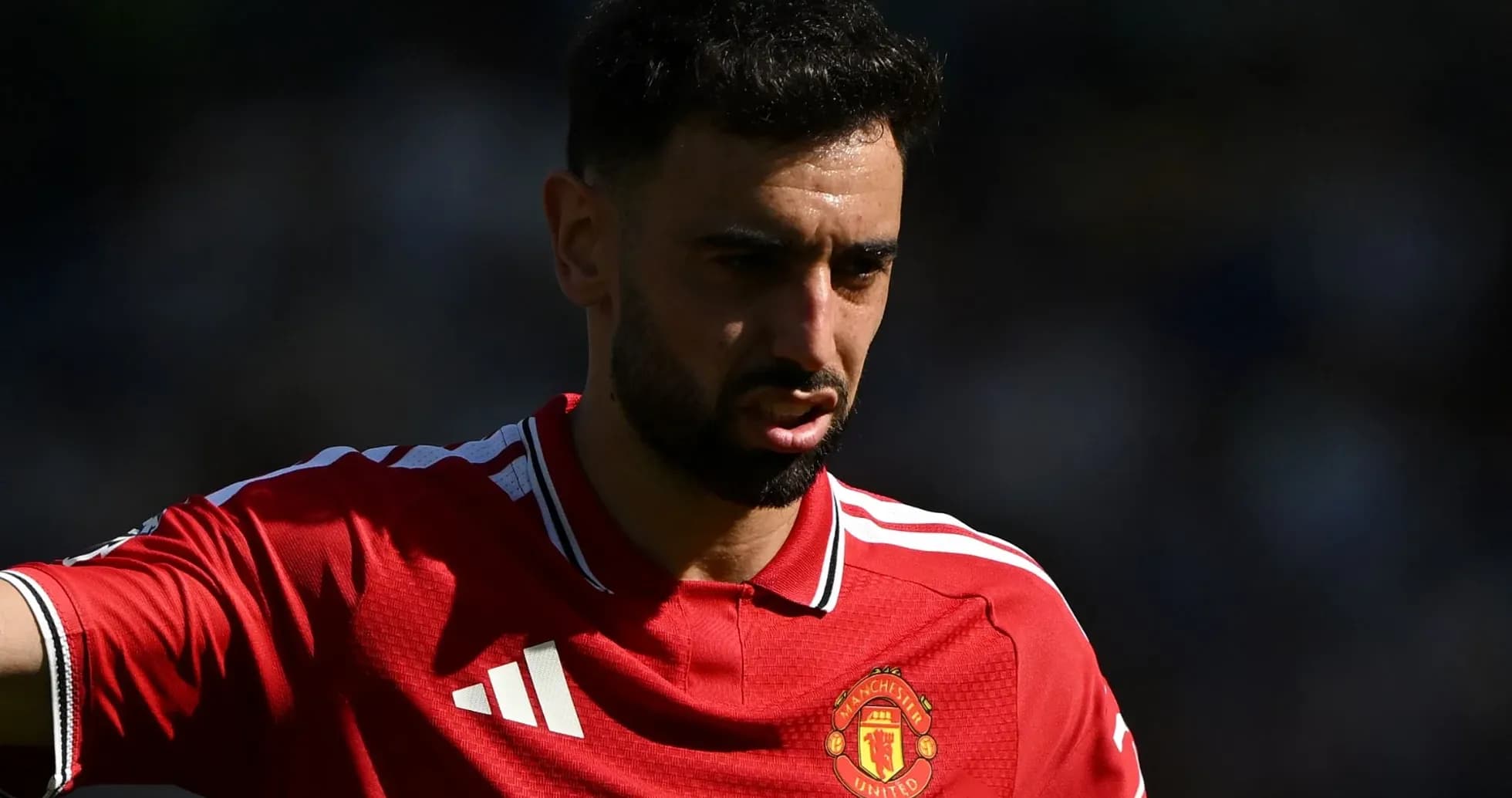
The club’s long-standing stance on contracts for players over 30 is being pushed to its limits by one man: Bruno Fernandes. United’s captain, creator-in-chief and emotional barometer is edging towards the final year of his deal, and the clock is ticking louder with every day that passes before the new season.
United do have a safety net. Buried in his current agreement is a 12‑month extension clause the club can trigger, a mechanism that would buy them time and avoid immediate panic. But that is not the plan. Inside Old Trafford, the hope is far more straightforward – that a fresh, long-term deal is agreed in the coming weeks, before the 2026-27 campaign fully roars into life.
Fernandes is back at Carrington after his exertions with Portugal at the World Cup. The ideal scenario for United is clear: new contract signed, captain secured, announcement made before the first ball is kicked in competitive action. No distractions. No saga.
The case for bending policy in his favour is written all over last season.
Twenty-one Premier League assists. A haul that did more than just light up United’s campaign; it ripped up the record books, nudging past the benchmarks set by Thierry Henry and Kevin De Bruyne. In a side still searching for consistency, Fernandes provided it, week after week, dragging attacks into life, threading passes where others saw only traffic.
He turns 32 in early September. For some at United, that number has traditionally been a red flag, a trigger for caution on wages and contract length. For Fernandes, it feels almost irrelevant.
Since arriving in January 2020, he has become the face of United’s modern era – flawed, turbulent, but always alive. Five Player of the Year awards underline what the eye already knows: he is the man this team leans on when the game tilts, when the pressure rises, when the season threatens to slip away.
The wider market has noticed. Saudi Pro League clubs have already tested United’s resolve, probing the possibility of a deal at a time when the club’s own hierarchy appeared open, at least in theory, to major sales. Those approaches were turned back. Now the emphasis inside Old Trafford has shifted from listening to offers to fending off “admiring glances” and locking in their captain’s future.
That shift is echoed by former players who understand what it means to carry United’s attack.
Michael Owen, a Premier League title winner with the club, believes this is one of those moments where policy must give way to pragmatism. Speaking to GOAL, he made it plain that age should not be the decisive factor when the player in question is this central to United’s hopes. In his view, Fernandes is so important that the club should be prepared to “break the rules” on contract length and structure to keep him.
Strip away the spreadsheets and the risk models, and Owen’s point is simple: United cannot afford to start a season without Bruno Fernandes at the heart of their team.
The numbers back that up. Since pulling on the shirt, Fernandes has racked up 327 appearances and 107 goals, an extraordinary return for a midfielder whose primary job is to supply others. The captain’s armband has rested on his arm since 2023. Under his watch, United have lifted the FA Cup and the Carabao Cup, brief flashes of silver in a decade that has not met the club’s own standards.
Yet for all the goals, all the assists, all the influence, there is still a gap in his story.
Mikael Silvestre, another former United defender who knows what a title-winning dressing room feels like, framed it bluntly in his own conversation with GOAL. Fernandes, he said, has already left a “big” footprint at the club. He stayed when Saudi money called. He performed through adversity. He was, in Silvestre’s eyes, the best player in the league last season.
But at a club like Manchester United, greatness comes with conditions.
Silvestre pointed to Steven Gerrard at Liverpool – a giant of a player, adored forever, yet never crowned a Premier League champion. Gerrard’s Champions League triumph secured his place in Anfield folklore. For Fernandes, the equation in Manchester is similar. To move from talisman to something “really special” in the eyes of supporters and club historians, he needs a defining title: the Premier League or the Champions League.
That is the standard at Old Trafford. It always has been. It is not enough simply to be the best player in a difficult era. The truly iconic figures are those whose brilliance aligns with trophies.
And so United stand at a crossroads with their captain. One path sticks to the guidelines: cautious terms for a player entering his mid-thirties, options kept open, flexibility preserved. The other accepts the risk, tears up the age rulebook and builds the next phase of the club’s rebuild around a 32-year-old who still dictates games at the highest level.
The clause in his contract means United can delay the final decision. They can trigger that extra year and push the real confrontation with reality further down the line.
But every big club eventually has to decide what it values more: the comfort of policy, or the rare, disruptive influence of a player who makes everyone around him better.
In Bruno Fernandes, Manchester United know exactly which one they have. The only question now is whether they are brave enough to pay for it.