Brighton 2–1 Nottingham Forest: Seagulls Secure Vital Win
At the Amex Stadium on Sunday afternoon, Brighton edged Nottingham Forest 2–1 in a tight Premier League contest that was effectively decided inside the opening quarter of an hour. In a meeting of sides hovering in mid-table and just above the relegation fight, Fabian Hurzeler’s team made their fast start count and then managed the game intelligently. The result keeps Brighton safely in mid-table on 37 points, while Vitor Pereira’s Forest remain anxiously close to the bottom three on 27 points.
First-half analysis
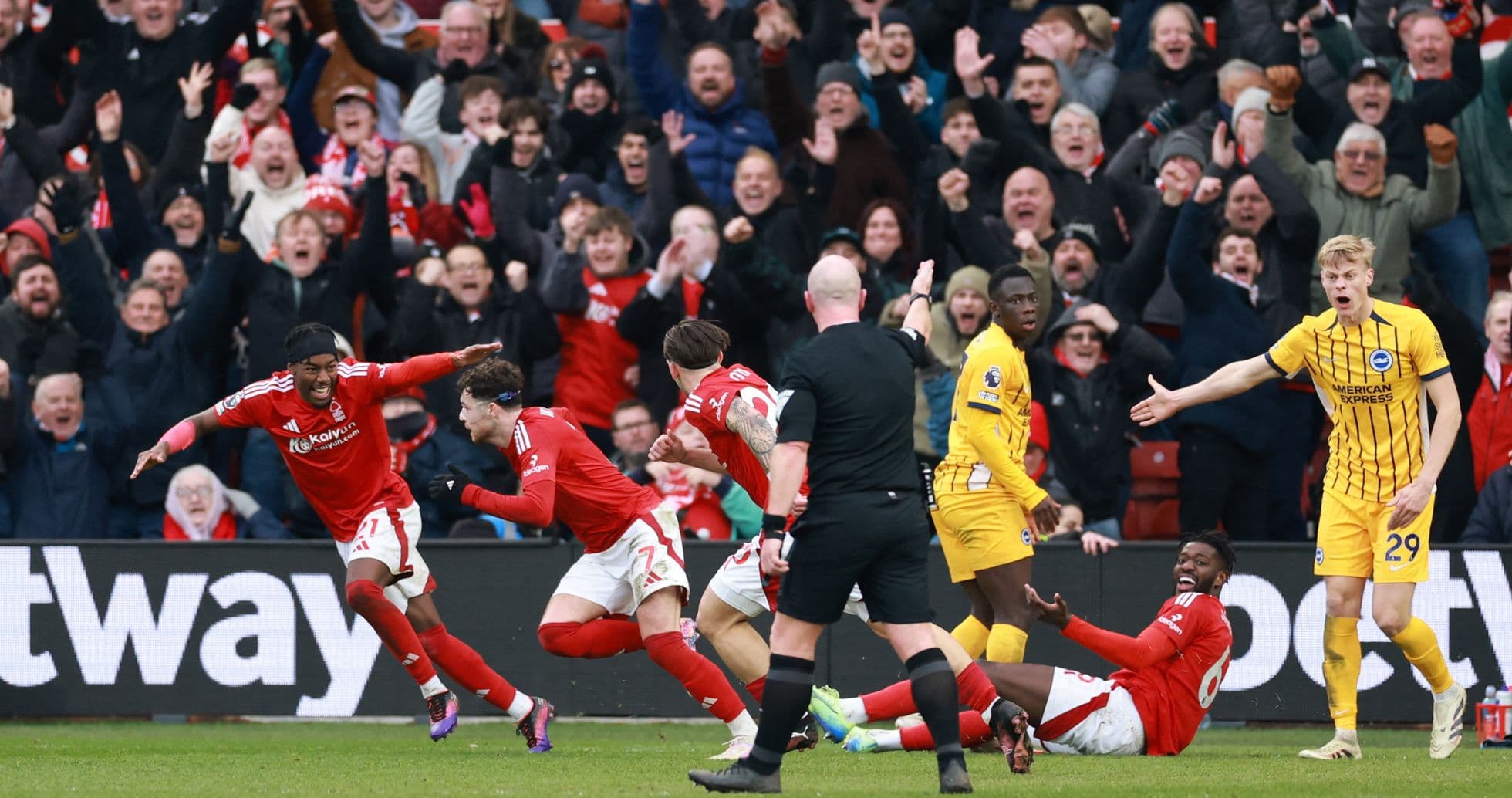
The match exploded into life almost immediately. Brighton struck first on 6', when Diego Gómez finished a move created by Pascal Groß, the German midfielder adding another assist to his growing influence in this side. Forest, however, responded quickly. On 13', Morgan Gibbs-White levelled the score, converting after being supplied by centre-forward Igor Jesus to pull the visitors back into the contest.
The frenetic start continued just two minutes later. On 15', Danny Welbeck restored Brighton’s lead, turning in a pass from Jack Hinshelwood to make it 2–1. With three goals in the opening quarter of an hour, both defences were punished for early looseness, but Brighton’s attacking precision gave them the edge.
Forest’s frustration began to show before the interval. On 30', Elliot Anderson was booked for simulation, a rare flashpoint in an otherwise open half. Brighton took their 2–1 advantage into the break, having capitalised better on their key chances in a half defined by clinical finishing rather than sustained pressure.
Second half and tactical shifts
The second period was more attritional, with both coaches adjusting in search of control. Brighton defender Mats Wieffer, already on a yellow card from a foul at 55', became a potential risk factor at the back. Pereira moved first from the touchline, reshaping Forest just before the hour.
On 56', Omari Hutchinson was withdrawn, with defender Jair Cunha introduced in his place. Moments later, Neco Williams made way for Luca Netz, another defensive-minded change. Those twin substitutions suggested Pereira was looking to steady Forest’s structure down the flanks while still chasing a route back into the game, perhaps wary of Brighton’s wide threats.
Hurzeler’s first alteration came on 71', when Wieffer was replaced by Joël Veltman. With Wieffer already booked, the change was a pragmatic defensive decision to avoid a possible red card and preserve Brighton’s narrow lead.
Forest then pushed again from the bench. On 74', Callum Hudson-Odoi was replaced by Dilane Bakwa, adding fresh attacking legs in the wide areas. The intent became even clearer on 82' as right-back Ola Aina came off for forward Dan Ndoye, an attacking gamble that effectively shifted Forest’s balance towards chasing an equaliser. A minute later, centre-forward Igor Jesus was substituted for Taiwo Awoniyi on 83', giving Forest a more physical focal point for the closing stages.
Brighton responded with their own late reshuffle to regain control and energy in midfield and attack. On 86', Diego Gómez was replaced by Solly March, and James Milner made way for Carlos Baleba, moves that freshened the central areas and wide creativity. In stoppage time, Kaoru Mitoma, booked for a foul on 84', was withdrawn for Maxim De Cuyper at 90+1', a defensive-minded change to help see out the final minutes.
Lewis Dunk collected a yellow card for a foul at 90+3', underlining the tension of the closing stages, but Brighton held firm to protect their first-half advantage.
Statistical deep dive
The numbers underline how finely balanced the contest was. Brighton controlled 53% of the ball to Forest’s 47%, a marginal edge in possession that mirrored the slight difference in territory and composure. Passing quality was almost identical: Brighton completed 438 of 507 passes (86%), while Forest found 372 of 436 teammates (85%), indicating that neither side was wasteful in buildup.
In attack, Brighton were marginally more efficient. They produced 14 total shots to Forest’s 13, but crucially hit the target more often (7 shots on goal to 4). The expected goals models broadly supported the scoreline: Brighton’s xG of 1.31 edged Forest’s 0.93, reflecting that the hosts generated slightly better-quality chances and converted two of them.
Defensively, both teams were committed and occasionally overzealous. Forest conceded 13 fouls to Brighton’s 12, but it was the hosts who picked up more cautions: three yellow cards (Wieffer, Mitoma, Dunk) compared to Forest’s single booking for Anderson. That imbalance hints at Brighton’s willingness to break up play and protect their lead in the second half, especially as Forest introduced extra attacking players.
Standings and implications
The victory lifts Brighton to 37 points with a goal difference of +3 after 28 matches (9 wins, 10 draws, 9 defeats). Their home record remains solid, now reading 6 wins, 6 draws and just 2 losses at the Amex, and this result stabilises them in 11th place, comfortably clear of relegation concerns and with an outside chance of pushing towards the top half.
For Nottingham Forest, the defeat leaves them 17th on 27 points with a goal difference of -15. With 7 wins, 6 draws and 15 losses from 28 games and a recent form line of LLDLD, they remain perilously close to the drop zone. Pereira’s side will need to turn competitive performances like this into points quickly if they are to avoid being dragged deeper into the relegation battle.