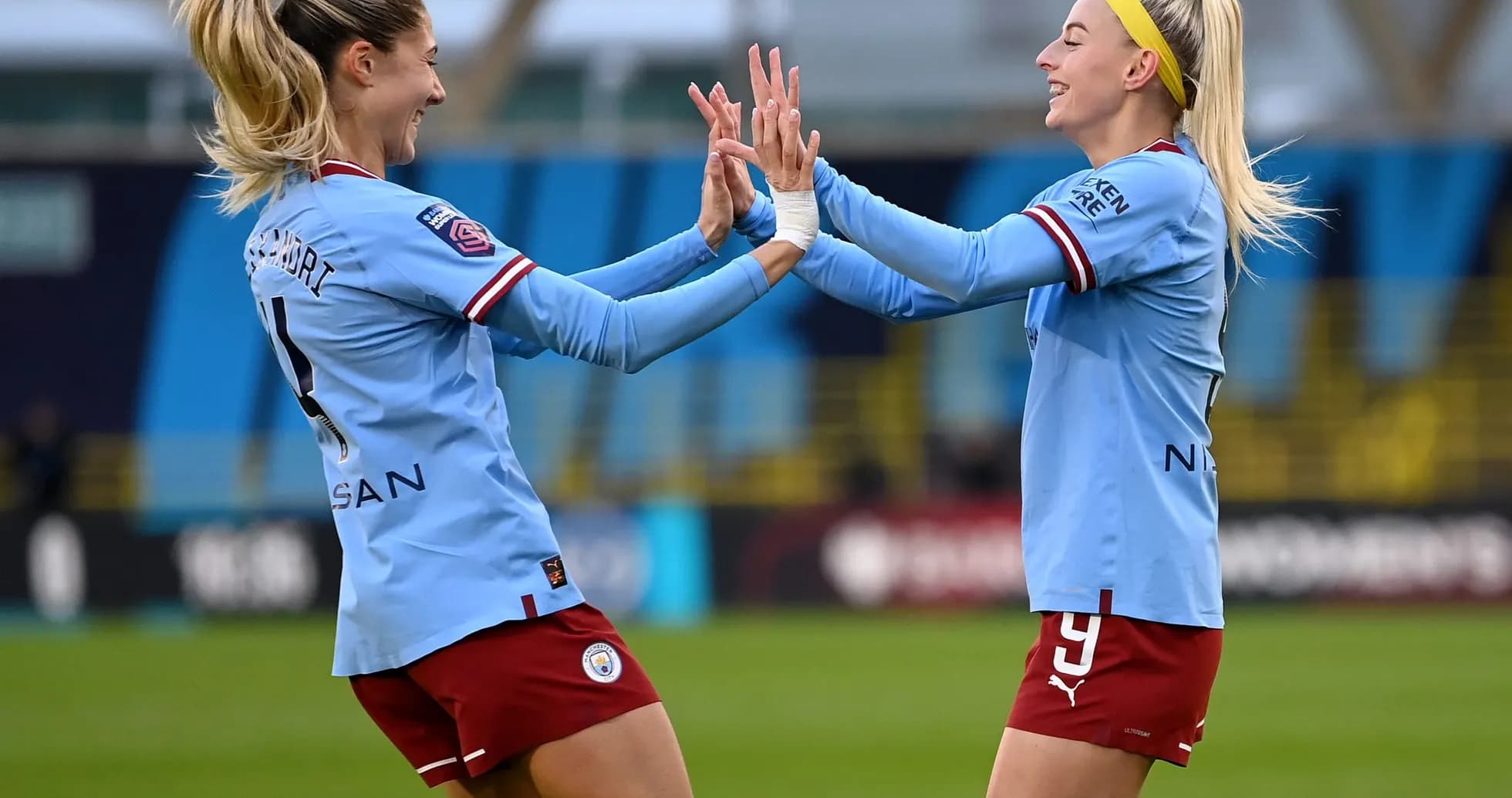
Brighton vs Manchester City: FA WSL Clash Preview
The Broadfield Stadium in Crawley stages a classic top-versus-mid-table clash in the FA WSL regular season on 25 April 2026, as sixth‑placed Brighton W host leaders Manchester City W. With City pushing hard to close out the title and Brighton still looking over their shoulder in a congested mid-table, the stakes are clear: points for safety and status for the hosts, and points for the championship for the visitors.
Brighton arrive on 21 points from 18 matches, with a goal difference of -1 (21 scored, 22 conceded). Their recent league form of “WDLLL” underlines a season of fluctuation: capable of results, but lacking consistency. At home they are competitive rather than dominant – three wins, two draws and three defeats from eight, scoring 12 and conceding 10.
Manchester City, by contrast, are operating at a different level. Top of the table on 49 points from 19 games, they have won 16, drawn one and lost only two, with a formidable goal difference of +40 (55 for, 15 against). Their away record – six wins, one draw and two defeats from nine – is strong, if not as perfect as their 10‑from‑10 home campaign, but they still average 2.0 goals scored and just 0.8 conceded per away game.
Tactical outlook: Brighton’s resilience vs City’s firepower
Across all phases this season, Brighton’s profile is that of a balanced but fragile mid‑table side. They average 1.2 goals for and 1.2 against per match, with six clean sheets but also five games in which they have failed to score. At home they score 1.5 per game and concede 1.3, suggesting that when they open up in Crawley, chances appear at both ends.
Their most used shapes – 4‑2‑3‑1 (four times) and 4‑4‑1‑1 (three times) – point to a team that wants a stable double pivot and wide outlets. The presence of Takako Seike as their top-rated attacking threat is crucial. With three goals and one assist in 15 appearances, operating from midfield, Seike offers Brighton vertical running and a willingness to shoot: 14 attempts, nine on target, and 17 key passes underline her role as both scorer and creator. She also works without the ball – 15 tackles and four interceptions – which will be vital against City’s fluid attacking midfielders.
Brighton’s biggest home win of 4‑1 shows what happens when their attacking structure clicks, but their heaviest home defeat (0‑3) and the fact they have already missed their only penalty this season highlight their thin margin for error. Set-piece ruthlessness cannot be assumed here; their penalty record (0 scored, 1 missed) is a clear weakness.
Manchester City’s tactical identity is much more defined. They have lined up in a 4‑2‑3‑1 in 11 of their 19 league games, with a single outing in 4‑1‑4‑1, reflecting a side built on a double pivot, aggressive full-backs, and a rotating line of three behind the striker. Their numbers across all phases are elite: 2.9 goals scored per game, just 0.8 conceded, seven clean sheets and only two matches without scoring.
The attacking trident is built around Khadija “Bunny” Shaw. The Jamaican forward has 12 goals and three assists in 19 appearances, averaging a shot volume of 61 attempts with 33 on target. She combines penalty-box presence with link play – 18 key passes and 221 total passes – and wins more duels than she loses (78 of 138), making her a constant outlet even when City are under pressure. Importantly, her penalty record in this data set is neutral (no attempts), but City as a team have been perfect from the spot this season, scoring both of their penalties (2/2).
Around Shaw, City have layered quality. Kerolin has emerged as a devastating impact player: seven goals and three assists in just 508 minutes, with 11 of her 13 shots on target. Her 82% pass accuracy and 13 tackles show a high-intensity, technically secure forward who can press and then punish in transition. Vivianne Miedema, redeployed as a midfielder, has six goals and four assists, underlining the threat of late runs from deeper areas; she also supplies 22 key passes at an 80% completion rate. Aoba Fujino adds balance and control, with three goals, one assist, 88% pass accuracy and 18 tackles, making her a two-way presence between the lines.
Collectively, City’s biggest wins – 6‑0 at home and 1‑5 away – show their capacity to run away with games once they get ahead. Their longest winning streak of 13 matches across the season speaks to sustained dominance rather than a brief hot run.
Head-to-head: Brighton’s lone upset against a dominant City
The recent competitive history between these sides is lopsided but not entirely one-way. The last five FA WSL meetings (all between 2023 and 2025) read:
- September 2025: Manchester City W 2-1 Brighton W at the Academy Stadium.
- March 2025: Brighton W 1-2 Manchester City W at Broadfield Stadium.
- September 2024: Manchester City W 1-0 Brighton W at Joie Stadium.
- March 2024: Brighton W 1-4 Manchester City W at Broadfield Stadium.
- November 2023: Manchester City W 0-1 Brighton W at Joie Stadium.
Over these five league fixtures, Manchester City have four wins, Brighton have one, and there have been no draws. City’s wins have typically come with control and goals – 4-1, 2-1, 2-1, 1-0 – while Brighton’s solitary success, a 1-0 away win in November 2023, is a reminder that they can frustrate and counterpunch if City are off their game.
At Broadfield Stadium specifically, the last two meetings have both ended in narrow City victories (2-1 in March 2025 and 4-1 in March 2024), suggesting that while Brighton can score at home against this opponent, keeping City out has been the bigger problem.
Key battles and game script
The central tactical question is whether Brighton’s defensive structure can cope with City’s multi-layered attack. Brighton’s six clean sheets across the season indicate they can organise, but conceding 22 in 18 games and failing to score five times shows that when the first goal goes against them, they can struggle to respond.
Brighton’s likely 4‑2‑3‑1 will need disciplined work from the double pivot to track Miedema’s and Fujino’s movements between the lines. Seike’s contribution out of possession on the flank will be critical against City’s full-backs and wide forwards, especially if Kerolin starts or comes on to attack the half-spaces.
For City, the pattern is familiar: dominate the ball, pin Brighton back, and look to Shaw’s movement and combination play to open up the back line. Their pressing triggers, reflected in high tackle counts from attacking players like Kerolin and Fujino, could force Brighton into errors in their own third, particularly given Brighton’s tendency to concede in clusters when games get stretched.
Discipline may also play a role. Brighton’s yellow cards are spread throughout matches, with notable spikes before half-time and in the final quarter, hinting at fatigue and late challenges. City’s bookings are concentrated between minutes 46-60, often coinciding with their most intense pressing phases. A Brighton side under sustained pressure in that period will need composure to avoid gifting set-pieces in dangerous areas.
The verdict
On form, data and recent history, Manchester City W travel to Crawley as clear favourites. They score more than twice as many goals per game as Brighton across all phases, concede significantly fewer, and have won four of the last five league meetings.
Brighton’s hope lies in making this a tight, low-margin contest: compact lines, aggressive work from Seike and the midfield to disrupt City’s rhythm, and efficient use of the few chances they are likely to create. Their past 1-0 win away in Manchester shows that City can be edged if frustrated for long periods.
However, given City’s depth of attacking options, their consistent 4‑2‑3‑1 structure, and a season-long habit of turning dominance into goals, the most logical expectation is an away win – and one that could feature goals at both ends if Brighton manage to harness their home attacking numbers.