Brazil's Outrage Over Vinicius Jr VAR Decision Sparks FIFA Response
The flashpoint came in the 21st minute, and it changed far more than a group game.
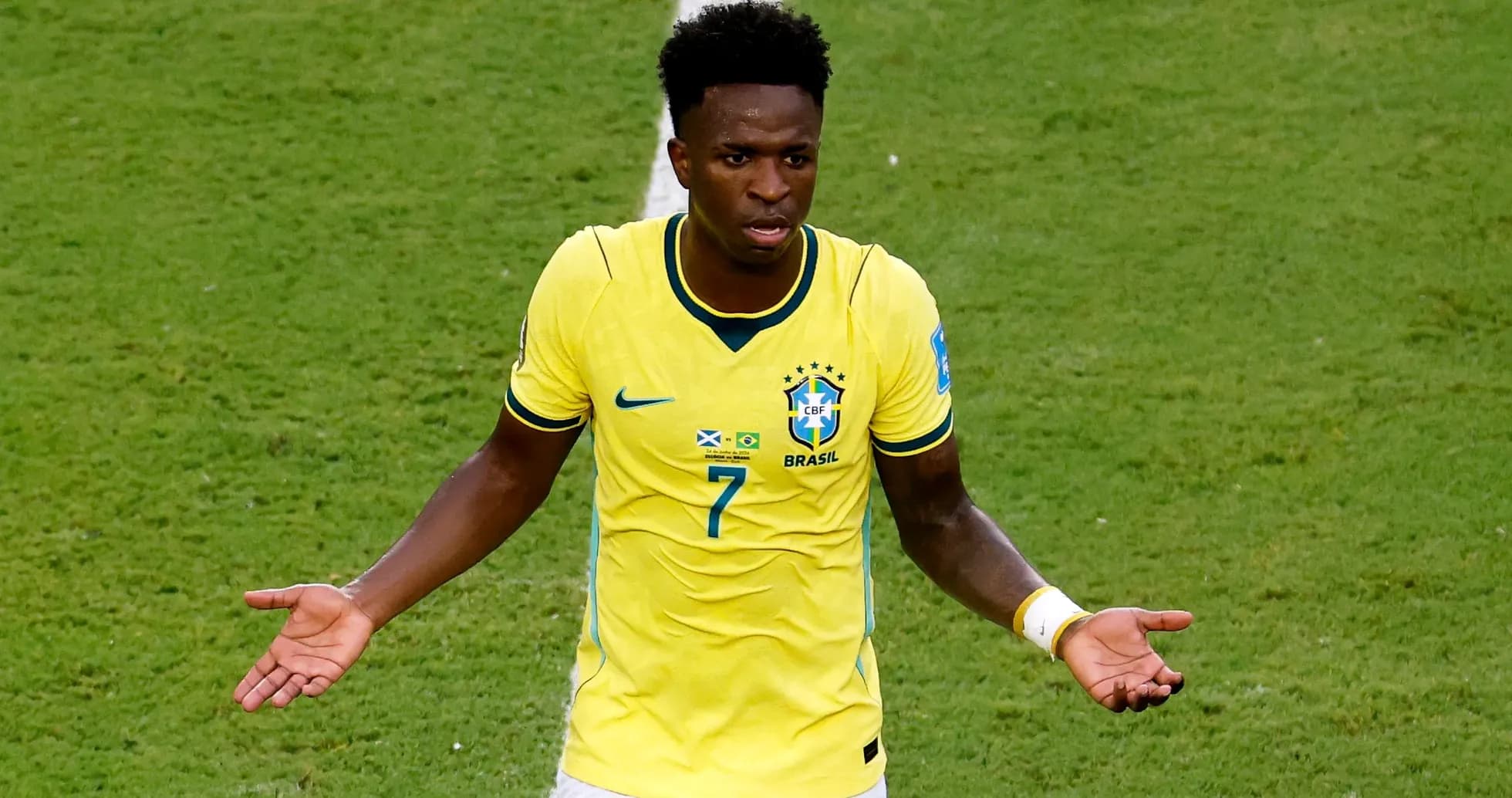
Brazil were already one goal up on Scotland, Vinicius Jr having struck early, when the Real Madrid forward snapped into a challenge on Jack Hendry, stripped him of the ball and slid a composed finish beyond Angus Gunn. Cesar Ramos pointed straight to the centre circle. Brazil celebrated. It looked like a statement goal from a side easing into knockout mode.
Then the familiar pause. VAR stepped in.
Moments later, the goal was gone.
On review, officials deemed Vinicius had fouled Hendry in the challenge. The contact, minimal to Brazilian eyes, became enough to erase what would have been his second of the night. The decision detonated on the touchline, Carlo Ancelotti and his staff incredulous at what they viewed as a soft call elevated into a game-changing intervention.
This was not just another argument about interpretation. Brazil believe the incident cuts to the heart of how this tournament is being refereed.
CBF goes to war over Ramos
The Brazilian federation, CBF, has moved aggressively. President Samir Xaud has written directly to FIFA president Gianni Infantino, challenging what he describes as a lack of consistency in officiating and asking for concrete consequences.
At the centre of the complaint: Mexican referee Cesar Ramos.
In a document cited by Brazilian outlet Estadao, the CBF has formally requested that Ramos be removed from any future Brazil assignments in North America. The letter leans on what it calls a “negative history” with the official, reaching back to the 2018 World Cup group match against Switzerland. On that night, Brazil felt they were denied a clear penalty and a foul in the build-up to Switzerland’s equaliser. Those grievances have clearly not faded.
For the CBF, that past should have mattered in the appointment process. Their argument is blunt: Ramos should never have been given this game.
The federation frames the Vinicius incident as the latest chapter in a pattern, not an isolated mistake. They insist the threshold for VAR intervention — the much-quoted “clear and obvious” standard — was nowhere near met, and that the referee’s original decision should have stood.
Brazil cite Messi goal to highlight double standard
In an unusual twist, Brazil have turned to their greatest rival to make their case.
Within the same letter, the CBF points to a goal scored by Lionel Messi for Argentina against Austria earlier in the tournament. According to Brazil’s analysis, similar levels of physical contact in the build-up were allowed to stand there, while Vinicius’ challenge on Hendry brought a forensic VAR review and eventual annulment.
The message is pointed: what flies for one giant of world football, they argue, is being punished for another.
The document also underlines the reaction on the pitch in the immediate aftermath of the incident against Scotland. The CBF notes that the decision “seemed unexpected not only for the Brazilian team, but also for the Scottish players,” arguing that their body language and lack of protest suggested nobody anticipated either a review or the cancellation of the goal.
To Brazil, that detail matters. It feeds the sense that the game’s natural rhythm is being overridden by remote, hyper-technical interventions that even the players on the field do not foresee.
Ancelotti blocks out noise as Japan await
While the legal and political battle heads into FIFA’s corridors, Carlo Ancelotti has little choice but to narrow his focus. The knockout rounds are here, and Brazil’s next assignment is Japan in Houston in the round of 32.
On the grass, his team did what they needed to do. Vinicius Jr eventually found the net again later in the match, refusing to let the earlier controversy define his night. Matheus Cunha added a third, and Brazil cruised to top spot in Group C with something to spare.
Ancelotti, rarely one to be blown off course by refereeing storms, sounded satisfied with the direction of travel.
“Now we are playing as a team, that is the goal. We are not perfect, we have things to improve. We can be a little quicker when we have control,” he said after the final whistle, before homing in on what he believes will matter most from here on. “I’m happy because the team has improved a lot, now we are solid. In the knockout stage, solidity is very important. We have a solid team. Compared to the first game, we are making fewer mistakes, we have more rhythm, and we are more effective up front.”
That is the dual reality for Brazil right now. In the boardroom, they are fighting to redraw the lines of what is acceptable in VAR usage and who should be trusted to referee their games. On the pitch, they look increasingly like a side growing into the tournament, with their star forward sharp, their structure tightening, and their coach talking about rhythm rather than rescue jobs.
The next test comes in Houston, against a disciplined Japan side with a history of unsettling favourites. If Brazil’s football keeps trending upwards while the noise around them grows louder, the real question may be whether anyone can knock them off stride before the politics do.