Borussia Dortmund's Season Analysis: Kobel's Impact and Guirassy's Struggles
The story of Borussia Dortmund’s campaign is not one of sweeping dominance or total collapse. It is a season built on a commanding goalkeeper, an iron new centre-back, a misfiring but vital striker, and a supporting cast that veered from inspired to invisible.
At times, BVB looked like a team ready to harden into a serious title contender. At others, like a side still searching for its true identity.
Kobel the Foundation
Start with Gregor Kobel. You have to.
Across 47 competitive matches, the Swiss keeper conceded 57 goals, kept 18 clean sheets and racked up 4,260 minutes – more than anyone else in the squad. The numbers back up what the eye test screamed all year: without him, Dortmund’s season looks a lot uglier.
He bailed his team out with spectacular saves on a weekly basis and stood tall in the cup tie in Frankfurt, where he became the hero in the penalty shoot-out. One careless pass against Freiburg, which led to Jobe Bellingham’s red card, remains the lone major blemish on an otherwise outstanding season. A rating of 2 feels almost conservative.
Defence: Anton Steps Up, Schlotterbeck Stalls
Behind Kobel, the defensive hierarchy shifted.
Waldemar Anton, not Nico Schlotterbeck, emerged as the defensive reference point. The former Stuttgart man logged 3,927 minutes in 44 matches, scored three goals and rarely put a foot wrong. Aggressive in the tackle, constantly switched on, he played exactly the role Dortmund had hoped for when they brought him in. A clear 2 in the ratings, and the new anchor of the back line.
Schlotterbeck’s story is more complicated. He returned in September after months out and initially looked sharp. Then the inconsistency crept in. Directly involved in several goals conceded, visibly unsettled by uncertainty over his future, he never quite hit his previous levels. Five goals in 37 matches – a personal best – show his value at the other end, but a rating of 3 reflects a defender capable of far more.
On the flanks and in the rotation, the picture is mixed.
Ramadan Bensebaini quietly put together a solid season. Recognised as one of the most technically gifted players in the squad, he sharpened his defensive work and contributed well to the build-up. With seven goals and three assists in 32 matches, he even finished as the most prolific player behind the attacking quartet of Guirassy, Brandt, Beier and Adeyemi. A 2.5 feels about right.
Chelsea loanee Aaron Anselmino was the season’s great “what if”. Rusty at first, he impressed on debut, then lost weeks to injury. When fit, he showed aggressive, intelligent tackling and calmness on the ball that belied his 20 years. Ten matches, 585 minutes, one goal, one assist – and then Chelsea activated a winter buy-back clause. Rating: 2.5 and a lingering sense of missed opportunity.
Young Italian defender Reggiani, drafted in due to injuries, took his chance with maturity. Nine games, 603 minutes, one goal and mostly risk-averse performances on the right side of the back three. He often leaned on Anton’s guidance, but for a player thrown in by necessity, a 3.5 rating and “decent” is no small compliment.
The other end of the spectrum? Players who lost ground.
One 20-year-old centre-back stepped in early, made a respectable debut in the cup tie at Essen, then suffered a nightmare five days later in the Bundesliga: a late penalty conceded, a red card, and a swift demotion. Reggiani overtook him, and he finished the season with the U23s – six appearances, 311 minutes, no rating and a hard lesson in elite football.
Midfield: Nmecha’s Rise, Sabitzer’s Fade
In midfield, Felix Nmecha finally played like the player Dortmund thought they had signed. Across 42 appearances and 3,137 minutes, he scored five times and added three assists, but the real value lay in his dominance on the ball. He dictated tempo, accelerated play and brought vision to a unit that often needs clarity. When injury kept him out, his absence was obvious. A deserved rating of 2 for his best BVB season yet.
Around him, though, stability was in short supply.
Emre Can’s year never really got going. Sidelined for months at the start, his form fluctuated on return, and a cruciate ligament tear ended his campaign prematurely. Sixteen games, 980 minutes, three goals, no assists – and a 3.5 that tells the story of a captain who could not impose himself.
The Swede in midfield – a tireless runner and tactically disciplined presence – played almost non-stop in the first half of the season, finishing with 45 matches and 3,462 minutes, plus four goals and two assists. His defensive work and positioning impressed, but going forward he stayed too quiet. The year 2026 turned into a mixed bag, and a rating of 4 reflects a player who must add more bite.
Salih Özcan, meanwhile, slipped quietly out of the picture. Left out of the Champions League squad, a planned summer move collapsed through injury, and even after Niko Kovac promised more minutes after the winter break, he saw just 53. Twelve appearances, 74 minutes in total, no rating, and now he leaves on a free.
Marcel Sabitzer’s season cut deeper because of what he should bring. At 32, with his experience and technical quality, Dortmund expected leadership in midfield. Instead, after a poor pre-season, he briefly found rhythm then drifted out of games again. One goal, four assists in 34 appearances and 2,347 minutes do not match his pedigree. A harsh but fair 4.5.
Full-Backs and Wing-Backs: Promise, Regression and Lost Places
On the right, one of last season’s problem children started to turn a corner. He spoke about backing up his words with actions and, for a while, did exactly that. His defensive duels remain a weakness, but his commitment improved and the error rate dropped. Then the winter break came, Julian Ryerson hit form, and the defender spent the rest of the campaign largely on the bench. Twenty-seven games, 1,501 minutes, three goals, three assists – not disastrous, but not enough to justify a €25 million fee. Rating: 4.5.
Ryerson himself mirrored the Norwegian wide man in one key way: work rate. He never found the net but produced an outstanding 18 assists in 42 games and 3,067 minutes, with 15 of those assists in the Bundesliga. Only Bayern’s Michael Olise (22) and Luiz Diaz (17) bettered that tally. His industry and fighting spirit remained top class, though his limitations in Europe were occasionally exposed. Rating: 2.5.
Jobe Bellingham’s first full season at Dortmund showed the steepness of the jump from England’s second tier. He often played it safe, looked shaky in defence at times, but grew steadily. By the end of the campaign, he had nailed down a starting role, beginning 29 of his 45 appearances. No goals, four assists in 2,665 minutes and a 3.5 rating: a season of adaptation, not arrival.
Attack: Brandt Leaves, Guirassy Streaks, Beier Emerges
Up front, the numbers tell one story, the mood another.
Serhou Guirassy still finished with 22 goals and six assists in 46 matches, directly involved in 28 goals. That’s a strong return by any normal standard and twice the tally of the next-best scorer, Brandt. Yet it felt underwhelming because of what came before: 43 goal contributions in 45 games last season. This time he endured a brutal drought, scoring just once in 13 Bundesliga matches. Frustration spilled over with a penalty row in Turin, a refusal to shake Kovac’s hand and poor body language. Rating: 2.5 – numbers solid, narrative far less so.
Julian Brandt, meanwhile, leaves Dortmund after his most productive season in front of goal for some time. Eleven goals and four assists in 41 games and 2,203 minutes, with 15 goal contributions from just 24 starts. Only Guirassy scored more. Yet the consistency expected in his seventh season never fully arrived, and a few flat outings linger in the memory. BVB chose not to extend his contract; they must now replace both his creativity and his end product. Rating: 2.5.
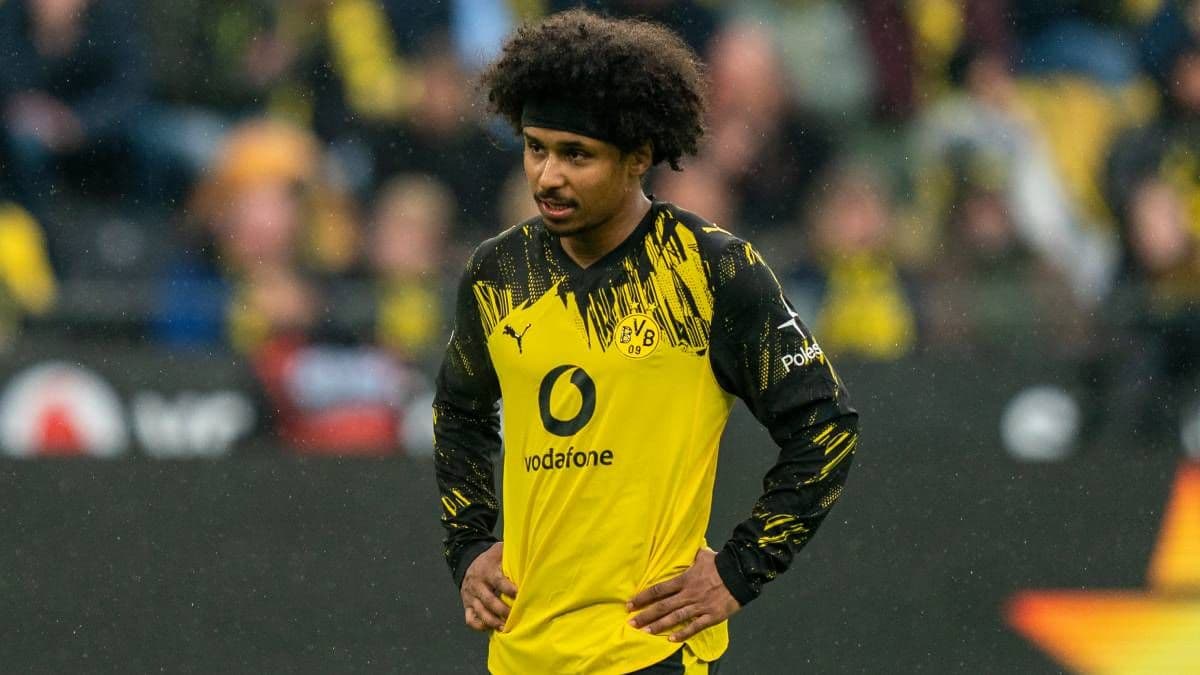
Kareem Adeyemi’s season splits cleanly in two. Before the turn of the year, he looked sharp, contributing to nine goals and hinting at the explosive forward he can be. Then 2026 hit. Injuries, only six starts, and form that fell off a cliff. He still finished with ten goals and six assists in 39 games and 1,836 minutes, joint third-top scorer alongside Beier, but the second half of the season – and earlier disciplinary issues on and off the pitch – made for a deeply disappointing campaign. Rating: 4.
And yet, out of that gloom, Maximilian Beier lit up the second half of the season. Six goals, seven assists, ten goals and ten assists overall in 44 matches and 2,736 minutes, mostly while playing out of position. He rarely lined up in his preferred roles – either in a front two or as a central second striker – but still changed games. Recently used more often as a left midfielder, he maintained his influence and almost certainly played himself into contention for the DFB’s World Cup squad. Rating: 2.5, and a clear arrow pointing upwards.
Behind them, a new striker tried to play catch-up. Arriving injured, he spent much of the season restricted to cameos. His energy and movement hinted at a useful option, yet when he did start, the cutting edge deserted him. Three goals and seven assists in 39 games and 1,181 minutes is respectable, but not enough for a leading forward. Rating: 3.5 and a clear demand: more goals next year.
Carney Chukwuemeka’s season never really escaped the shadows. The transfer fee was high, the output modest. He averaged just 32 minutes per appearance, started only ten of his 38 matches and only in mid-April at Hoffenheim did he complete a full 90 minutes for the first time in his professional career. Three goals, two assists, 1,225 minutes – and a 4.5 rating that underlines the central issue: his fitness and stamina must improve if his obvious talent is to be seen more than sporadically.
Veterans, Departures and the Next Wave
Pascal Groß, at 34, found himself stuck between roles. Second among outfielders in the squad with 15 assists in the 2024/25 campaign, he spent much of this season on the bench. Sixteen appearances, 732 minutes, no goals, two assists, only eight starts and little impact when chances did arrive. By winter, frustration had built to the point that a return to former club Brighton became the natural solution. Rating: 4.5.
On the fringes, the next generation knocked politely rather than kicked the door down.
Inacio, the 18-year-old Italian attacker, made seven appearances and 383 minutes, scoring once. Kovac’s verdict – “sees things that others don't see even at 30” – captures the excitement around him. Constantly dangerous between the lines, diligent off the ball, always arriving in good areas, he could easily have had three or four goals with a touch more precision. No rating, but a clear signpost towards a bigger role next season.
Cole Campbell (16 minutes), Almugera Kabar (14) and Mathis Albert (2) all tasted first-team football briefly. Nine other players – Alexander Meyer, Patrick Drewes, Silas Ostrzinski, Yannik Lührs, Danylo Krevsun, Elias Benkara, Julien Duranville, Giovanni Reyna and Mussa Kaba – spent time in the squad without seeing the pitch. For them, the season existed on the team sheet, not the grass.
A Team Between Eras
Strip it all back and a pattern emerges.
Kobel, Anton and Nmecha formed a spine that often held. Guirassy’s goals, even with the drought, kept Dortmund competitive. Beier’s rise and Inacio’s promise hint at a more dynamic, flexible attack. Around them, too many players drifted, whether through injury, form or simply failing to impose themselves.
Brandt, Groß and Özcan are gone or going. Others stand at a crossroads. The numbers are on the page now; the judgments have been made.
The real question is simple: does this season mark the painful middle of a rebuild, or the last warning before Dortmund’s window to challenge at the very top begins to close?