Bologna 2–2 Celtic: Ten-Man Visitors Hold On in Europa League Clash
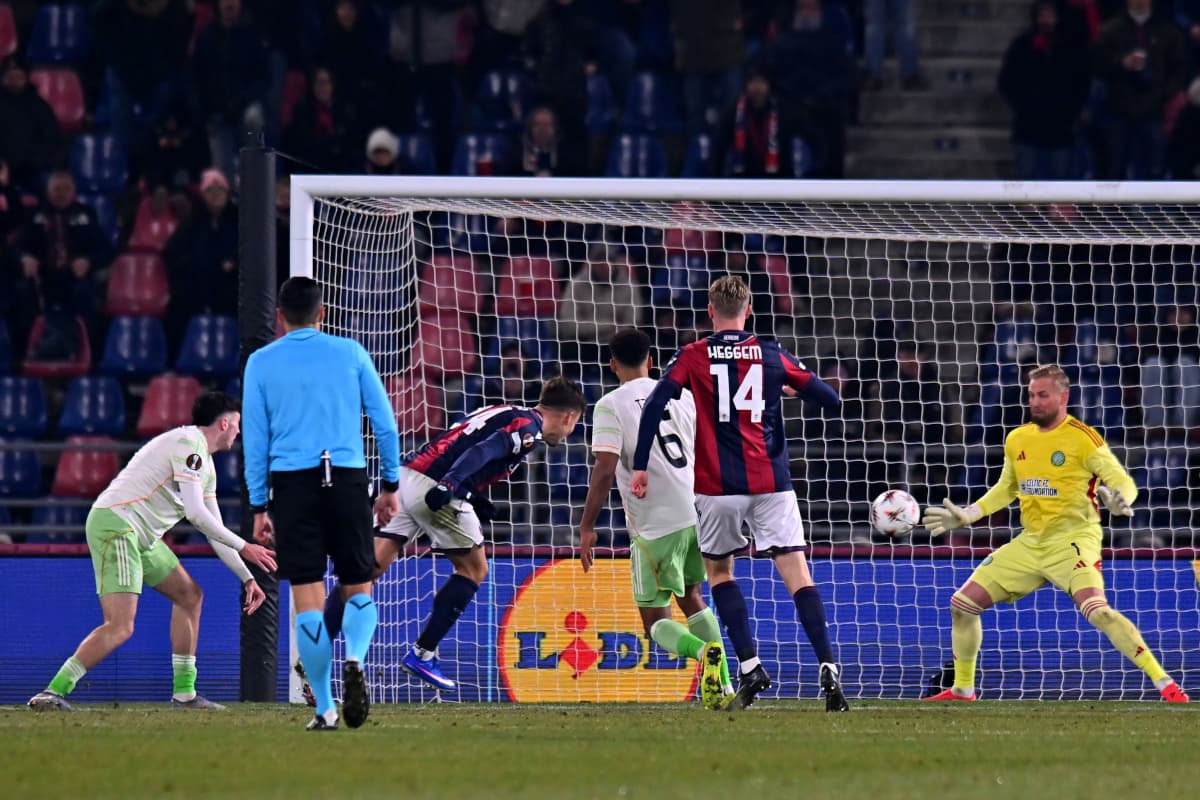
At Stadio Renato Dall'Ara, Bologna’s late surge salvaged a 2–2 draw against ten-man Celtic in a dramatic UEFA Europa League League Stage clash on 22 January 2026. The Italians, coached by Vincenzo Italiano, trailed 0–2 at half-time but roared back after the break to extend their unbeaten home run in the group. Martin O’Neill’s Celtic, reduced to ten men after Reo Hatate’s first-half dismissal, were forced into a backs-to-the-wall performance yet still emerged with a point that keeps both sides on course for the 1/16-finals play-offs.
First-half analysis
Celtic struck early. On 6', Reo Hatate put the visitors in front, finishing a move created by Daizen Maeda’s assist to stun the home crowd and hand O’Neill’s side the perfect start. Bologna, in their 4-3-3, were forced to chase the game, but the key drama of the half centred on discipline rather than chances.
Maeda went into the book on 27' for a foul, signalling Celtic’s increasingly combative approach as Bologna pushed forward. Hatate then endured a disastrous personal spell: booked for a foul on 31', he received another yellow for a further foul on 34', which converted into a red card and left Celtic down to ten men before the interval. Bologna’s Juan Miranda was also cautioned for a foul on 39', underlining a tense, stop-start period.
Despite the numerical disadvantage, Celtic struck again. On 40', defender Auston Trusty made it 0–2, finishing after an assist from Arne Engels. Bologna went into the break two goals down and a man up, facing a psychological as much as a tactical challenge.
Second half and tactical shifts
O’Neill reacted immediately at half-time, withdrawing Sebastian Tounekti and introducing Benjamin Nygren on 46'. The change hinted at a desire to retain an outlet in transition despite being a man short. Italiano’s key move came on 56', when he replaced midfielder Tommaso Pobega with forward Jens Odgaard – a clear attacking shift from the Bologna coach.
The substitution paid off almost instantly. On 58', Thijs Dallinga halved the deficit, scoring for Bologna with Odgaard providing the assist. That goal changed the tone of the contest, turning sustained pressure into tangible reward and pinning Celtic deeper.
The equaliser arrived on 72'. Jonathan Rowe struck to make it 2–2, finishing without an assist recorded, as Bologna finally converted their territorial dominance into parity on the scoreboard. Italiano doubled down on attacking intent moments later: at 73', he removed forward Benjamín Domínguez for Riccardo Orsolini, and took off midfielder Lewis Ferguson for Nicolò Cambiaghi. With additional forwards on the pitch, Bologna were effectively playing with a front line designed to overwhelm a tiring Celtic defence.
Celtic responded on 76' with a double change aimed at shoring up the flanks and back line. Yang Hyun-Jun made way for Johnny Kenny, adding fresh legs higher up, while Colby Donovan was replaced by Anthony Ralston at right-back. Bologna’s final roll of the dice came on 85', when centre-back Nicolò Casale was withdrawn for Charalampos Lykogiannis, a like-for-like defensive change that also brought fresh energy to the back four as they continued to attack.
O’Neill’s last substitution on 87' was another midfield adjustment: Engels, who had assisted Celtic’s second, went off for Paulo Bernardo, an attempt to add composure and ball retention in the closing minutes. Despite Bologna’s pressure, Celtic held out for a point.
Statistical deep dive
The numbers underline Bologna’s territorial and technical control. Italiano’s side had 71% of the ball, completing 456 of 525 passes at 87% accuracy. Celtic conceded possession, completing 164 of 236 passes at 69%, and spent long spells defending deep, especially after Hatate’s dismissal.
In attack, Bologna produced a barrage of attempts: 36 total shots, with 10 on target and 11 blocked, including 25 efforts from inside the box. Their expected_goals of 2.46 closely matched the two goals they scored, suggesting a broadly fair return given the volume of chances. Celtic, by contrast, were ruthlessly efficient. They mustered only 8 shots – all from inside the box – with 5 on target and an expected_goals of 1.99, converting twice in their more limited attacking moments.
Discipline was decisive. Celtic committed 11 fouls to Bologna’s 8, collecting three yellow cards and Hatate’s red, which shaped the entire second half. Bologna, with just one yellow card for Miranda, maintained greater composure, but could not turn their numerical advantage into a winning goal despite 16 corner kicks to Celtic’s 2.
Standings and implications
In the broader Europa League picture, the draw consolidates Bologna’s strong campaign. They sit 15th in the overall table with 12 points from 7 matches (3 wins, 3 draws, 1 defeat) and a +4 goal difference (11 scored, 7 conceded), maintaining their “Promotion – Europa League (Play Offs: 1/16-finals)” status and extending a home record of 1 win and 3 draws, still unbeaten at Dall’Ara.
Celtic, ranked 24th with 8 points and a -4 goal difference (9 for, 13 against), also remain on track for the play-offs. Their away record – 1 win, 2 draws, 1 defeat with 7 goals scored and 7 conceded – reflects a side capable of taking important points on the road. Holding on for a draw with ten men in Bologna may prove a pivotal result in sustaining their European trajectory.