Boavista's Closure and Celtic's European Memories
Boavista are gone. Not relegated, not merely restructured. Extinguished by a court order that demands they shut their doors by 31 July and hand over their premises. A club that once stood toe-to-toe with Europe’s elite now reduced to a line in an insolvency file.
For Celtic supporters, the news lands with a jolt of nostalgia. This isn’t just any Portuguese club disappearing. This is Boavista of Porto – the club that twice crossed Celtic’s path in Europe and helped shape some of the most vivid chapters in the Glasgow side’s continental story.
From Hoops and First Numbers to European Edges
The relationship began almost half a century ago, in the Cup Winners’ Cup of 1975. Celtic were drawn against Boavista and did the hard work away from home, grinding out a 0-0 draw in Porto. Routine enough on paper, but what followed at Celtic Park would etch the tie into club folklore.
Under the lights in Glasgow, Celtic won 3–1 on the night and on aggregate. Kenny Dalglish struck, Shuggie Edvaldsson added his name to the scoresheet, and Dixie Deans finished the job. The result pushed Celtic through, but the evening carried another, quieter milestone.
That Boavista visit marked the first time Celtic wore squad numbers on the back of those famous green-and-white hoops. A small detail, perhaps, yet one that symbolised a club moving with the times, even as it leaned on its traditional power at home in Europe.
Larsson, Porto, and a Semi-Final That Still Stings
Most Celtic fans, though, hear the name Boavista and think instantly of 2003.
The UEFA Cup semi-final. The year of Seville. The season when Martin O’Neill’s Celtic bulldozed their way through Europe with Henrik Larsson at the peak of his powers.
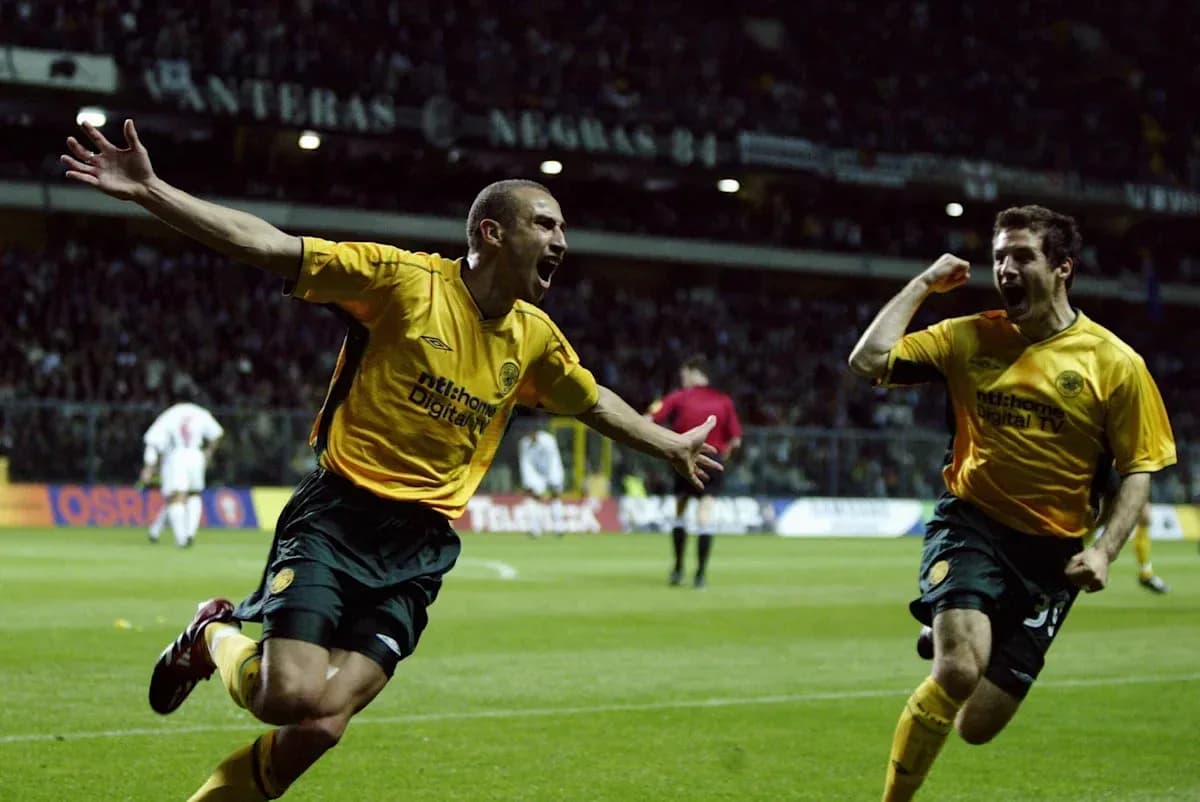
The first leg at Celtic Park finished 1-1, Larsson scoring the equaliser to keep the tie alive after a tense, cagey affair. It was one of those nights when the noise never quite left the stadium, even after the final whistle. The sense lingered that Celtic had more to give, that the job would be finished in Portugal.
At the Bessa Stadium on 24 April 2003, they did exactly that. Larsson again. A single, priceless away goal in a 1-0 win, enough to send Celtic into a European final for the first time since 1970. Boavista were stubborn, organised, awkward. But they could not keep the Swede out.
The reward was a date with Boavista’s city rivals, Porto, in the UEFA Cup final. What happened in Seville still sits raw in many Celtic minds, so the less said about that night, the better. Yet without Boavista, without Larsson’s decisive strikes against the black-and-white chequered shirts, that journey never reaches its crescendo.
A Champion Outside the “Big Three”
Boavista were never just a supporting act in someone else’s story. Founded in 1903, the club carved out a unique place in Portuguese football.
Nine major honours. A Primeira Liga title in 2001, a seismic achievement that broke the iron grip of Benfica, Porto and Sporting Lisbon. To this day, Boavista remain the only side outside that “big three” to have been crowned champions of Portugal.
They did it their way, too – a gritty, combative side that refused to bow to the established order. For a time, the black-and-white squares of their shirts became a symbol of defiance in a league long dominated by giants.
But football’s romance rarely protects against the balance sheet.
Transfer Bans, Chaos, and a Slow Unravelling
Boavista’s financial problems did not appear overnight. The decline had been brewing for years, but the past couple of seasons brought everything crashing down.
After being banned from signing players across five transfer windows, the club lurched in the opposite direction, registering nine players in a single day in February 2025. It felt less like a strategy and more like a last throw of the dice.
The 2024/25 campaign ended in humiliation. A 4–1 defeat away to Arouca on the final day condemned Boavista to bottom place and relegation. Some 2,000 travelling supporters saw enough; a pitch invasion underlined just how far the club had fallen.
Even in relegation, there was no stability. The Portuguese league authorities barred Boavista from taking their place in Liga Portugal 2, handing a lifeline to Oliveirense, who had been destined for the drop. Boavista then found themselves refused registration for the third-tier and the fourth-tier Campeonato de Portugal in 2025.
What followed was a maze of restructuring and rebranding. A change of company. A restart in the Liga Pro, the new elite competition of the Porto Football Association. The original club, trying to keep some semblance of identity alive, entered a team in the fourth division of the district leagues.
It never truly got off the ground. Failing to turn up for matches led to defeats by default. By the end of October, the club-run team withdrew from competition altogether. The slide was complete. All that remained was the formality of the courts.
Court Order and Closure
On 16 July 2026, the final blow landed. A court ruled that Boavista must cease all activities by 31 July and surrender their facilities. Years of unpaid debts, failed restructurings and broken promises to creditors had caught up with them.
In blunt terms, Boavista failed to pay what they owed. The cost is their existence as a professional club.
For Celtic supporters, the name Boavista will always mean Dalglish, Edvaldsson and Deans in ’75, Larsson’s ice-cold finishing in 2003, and the roar that greeted a place in a European final. For Portuguese football, it means something even heavier: the loss of the only champion to crack the monopoly of the Lisbon and Porto giants.
Now the chequered shirts are folded away, their stadium silenced, their honours consigned to history. The question is whether this really is the end, or whether one day a “Boavista FC” rises from the wreckage to reclaim that black-and-white identity that once rattled Europe’s elite.