Belgium 4-1 USA: De Ketelaere Shines in World Cup Clash
The party was supposed to last a little longer. Instead, under a heavy Seattle sky and a sea of red, white and blue, the United States ran straight into a Belgian buzzsaw – and into the limits of their own ambition.
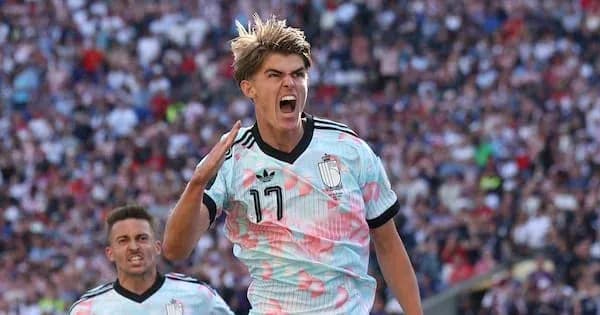
Charles De Ketelaere tore through the hosts with the authority of a player in complete command of the moment, scoring twice and creating another in a ruthless 4-1 win that sent Belgium into the quarterfinals and dumped the United States out of their home World Cup.
For a generation that had talked openly about changing the sport’s place in American life, this was a brutal reality check.
Defensive frailties laid bare
Belgium didn’t need long to find the soft underbelly everyone had been pointing at for months.
In the eighth minute, De Ketelaere put the Red Devils in front, punishing the first real crack in a US back line that had been labeled the weak link of Mauricio Pochettino’s side. It was the first time all tournament the Americans had fallen behind. The early blow rattled them, and Belgium smelled blood.
The United States had been buoyed before kickoff by the return of Folarin Balogun, cleared to play after FIFA controversially overturned his one-game suspension. On paper, it looked like a statement. On the pitch, it barely mattered. The problems were behind him, not ahead.
American defenders were culpable on both first-half Belgian goals, their positioning and decision-making repeatedly exposed by Belgium’s movement and De Ketelaere’s intelligence between the lines. Every misplaced step felt costly. Every lapse, punished.
Tillman’s lifeline, Belgium’s instant reply
For a brief spell, the stadium believed.
In the 31st minute, Malik Tillman bent over a free kick and took aim. His strike took a big deflection, wrong-footed the keeper and flew in for his second set-piece goal of the tournament. Lumen Field erupted, 66,925 fans surging to their feet, noise rolling down from the stands like a wave.
The goal seemed to jolt the US into life. The tackles bit harder. The pressing had more edge. The crowd fed off every duel.
It lasted 61 seconds.
Straight from the restart, Belgium sliced through again, capitalizing on more defensive uncertainty and restoring their lead before the celebrations had even died down. The air went out of the building. On the touchline, Pochettino’s frustration boiled over; he lashed out at a rack in front of the bench, sending four water bottles skidding across the technical area.
That image said as much about the night as the scoreline.
Freese’s gaffe and De Ketelaere’s dominance
If the first half was about defensive cracks, the second half brought the collapse.
Early after the break, goalkeeper Matt Freese produced the kind of moment that haunts careers. Under pressure in front of his own goal, he lost control of the ball. De Ketelaere pounced, squared, and Hans Vanaken did the rest in the 57th minute.
A gift. At this level, unforgivable.
The third goal didn’t just stretch the score; it broke belief. Belgium, who had started the night with stars Jérémy Doku and Kevin De Bruyne watching from the bench, were now in complete command, their decision to rotate looking increasingly shrewd. They pressed high, forced errors, and turned every US misstep into a counterpunch.
De Ketelaere dictated the rhythm, drifting into pockets, picking passes, finishing chances. He had already scored and assisted; his fingerprints were on every meaningful Belgian attack.
Pulisic hobbled, the dream fades
The night turned cruel for Christian Pulisic.
The American talisman, centerpiece of this much-hyped generation, saw his World Cup end not with a flourish but with a grimace. In the 52nd minute, he connected with the boot of Belgium captain Youri Tielemans while shooting, injuring his right foot. He tried to carry on but lasted only seven more minutes before being forced off, reduced to a spectator as his teammates chased a game slipping away from them.
From the bench, he watched the World Cup – and a golden opportunity – disappear.
By the time Romelu Lukaku, introduced as a second-half substitute, strode through to add Belgium’s fourth in the third minute of stoppage time, the contest had long since turned into a procession. His finish simply underlined the gulf in composure and cutting edge.
A harsh verdict on a heralded generation
This was supposed to be the coming-of-age tournament for a group led by Pulisic, Weston McKennie and Tyler Adams. They spoke about dragging the sport closer to the status of the NFL, MLB and the NBA. They backed it up in the group stage, winning three games at a World Cup for the first time in the nation’s history.
But the knockout rounds demand something more – and Europe keeps reminding the United States of that fact.
The loss to Belgium was their seventh straight against the Red Devils since that famous win at the inaugural World Cup in 1930. More broadly, the Americans have now dropped 11 of their last 12 games against European opposition at major tournaments, the lone bright spot their round of 32 victory over Bosnia-Herzegovina.
For all the progress, the ceiling remains stubbornly low.
CONCACAF shut out, old powers remain
The wider picture is just as unforgiving.
All six CONCACAF nations are gone. USA, Mexico and Canada – the co-hosts of this expanded 48-team tournament – all fell at the same hurdle in the round of 16. Every quarterfinalist will come from Europe, South America or Africa, a stark reminder of the competitive gap that still separates CONCACAF and Asia from the sport’s traditional power bases.
Belgium march on to face Spain in Inglewood, California, on Friday, their blend of established names and emerging stars suddenly looking dangerous again. They did not need De Bruyne or Doku to dismantle the hosts. They had De Ketelaere, and that was more than enough.
For the United States, the stadium emptied under a cloud of what-ifs. A home World Cup run cut short. A generation that has moved the needle, but not yet broken through it.
The question now is no longer whether America can fall in love with the sport. It already has. The question is whether this team can ever match that passion with a result that truly shifts the global conversation.